12 Best Matching Ring Set Ideas for Couples
A matching set does not have to mean two identical rings. The best matching ring set ideas feel connected at a glance while still giving each person a piece that suits their style, comfort, and everyday routine. For some couples, that means the same inlay in two different band widths. For others, it is a shared material story - a slice of meteorite, a flash of opal, or an ancient fragment of dinosaur bone - interpreted in complementary ways.
That flexibility is what makes unconventional wedding bands, promise rings, and anniversary rings so special. A set can be bold without being overly coordinated, sentimental without looking traditional, and durable enough to become part of daily life.
Best Matching Ring Set Ideas That Feel Personal
1. Matching meteorite rings in different widths
Meteorite is a natural choice for a couple with a big story and an eye for the rare. Its distinctive crystalline pattern means no two inlays look exactly alike, even when the rings are made as a set. Choose a wider tungsten band for someone who likes a substantial feel and a narrower profile for someone who prefers a more delicate look.
The shared material creates the match. The difference in width keeps the pair personal. It is a strong option for wedding bands because the design reads as intentional without feeling overly formal.
2. Black tungsten with matching opal inlays
Black tungsten creates a dramatic backdrop for opal, especially when the inlay shows bright blue, green, or fire-like flashes. One partner might choose a full opal channel, while the other wears a black band with a slimmer opal line. Together, they have the same color story with different levels of detail.
This pairing works beautifully for couples who want statement rings but still need an easy-to-wear silhouette. Tungsten is known for its impressive scratch resistance, while opal brings the color and individuality that makes a set feel one of a kind.
3. Moon dust and crushed opal pairs
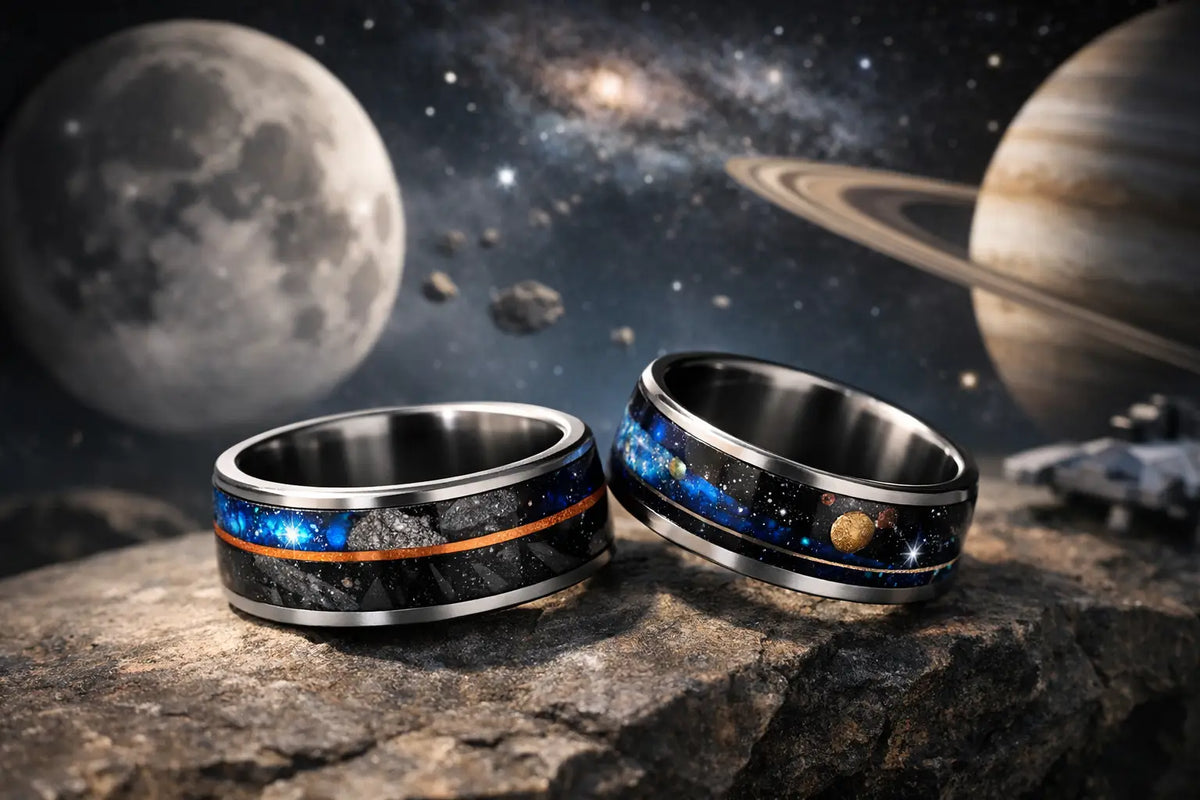
For a set that feels celestial rather than conventional, pair moon dust with crushed opal. The moon dust delivers a soft, mysterious shimmer, while the opal catches light with a vivid pop of color. You can use the same palette across both rings or let one ring lean blue and the other green.
These rings are especially meaningful for couples who share a love of stargazing, travel, science fiction, or simply the feeling that their relationship is written in the stars. The materials carry the theme without relying on an obvious symbol or engraving.
4. Dinosaur bone rings with coordinated metal tones
Dinosaur bone is for people who want their jewelry to start conversations. Fossilized over millions of years, it has natural patterning and earthy color that no manufactured material can quite copy. A matching set can feature the same dinosaur bone inlay set into black tungsten and silver-tone tungsten, giving each ring its own personality.
This is a thoughtful choice for adventurous couples, museum lovers, geology fans, and anyone who appreciates an object with a real past. Because natural fossil material varies, the rings will coordinate rather than look mass-produced.
5. Damascus steel and whiskey barrel wood bands
Damascus steel has layered, flowing patterns that feel handcrafted and industrial at once. Add whiskey barrel wood, and the result becomes warm, textured, and full of character. A wider ring can feature a bold Damascus exterior with a wood interior, while a narrower partner band uses a clean wood inlay framed by steel.
This set is ideal when one person prefers darker, rugged details and the other likes natural warmth. It also makes a fitting anniversary gift for a couple with a shared appreciation for craftsmanship, good drinks, or time-tested materials.
6. His-and-hers glow ring sets
A glow inlay brings an unexpected element to a matching set. In daylight, the rings can look sleek and understated. In low light, they reveal a blue, green, or aqua glow that feels playful and personal. Matching glow color is the simplest way to tie the rings together, even if the band finishes differ.
One practical point: glow materials are strongest after exposure to light, and the glow is a feature rather than a replacement for a bright gemstone. Couples who love concerts, night skies, gaming, or distinctive everyday accessories often find that this detail feels very much like them.
7. Polished and brushed versions of the same band
Not every matching set needs contrasting materials. A polished and brushed pair offers a quieter, modern kind of coordination. Both rings might feature the same tungsten base and inlay, but one has a mirror-like finish while the other has a satin surface.
This approach is excellent for couples with different comfort zones around jewelry. The polished ring feels dressier and more eye-catching. The brushed version hides everyday marks a little more easily and gives a softer, more understated look.
8. Matching crystal inlays with different color intensity
Crushed crystal inlays allow a couple to share a favorite color in a very wearable way. Think deep blue, emerald green, violet, or a pale icy tone. One ring can use a rich, saturated inlay, while the other includes the same shade mixed with opal or a darker background.
Color-based sets are popular for promise rings and anniversaries because they can reflect a birth month, wedding palette, favorite travel destination, or meaningful memory. They also leave room for each person to choose a design that feels right on their hand.
9. Petrified wood with a shared natural pattern
Petrified wood has the warmth of wood and the permanence of stone. Its layered markings make every inlay distinctive, which gives a matching set an organic, collected feel. Pair two rings with the same type of petrified wood, then vary the band width, edge profile, or metal color.
This is a beautiful option for couples drawn to the outdoors, hiking, forests, and materials that feel grounded rather than flashy. It is also a reminder that matching can be about origin and story, not exact visual duplication.
10. Ceramic and tungsten contrast sets
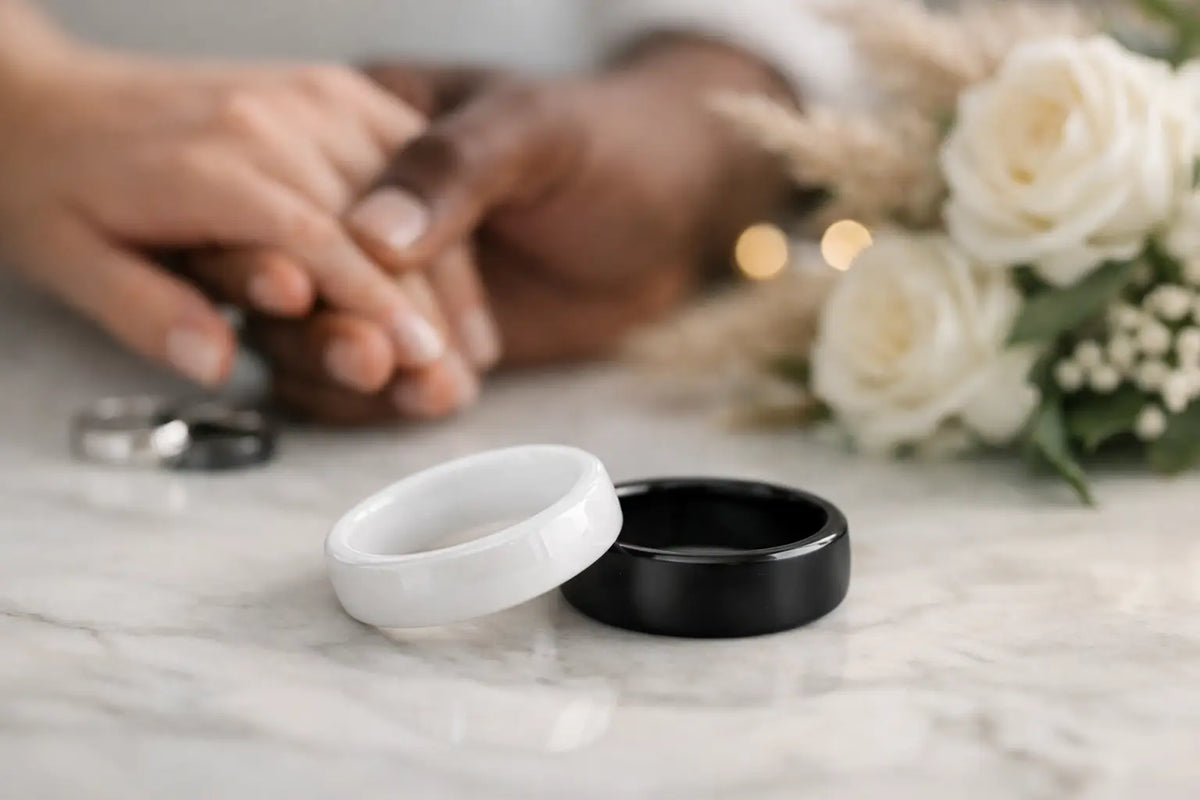
Ceramic rings are lightweight, smooth, and available in crisp black or white finishes. Tungsten has a heavier, more substantial presence. Combining them in a set gives each partner a material that matches their preference while keeping a coordinated black-and-silver, black-and-blue, or monochrome look.
The trade-off is feel: someone who likes a weighty ring may prefer tungsten, while someone who barely wants to notice their band may enjoy ceramic. Choosing two materials is not a compromise. It is often the smartest way to make a set both cohesive and comfortable.
11. Same inlay, opposite edge details
A shared inlay can look completely different depending on the edges around it. Consider matching meteorite, opal, or wood inlays with one ring featuring beveled edges and the other a flat, modern profile. One partner may prefer a high-polish rim, while the other chooses black stepped edges.
This idea is particularly useful for couples who agree on the material but have very different personal styles. The rings still look like they belong together in photos and in person, yet neither wearer has to settle for a shape they would not choose independently.
12. A wedding band and promise ring pairing
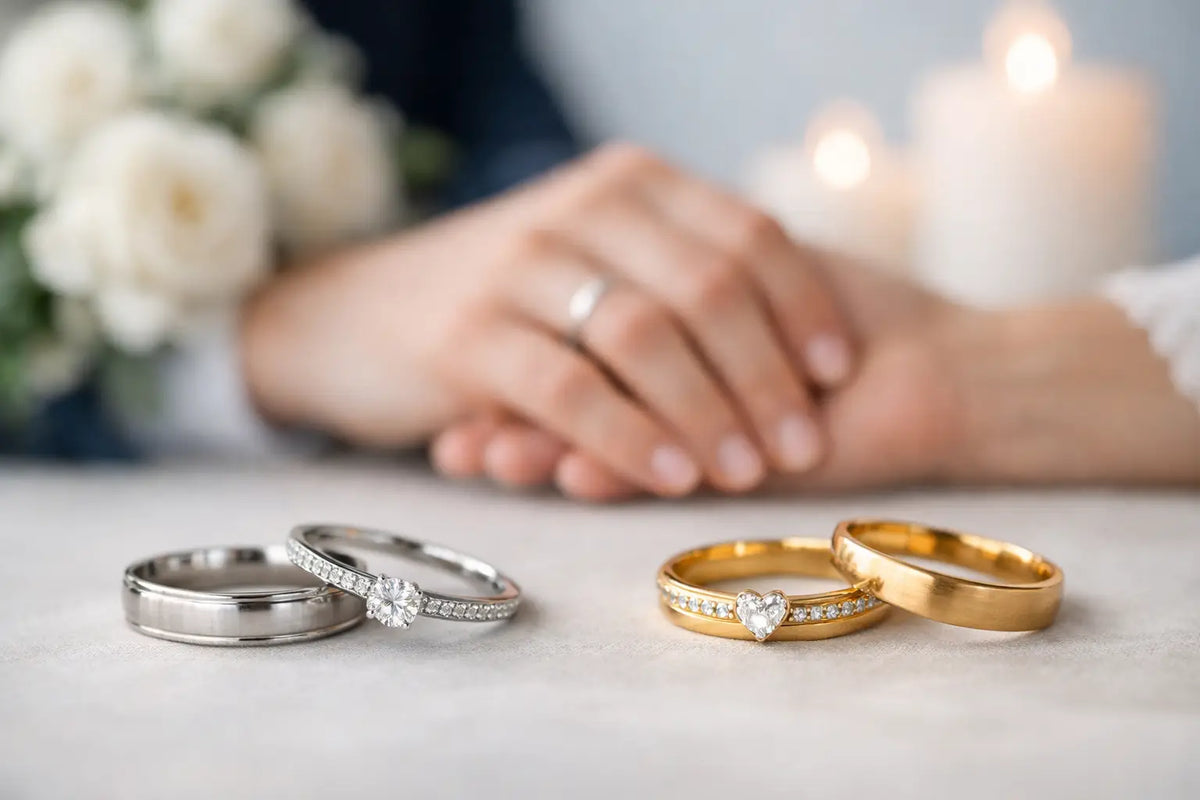
Matching sets are not reserved for weddings. A wider wedding-style band and a slim promise ring can make a meaningful pair for couples at different stages, or for someone who wants a stackable ring that coordinates with their partner's band. Use a shared opal color, meteorite accent, or glow detail to keep the connection clear.
This approach is also helpful when budgets, timelines, or ring preferences differ. Start with the piece that fits the moment, then add a coordinating ring later. A well-chosen material story can carry across years and milestones.
How to Choose a Set You Will Actually Wear
Start with the material story, then let comfort guide the final design. If you both love the idea of a rare material, meteorite, dinosaur bone, moon dust, or petrified wood can become the unifying element. If color matters more, opal, crystal, and glow inlays give you more room to personalize the look.
Next, think honestly about daily wear. Band width changes how a ring feels, especially for someone new to wearing jewelry. Comfort-fit interiors, which have gently rounded inner edges, are often easier for everyday use. A narrower ring can feel elegant and light, while a wider band makes more of a statement.
It also helps to coordinate without demanding a perfect match. Two identical rings can be right for some couples, but complementary designs usually offer more freedom. Matching materials, color, engraving, or finish details can create a clear connection while respecting two different styles.
Finally, take sizing seriously. Rings made from durable materials such as tungsten are designed for lasting wear, but they are not resized in the same way as traditional precious-metal bands. Confirming size before ordering helps make the experience feel as confident as the commitment behind the ring.
The right set should give you both that small, satisfying moment of recognition: different hands, different tastes, one story you can wear every day.