Can Meteorite Rings Rust Over Time?
A meteorite ring is one of those rare pieces that gets people to stop and ask questions. It carries real pattern, real texture, and a real connection to material that formed far beyond Earth. But once the excitement of owning one sets in, a practical question usually follows: can meteorite rings rust over time?
The honest answer is yes, they can. But that does not mean meteorite is a bad choice for a wedding band or statement ring. It means meteorite is a natural material with specific care needs, and knowing those details upfront helps you wear it with confidence instead of guesswork.
Why meteorite rings can rust over time
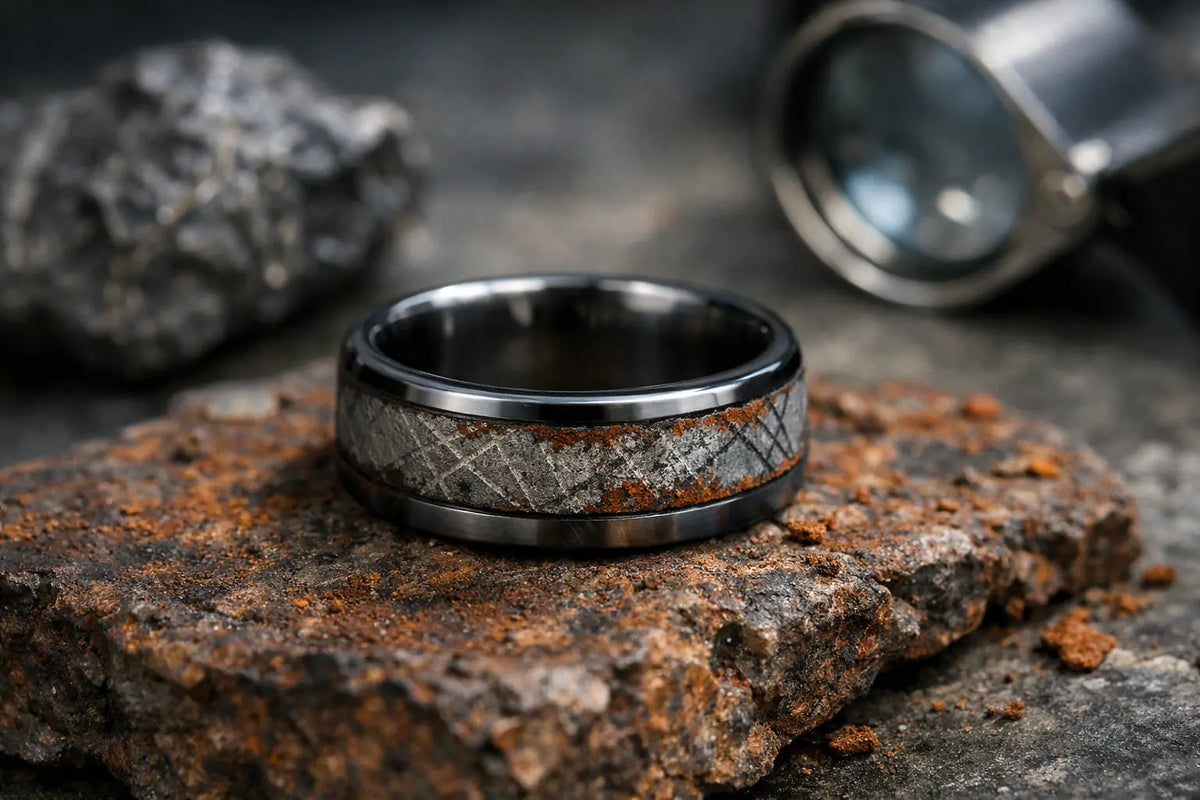
Most meteorite rings use fragments of iron meteorite, often Muonionalusta or Gibeon. These meteorites are prized for their distinctive Widmanstatten pattern, the interlocking lines that give the ring its unmistakable cosmic look. That pattern comes from an alloy rich in iron and nickel.
Iron is the key reason rust is possible. When iron is exposed to moisture, humidity, sweat, and oxygen, oxidation can happen. In plain terms, that means the meteorite portion of the ring can develop rust if it is not properly protected or if that protection wears down over time.
This catches some shoppers off guard because they are comparing meteorite to materials like tungsten or ceramic, which are chosen partly for their low-maintenance durability. Meteorite is different. It is less about being indestructible and more about wearing something genuinely rare and visually alive.
Does every meteorite ring rust?
Not necessarily. A well-made meteorite ring is usually stabilized, sealed, or coated to reduce exposure to moisture. The metal around it also matters. Many meteorite designs use a strong base like tungsten, which adds structure and everyday durability, while the meteorite sits as an inlay or sleeve.
That construction makes a big difference. If the meteorite is carefully set and professionally sealed, the ring can hold up beautifully with normal wear. If the sealant breaks down, the ring is exposed to frequent water, or the piece is stored badly, rust becomes more likely.
So the better answer is this: meteorite rings can rust over time, but the risk depends on craftsmanship, protective finishing, and how the ring is worn.
What makes rust more likely?
Water is the obvious one, but it is not the only factor. Repeated exposure to handwashing, showers, swimming pools, hot tubs, and sweat can all put stress on the meteorite section. High humidity matters too, especially if the ring is stored in a damp bathroom or left in a closed space after getting wet.
Chemicals can also speed things up. Soap residue, cleaning products, chlorine, and saltwater are especially rough on specialty materials. Even body chemistry plays a role. Some people naturally have more acidic skin or perspiration, and that can affect how materials age.
This is why two people can own similar meteorite rings and have very different experiences. One wears it mostly in dry conditions and removes it before water exposure. The other keeps it on at the gym, in the shower, and at the beach. Same material, different outcome.
How quality craftsmanship helps
This is where shopping the ring, not just the material, really matters. A meteorite ring is only as dependable as the way it was made. Clean inlay work, a secure setting, and a proper protective finish all help defend against oxidation.
Handmade rings often have an advantage here because the maker is paying close attention to how different materials behave together. Meteorite is not a plug-and-play inlay. It needs careful handling, precise fitting, and finishing that respects both its beauty and its limitations.
That is one reason brands that specialize in unconventional materials tend to inspire more confidence. They are not treating meteorite like a novelty add-on. They are building around its personality.
Can meteorite rings rust over time if they have a coating?
Yes, although the timeline is usually much better with a good coating than without one. Protective coatings are helpful, not magical. Over months and years, everyday wear can create micro-abrasions. If the ring gets knocked around often or exposed to water constantly, that protective barrier can weaken.
Think of the coating as a rain jacket, not permanent armor. It does a lot of good work, but it still needs sensible care behind it.
The upside is that minor surface issues are often manageable if caught early. A ring may need refinishing, resealing, or professional cleaning rather than full replacement. That is another reason to buy from a seller that understands aftercare and gives clear guidance instead of vague promises.
Signs your meteorite ring may be developing rust
Rust does not always arrive as dramatic orange patches right away. Sometimes it starts subtly. You might notice slight discoloration in the meteorite pattern, a duller surface, small reddish-brown spots, or a rougher feel in one area.
If you spot any of that, it is smart to stop wearing the ring in wet conditions and have it assessed sooner rather than later. Early intervention is much easier than trying to reverse deeper oxidation.
A lot of people make the mistake of scrubbing aggressively when they see a change in the surface. That can do more harm than good, especially if it damages the finish protecting the meteorite. Specialty materials respond best to gentle care.
How to keep a meteorite ring from rusting
Daily habits matter more than people think. Take the ring off before showering, swimming, washing dishes, or using cleaning products. If your hands get sweaty during workouts or outdoor work, it is worth removing the ring first.
When you are not wearing it, store it somewhere dry. A soft ring box or fabric-lined case is ideal, and a low-humidity environment is better than a bathroom shelf. If the ring does get wet, dry it promptly and thoroughly.
It also helps to treat meteorite as a specialty ring rather than a zero-maintenance band. Some people are happy to do that because the look is so distinctive. Others would rather choose a material they never have to think about. Neither approach is wrong. It just comes down to what kind of ownership experience you want.
Is meteorite still a good choice for a wedding band?
For a lot of couples, absolutely. Meteorite has real emotional pull. It feels symbolic, unusual, and memorable in a way that traditional materials often do not. If you love the story of wearing something ancient, rare, and literally out of this world, meteorite delivers that better than almost anything else.
The trade-off is maintenance. If you want a ring you can wear in every condition without much thought, tungsten, ceramic, or Damascus steel may feel easier. If you want a wedding band with character and you do not mind a little extra care, meteorite can be incredibly rewarding.
That is the best way to think about it. This is not a question of good versus bad. It is a question of fit. The right ring matches both your style and your real-life habits.
Who should and should not choose meteorite
Meteorite tends to be a great fit for someone who values rarity, story, and texture as much as durability. It is especially appealing for people who want their ring to feel different from standard jewelry store options. If that sounds like you, the material can feel deeply personal.
It may be less ideal if you work with water constantly, spend a lot of time in humid or outdoor conditions, or know you are unlikely to remove your ring during hands-on activities. In those cases, you might still love the meteorite look, but it is worth considering designs where meteorite is paired with highly durable materials and finished for better protection.
At Decazi, that balance between standout materials and wearable design is a big part of the appeal. The goal is not just to create a conversation piece. It is to create a ring you can feel good about owning.
What to remember before you buy
If you are asking can meteorite rings rust over time, you are asking the right question. It means you care about how the ring will actually live with you, not just how it looks in a photo.
Meteorite can rust because it contains iron. That is simply part of the material's nature. But a well-crafted ring, a solid protective finish, and smart everyday care can go a long way toward keeping it beautiful.
The best meteorite ring is not the one that promises impossible perfection. It is the one that tells the truth about the material and still makes you want to wear it every day. If you love the idea of a ring with cosmic history and unmistakable pattern, a little mindfulness is a small price to pay.