Dinosaur Bone Versus Meteorite Rings: Which Fits?
A ring can say more than “I do.” It can carry a fragment of deep time, a connection to the cosmos, or both. When choosing dinosaur bone versus meteorite rings, the real question is not which material is more impressive. Both are. It is which story, look, and daily-wear routine feels most like the person who will wear it.
Dinosaur bone brings earthy color and a fossilized history measured in millions of years. Meteorite brings an unmistakably celestial character, often with metallic patterns formed long before our planet existed. For a wedding band, anniversary gift, or promise ring, that difference can make the choice feel wonderfully personal.
Dinosaur Bone Versus Meteorite Rings at a Glance
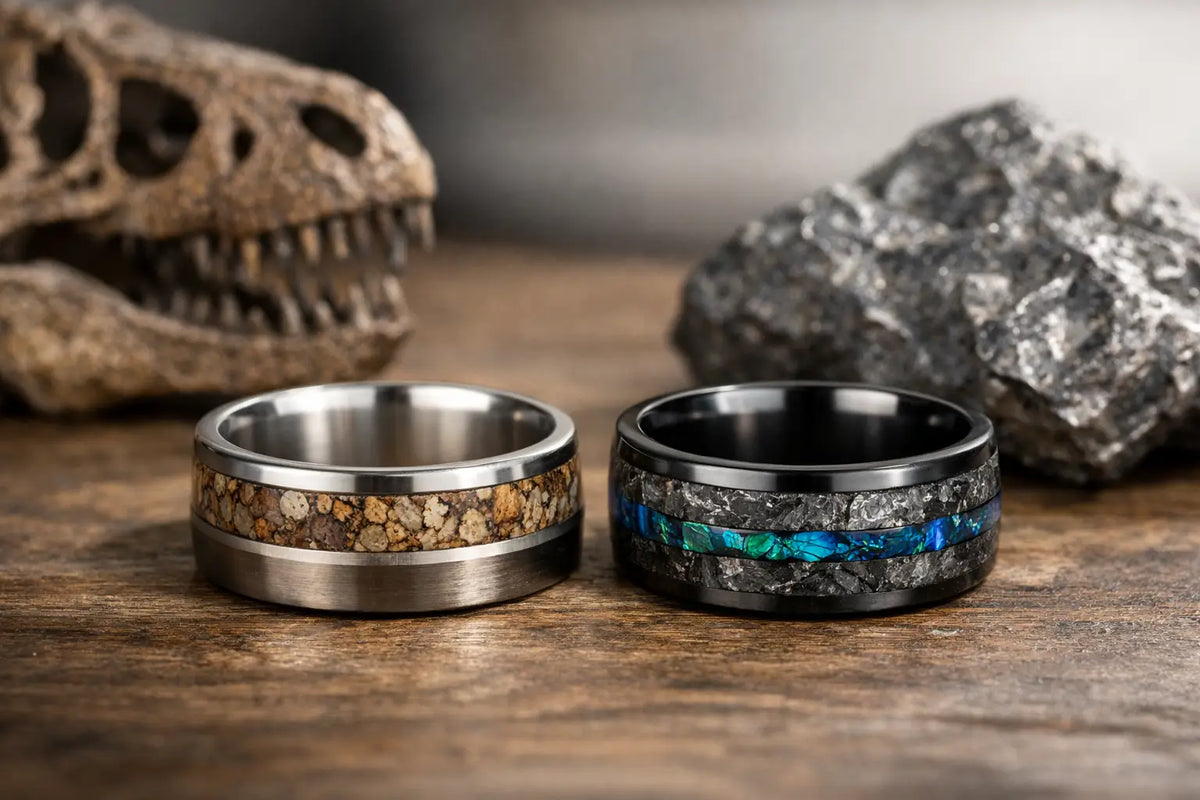
Dinosaur bone rings are usually made with genuine fossilized bone that has mineralized over time. The original bone structure is replaced or filled with minerals, often creating a gemstone-like material with intricate cells, lines, and natural variation. Depending on the piece, the inlay may show shades of red, brown, black, cream, green, or blue.
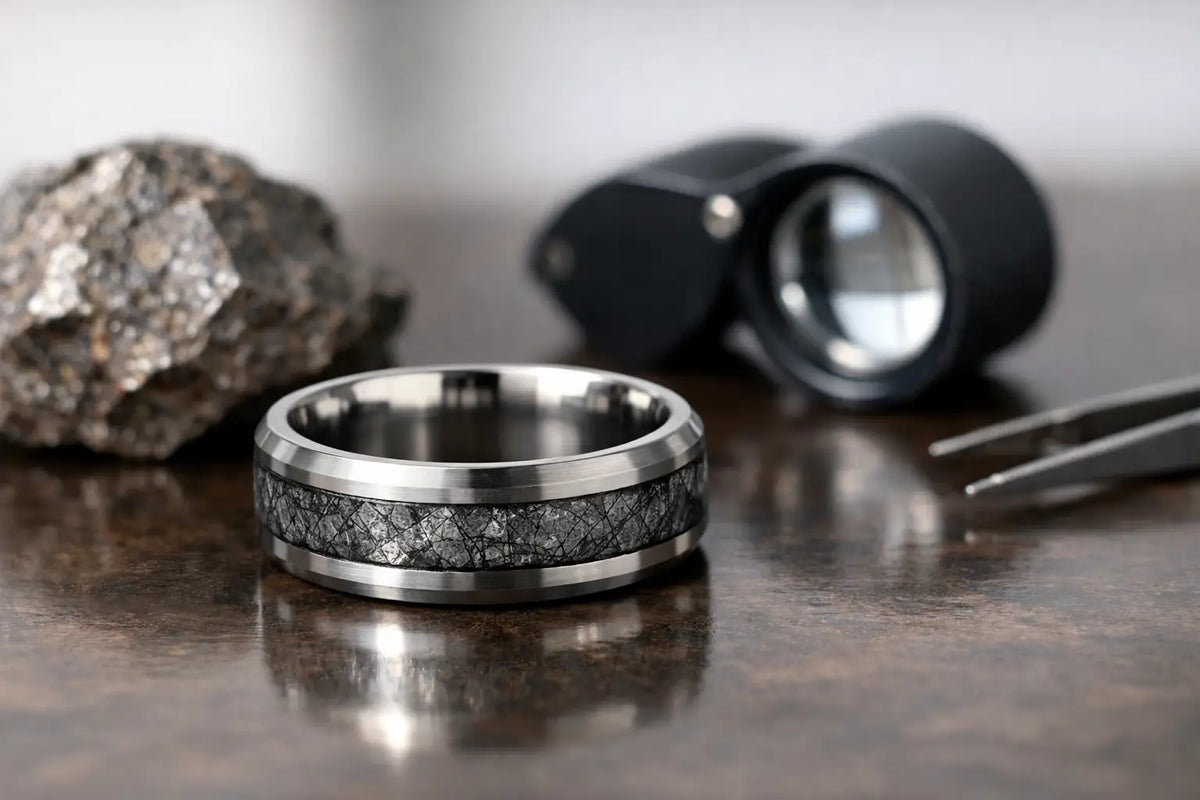
Meteorite rings commonly feature iron-nickel meteorite, frequently recognized by its angular Widmanstatten pattern. This natural crystalline design forms as metal cools extremely slowly in space. It is not stamped on or copied by a machine, which gives each genuine meteorite inlay an individual look.
Neither material is “better” across the board. Dinosaur bone tends to suit someone drawn to warm, organic color and ancient-earth symbolism. Meteorite tends to suit someone who likes a cooler palette, metallic detail, and an unmistakable space-inspired story.
The Story You Wear
A dinosaur bone ring is a conversation starter in the most grounded sense. It connects the wearer to prehistoric life, natural transformation, and the remarkable passage of time. For someone who loves fossils, geology, hiking, natural history, or the idea that beauty can be preserved through change, dinosaur bone has real emotional pull.
A meteorite ring feels more cosmic. Its material traveled through space before becoming part of a wearable piece of jewelry. That makes it a fitting choice for couples who want a symbol of a love that feels rare, unlikely, and bigger than ordinary routines. It also appeals to science-fiction fans, stargazers, and anyone whose style leans dark, modern, or celestial.
The symbolism can be especially meaningful for wedding bands. Dinosaur bone suggests endurance through eras. Meteorite suggests a once-in-a-lifetime collision of timing and circumstance. There is no wrong interpretation, and that is part of the appeal. The best ring story is the one that feels true to your relationship.
Color, Pattern, and Everyday Style
Dinosaur bone is usually the more colorful choice. Its cellular pattern can look almost mosaic-like, with mineral deposits creating contrast from one section to another. No two fossil inlays are identical, so a product photo should be treated as a guide to the style rather than a promise of an exact pattern or color placement.
This organic variation pairs beautifully with black tungsten, brushed silver-tone tungsten, Damascus steel, or warm rose-gold-tone accents. A darker ring base can make colorful dinosaur bone stand out, while a lighter metal can make the inlay feel more subtle and refined. It is a strong option for someone who wants their ring to feel like wearable art rather than a conventional band.
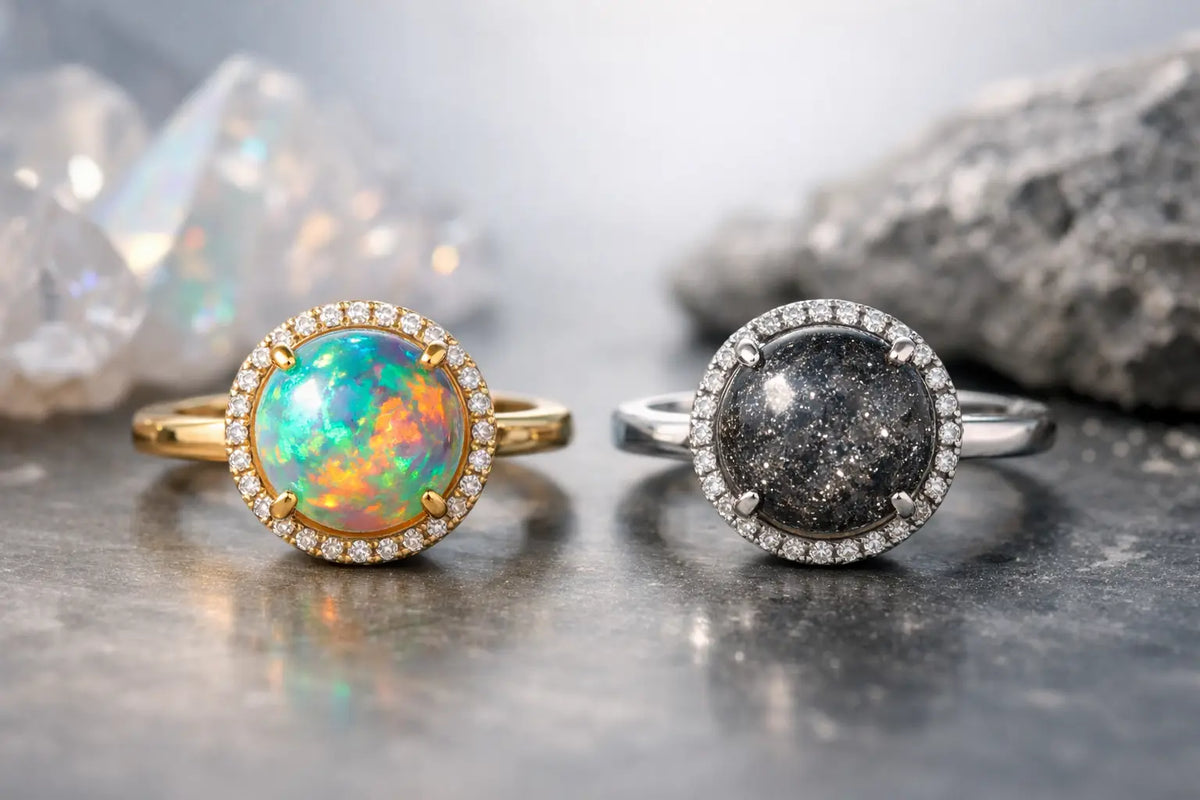
Meteorite is typically more restrained in color but striking in texture. Its silvery gray surface can show bold geometric lines that catch the light differently as the ring moves. It works naturally with black tungsten, polished tungsten, ceramic, carbon fiber, and moon dust details. The result often feels sleek, architectural, and quietly dramatic.
If you wear mostly black, gray, silver, navy, or cool-toned clothing, meteorite may blend easily into your wardrobe while still getting noticed up close. If you gravitate toward leather, denim, earthy colors, gemstones, or expressive accessories, dinosaur bone may feel more immediately at home. Of course, personal style is not a rulebook. A colorful fossil inlay can look incredible with a minimalist wardrobe, and a meteorite band can be the perfect contrast to a warm, vintage-inspired look.
Durability Depends on the Whole Ring
When shoppers compare dinosaur bone versus meteorite rings, durability deserves a more detailed answer than a simple material ranking. The ring’s base, setting method, and your lifestyle matter just as much as the inlay itself.
Tungsten is popular for statement wedding bands because it is highly scratch resistant and has a satisfying, substantial feel. Ceramic offers a lightweight, smooth alternative with excellent resistance to everyday scratching. Both can provide a durable frame for detailed inlays when the ring is carefully handmade and the material is properly protected.
Dinosaur bone is a natural fossil material, not solid metal. It should be treated with respect, especially around hard impacts. Meteorite is metal, but it is not maintenance-free simply because it is metal. Iron-bearing meteorite can react to moisture over time if it is repeatedly exposed to water, sweat, chemicals, or damp storage conditions.
For most people, either ring can be a reliable everyday piece with sensible care. But if you work with tools, lift heavy equipment, climb, do mechanical work, or regularly use harsh cleaning products, take the ring off first. That habit protects the inlay, the ring edge, and your fingers.
Care Requirements: Where the Difference Matters
Dinosaur bone rings generally benefit from gentle cleaning. A soft, dry cloth is often enough for everyday upkeep. If a ring needs more attention, follow the maker’s specific care instructions rather than soaking it or using abrasive cleaners. Avoid ultrasonic cleaners unless the jewelry maker explicitly says the exact ring construction is safe for them.
Meteorite rings require a little more vigilance around moisture. Remove them before swimming, showering, washing dishes, using household cleaners, or spending extended time in a hot tub. Dry the ring promptly if it gets wet, and store it in a dry place. Some meteorite inlays are sealed or treated for added protection, but careful wear is still the safest approach.
This does not mean meteorite is too delicate for daily life. It means it is a meaningful natural material with needs of its own. Many people enjoy that small ritual of care, just as they do with a favorite watch, leather boots, or heirloom jewelry. If you know you prefer a ring you never have to think about removing near water, dinosaur bone in a well-protected setting may be the easier fit.
Authenticity and What to Ask Before You Buy
Because these materials are special, clarity matters. A trustworthy seller should describe what the ring contains in direct language. “Dinosaur bone” should refer to genuine fossilized dinosaur bone, while “meteorite” should identify genuine meteorite rather than a printed pattern or a meteorite-inspired finish.
Ask how the inlay is set and whether it is sealed. Confirm the ring’s base material, width, fit style, and care guidance. For meteorite, it is reasonable to ask about moisture protection and recommended maintenance. For dinosaur bone, ask about expected color variation, since natural fossil material will never be perfectly uniform.
Photos, customer reviews, and clear sizing support also matter when ordering online. A handmade ring should feel intentional, not generic. At Decazi, the appeal of unconventional materials comes from pairing their natural character with a wearable, carefully finished design.
Which Ring Is Right for You?
Choose dinosaur bone if you want color, fossil texture, and a connection to the ancient natural world. It is especially compelling for someone who wants a ring no one else will have in exactly the same pattern. It can feel bold, earthy, artistic, and deeply personal.
Choose meteorite if you want a cooler, metallic look with a cosmic origin story. It is ideal for someone who likes geometric pattern, dark modern styling, and jewelry with a rare sense of scale. Just be prepared to keep it dry and avoid unnecessary chemical exposure.
For couples, the answer can also be both. Matching bands do not need identical materials to feel connected. A dinosaur bone ring and a meteorite ring can share the same tungsten base, profile, or inlay color while letting each person wear the story that speaks to them.
The right choice is the one you will still want to turn over in your hand years from now. Pick the material that makes you pause, smile, and think, “That one feels like us.”