
Artikel: Guide to Comfort Fit Bands for Everyday Wear
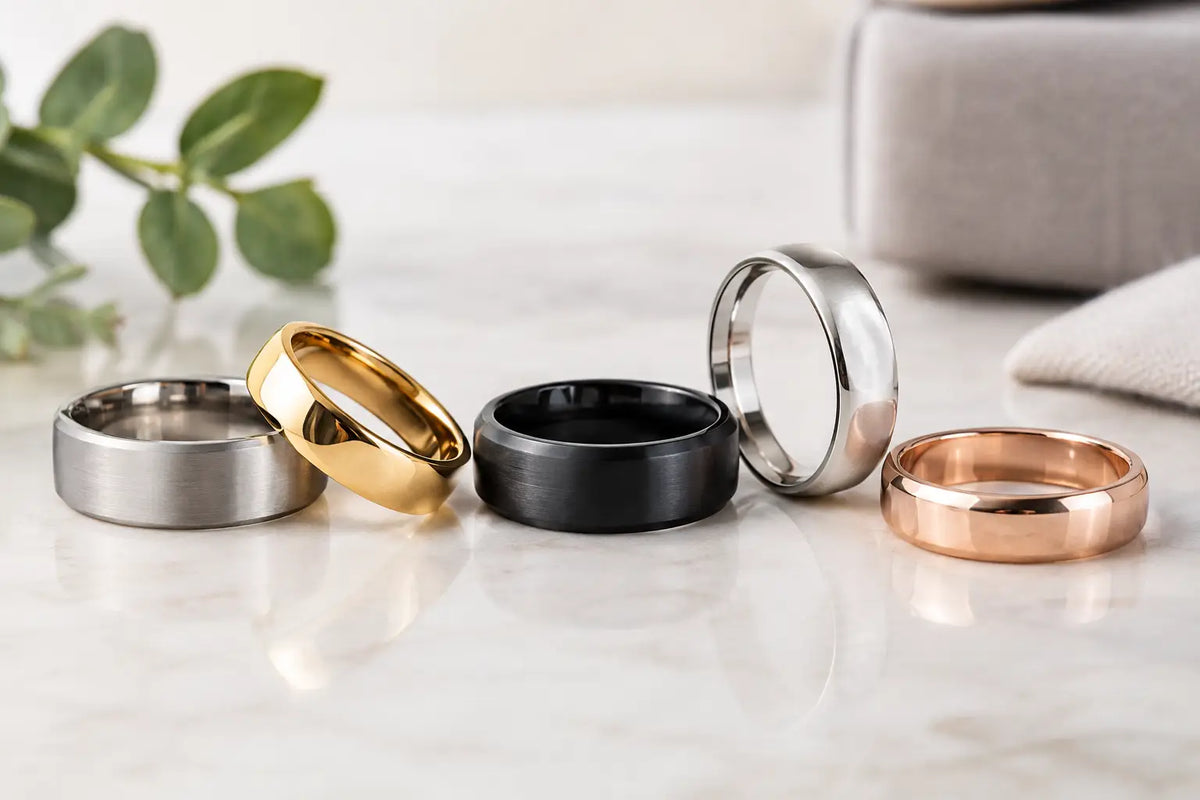
Guide to Comfort Fit Bands for Everyday Wear
A ring can carry a remarkable story - a wedding date, a shared promise, a piece of meteorite that traveled through space, or an inlay made from ancient dinosaur bone. But even the most meaningful band needs to feel good at 8 a.m., 8 p.m., and every ordinary moment in between. This guide to comfort fit bands explains what gives these rings their easy-wearing feel and how to choose one with confidence.
What Is a Comfort Fit Band?
A comfort fit band has a gently rounded interior rather than a completely flat inner surface. Instead of meeting the finger with a sharp, squared edge, the ring curves slightly inward at both sides. The result is less contact with the finger and a smoother sensation as the ring moves over the knuckle.
The difference can sound small until you wear a ring every day. A traditional flat-fit band may feel secure and familiar, especially in a thin width. A comfort fit band often feels less restrictive, particularly in wider designs or substantial materials such as tungsten and ceramic.
The outside of the ring can still be anything but ordinary. A comfort-fit interior works beautifully with polished black ceramic, brushed tungsten, faceted edges, meteorite textures, opal inlays, glow details, and other statement-making materials. It is a functional design feature, not a visual style category.
Why Comfort Fit Matters for Daily Wear
Wedding bands, promise rings, and anniversary rings are often worn through commutes, workouts, dinners, travel, and quiet weekends at home. Your fingers also change slightly over the course of a day due to temperature, activity, hydration, and natural swelling. A well-made rounded interior gives the ring a little more forgiveness during those normal shifts.
Many people choose comfort fit because they are not used to wearing jewelry. If you have never worn a ring daily, a hard inner edge can make you more aware of it. The softer interior profile reduces that feeling without making the ring look less bold from the outside.
Comfort fit is especially worth considering if you are choosing a wider band. As width increases, more metal or ceramic touches the finger. A 4 mm band and an 8 mm band can feel very different even when they have the same size stamped inside. The rounded interior helps the wider option sit more naturally.
That said, comfort fit is not a cure for incorrect sizing. A ring that is too tight will still feel too tight, and one that is too loose may still spin. The goal is a band that moves over the knuckle with gentle resistance, then rests securely at the base of the finger.
Comfort Fit Bands vs. Flat-Fit Bands
Neither profile is automatically better. The right choice depends on the look you love, the width you want, and how you prefer a ring to feel.
A flat-fit band has a flatter inner wall and typically more direct contact with the finger. Some people like that grounded, close-fitting sensation. It can also suit very slim bands where the difference in interior shape is less noticeable.
Comfort fit bands have a more rounded inner edge, so they may feel easier to put on and take off. They are a popular choice for people selecting 6 mm, 8 mm, or wider wedding bands, as well as anyone who works with their hands or experiences minor changes in finger size throughout the day.
There is one sizing detail to keep in mind: comfort fit rings can sometimes feel roomier than flat-fit rings in the same labeled size. Do not assume that your old ring size will translate perfectly across profiles, widths, and materials. Measure for the specific band you plan to wear.
How to Find the Right Comfort Fit Ring Size
Online ring shopping should feel exciting, not uncertain. The most reliable method is to have your finger measured by a jeweler using a ring sizer, then mention that you are buying a comfort-fit band if possible. If you are measuring at home, use a proper ring-sizing tool rather than string, paper, or an app alone whenever you can.
Measure later in the day, when fingers are usually closer to their normal fuller size. Avoid measuring immediately after strenuous exercise, a very salty meal, or exposure to extreme heat or cold. Those conditions can temporarily affect your result.
Consider Width Before You Order
A wider ring generally needs more room than a narrow ring because it covers more of the finger. If you normally wear a slim 3 mm ring but are ordering an 8 mm tungsten wedding band, your ideal size may change. This is one reason a band’s width should be decided before finalizing the size.
If you are between sizes, the answer depends on the ring’s width, your knuckle shape, and your usual swelling. A slightly roomier fit may be more comfortable for a broad band or prominent knuckle, while a slimmer band may need a closer fit to avoid spinning. When in doubt, ask for guidance based on the exact style rather than using a one-size-fits-all rule.
Think About Your Knuckle
Some fingers have a knuckle that is significantly larger than the base of the finger. In that case, the ring needs to pass over the knuckle without becoming so large that it rotates freely afterward. A comfort-fit interior can make this process feel smoother, but precise sizing remains essential.
For rings made from tungsten, ceramic, or other rigid materials, sizing deserves extra care. These materials are chosen for their strength, distinctive appearance, and durability, but they generally cannot be resized like traditional precious-metal rings. Confirming your size before production protects both the experience and the finished piece.
Materials and Details That Pair Well With Comfort Fit
Comfort is about more than the interior curve. The material, edges, finish, and inlay design all shape how a band feels during everyday wear.
Tungsten is a favorite for couples who want a substantial, scratch-resistant feel and a clean modern profile. It can support polished, brushed, hammered, and beveled looks, making it a strong foundation for bold inlays such as meteorite, crushed opal, wood, or glowing materials. Its satisfying weight is part of its appeal, though people who prefer a nearly weightless ring may favor ceramic instead.
Ceramic is lightweight, smooth, and available in dramatic colors such as black or white. It can be an appealing option for someone who wants a statement ring that feels less noticeable on the hand. Like tungsten, ceramic should be sized carefully because it is not typically adjustable after it is made.
Inlay bands add visual depth and personal meaning. A strip of galaxy-inspired meteorite, moon dust, fossilized dinosaur bone, vivid opal, or petrified wood turns a practical everyday band into a conversation piece. For daily wear, inspect the design rather than focusing only on the material name. A well-finished ring should have smooth transitions where metal meets inlay, with no rough spots that catch on skin or fabric.
Beveled outer edges can also make a wider ring look more refined and can reduce the visual bulk of a substantial band. They do not replace a comfort-fit interior, but together they create a ring that feels considered from every angle.
Choosing a Width That Feels Like You
Band width affects style as much as comfort. Narrow bands, often around 2 mm to 4 mm, can look delicate, understated, and easy to stack. Mid-width bands around 5 mm to 6 mm offer a versatile balance. Wider bands from 7 mm upward make more room for meteorite patterns, colorful inlays, and meaningful materials with natural variation.
There is no rule that says a certain hand needs a certain width. Try on a few widths if you can, or use a strip of paper cut to the approximate width to get a visual sense of proportion. Consider your lifestyle too. Someone who wants an understated ring for a hands-on job may choose a slimmer, low-profile design, while someone who wants their wedding band to be the centerpiece of their look may prefer a wider inlay band.
The best choice is the one you will be glad to reach for every morning. At Decazi, handcrafted bands are made to tell a story, whether that story is cosmic, geological, romantic, or entirely your own. A comfort-fit interior helps make sure that story is also easy to wear.
Care Habits That Protect Everyday Comfort
Keep your band clean, especially around textured surfaces and inlay edges. Mild soap, warm water, and a soft cloth are usually enough for routine care. Dry the ring thoroughly before putting it back on.
Remove your ring for activities that create a real risk of impact, crushing, or chemical exposure. Even durable materials deserve sensible care, and protecting an inlay ring during heavy lifting, home repairs, or harsh cleaning helps preserve its finish. If your finger becomes swollen, do not force the ring off. Cool your hand, elevate it, and give the swelling time to settle.
A comfort fit band should never demand your attention all day. Choose the profile, size, width, and material that suit your life, then let the ring do what meaningful jewelry does best: quietly remind you of what matters.

