Top Durable Alternative Wedding Bands to Consider
A wedding band should feel as natural on a grocery run as it does during the ceremony. That is why the top durable alternative wedding bands are not just chosen for an unusual look. They are chosen because they can carry a personal story through workdays, travel, celebrations, and all the ordinary moments that make a marriage real.
Traditional gold and platinum will always have their place, but they are not the only meaningful options. Tungsten, ceramic, Damascus steel, meteorite, and carefully protected natural inlays offer a completely different kind of appeal: distinctive texture, memorable materials, and a design that feels made for one person rather than everyone.
What Makes an Alternative Wedding Band Durable?
Durability is more nuanced than simply picking the hardest material. A band needs to stand up to the way you actually live, but it should also suit your comfort, maintenance preferences, and expectations around sizing. Some materials resist everyday scratching beautifully but can crack under a sharp impact. Others can develop character over time and need a little more care.
The most successful alternative bands combine a strong outer structure with a thoughtfully finished interior and secure inlay work. A ring may feature a tungsten or ceramic base for everyday resilience, then use meteorite, opal, dinosaur bone, petrified wood, or crushed crystal as a protected design element. That pairing gives you the visual story of rare materials without asking the inlay to do all the heavy lifting.
For many couples, the best choice is not the material with the most impressive technical claim. It is the one that fits their lifestyle and still makes them pause every time they look at their hand.
Top Durable Alternative Wedding Bands by Material
Tungsten: Best for scratch resistance and weight
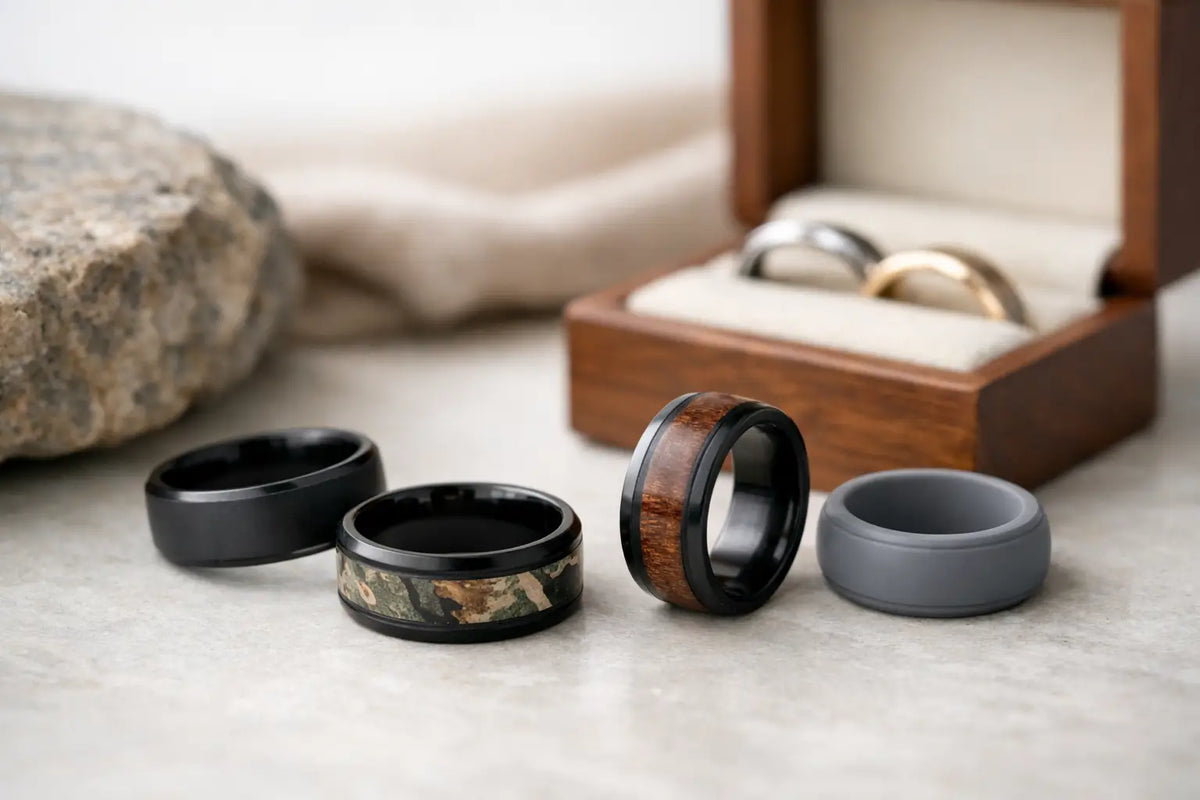
Tungsten is a favorite for people who want a band that feels substantial. It has a satisfying weight, a clean modern finish, and excellent resistance to everyday surface scratches. Matte black, polished silver-tone, brushed gray, and faceted designs all give tungsten a strong visual presence without making it feel overly formal.
It is especially appealing for hands-on lifestyles, frequent travelers, and anyone who does not want to baby their ring. Tungsten also works beautifully as the foundation for colorful opal, galaxy-inspired glow material, wood, or meteorite inlays.
There is one important trade-off: tungsten is extremely hard, but it is not bendable. A hard strike against a sharp surface can cause it to crack or break rather than dent. It also cannot be resized, so confirming your ring size before ordering matters. For most wearers, that is a worthwhile exchange for its scratch-resistant finish and long-lasting structure.
Ceramic: Best for a lightweight, modern look
Ceramic wedding bands are sleek, lightweight, and pleasantly smooth to wear. Black ceramic is particularly popular because it creates a bold, uninterrupted field of color that makes bright inlays, moon dust details, or polished edges stand out.
Unlike plated rings, quality ceramic gets its color from the material itself rather than a surface coating that can wear away. It is also highly resistant to scratches and does not tarnish. For someone who prefers a lighter ring than tungsten but still wants an alternative material with a crisp contemporary feel, ceramic is a compelling option.
Like tungsten, ceramic is not a resizeable material and can be brittle under a severe impact. It is a great fit for everyday wear, but it is wise to remove any ring before activities involving heavy tools, climbing, contact sports, or substantial force on the hands.
Damascus Steel: Best for one-of-a-kind pattern
Damascus steel has an unmistakable layered pattern, with flowing lines that make every band feel slightly different. Its appeal is not about flawless uniformity. It is about movement, depth, and the handmade character of the steel.
A Damascus wedding band can be worn on its own for a rugged, refined look, or paired with an inlay of meteorite, whiskey barrel wood, opal, or crushed stone. It is a strong option for someone drawn to craftsmanship and texture rather than a flat, polished finish.
Steel requires more awareness than tungsten or ceramic. Depending on its finish and care, Damascus steel may need to be kept dry and cleaned after exposure to saltwater, chemicals, or prolonged moisture. That small bit of attention is part of owning a material with such visible character. If you want a band that looks even more personal with time, it can be an excellent choice.
Meteorite Inlay: Best for a story beyond Earth
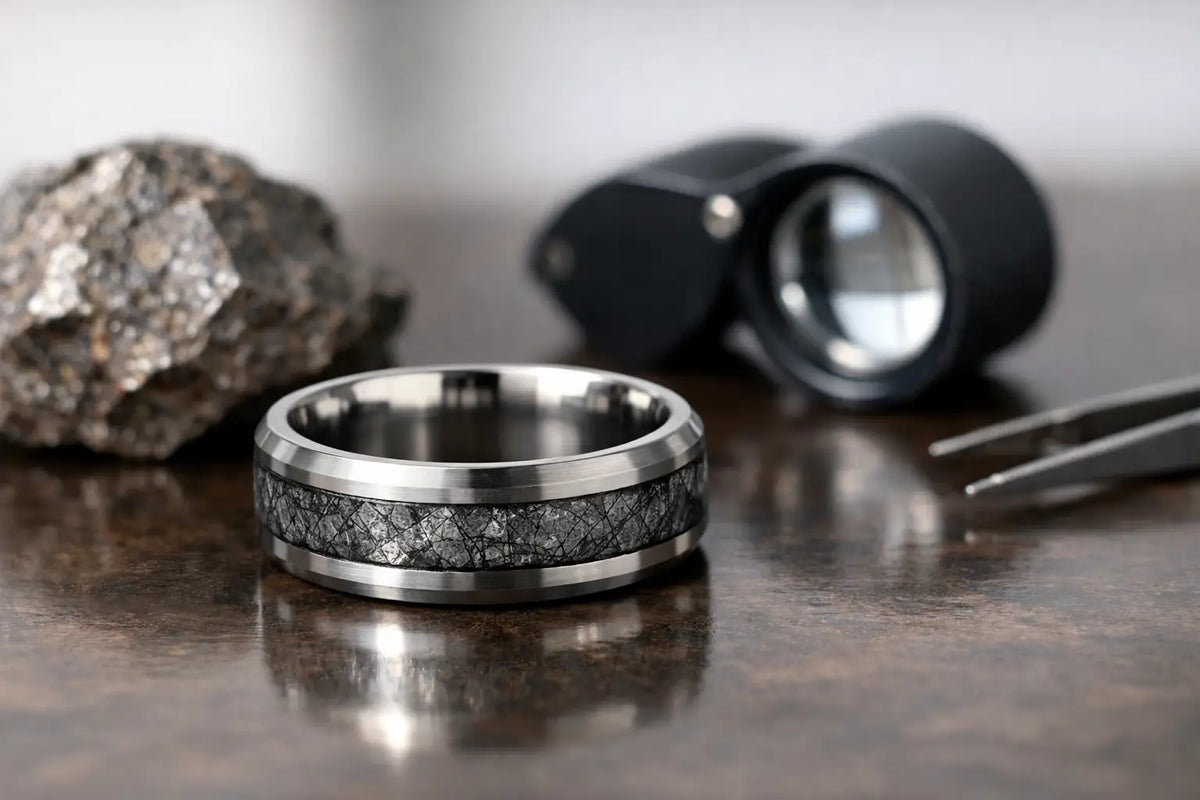
A meteorite wedding band is hard to ignore. The material formed beyond our planet, traveled through space, and now becomes part of a piece worn every day. Its naturally occurring crystalline pattern gives it a depth that cannot be copied by a standard engraved design.
Meteorite is often most practical as an inlay set into a durable band base. This construction lets you enjoy its rare appearance while supporting it with a material selected for everyday wear. It is an especially meaningful choice for couples who share a love of science, stargazing, travel, or the idea that their relationship is truly one of a kind.
Because authentic meteorite contains iron, it should be treated with care around prolonged water exposure, chlorine, and harsh cleaning products. A quick dry after handwashing and sensible storage go a long way. The result is worth it for a ring with a story that reaches far beyond the jewelry box.
Protected Natural Inlays: Best for personal symbolism
Dinosaur bone, petrified wood, opal, crystals, and moon dust bring color and emotional weight that solid metal alone cannot offer. A fossil-based inlay can speak to a shared love of natural history. Petrified wood can represent endurance and transformation. Opal flashes with shifting color, while moon dust and glow materials create a space-inspired look that feels quietly magical.
These materials are best chosen in a well-crafted setting where the inlay is carefully sealed and supported by a durable ring body. That construction matters. Natural materials vary in hardness and can be more sensitive than metal, so the quality of the craftsmanship is just as important as the material itself.
If your priority is zero-maintenance wear, a plain tungsten or ceramic band may be the safer route. If your priority is a ring that feels deeply personal, a protected natural inlay offers a striking balance between durability and symbolism.
How to Choose a Band for Your Actual Routine
Start with your daily environment. Someone who works at a desk, enjoys weekend adventures, and wants a low-maintenance ring may love tungsten or ceramic. Someone who values a visible handmade pattern and does not mind occasional care may feel more connected to Damascus steel. For a couple who wants an object with a story, meteorite or fossil inlays can make the band feel less like an accessory and more like a keepsake.
Comfort deserves equal attention. Wider bands make a stronger statement but can feel tighter than narrow bands in the same size. Comfort-fit interiors are gently rounded on the inside, which many people prefer for all-day wear. If you are between sizes, have your finger measured at different points in the day, ideally when your hands are not especially cold or swollen.
Also consider future sizing before committing. Tungsten and ceramic rings cannot be resized, while many alternative designs are made to order in your selected size. Taking a few extra minutes to get sizing right protects the experience of receiving a handcrafted piece you are excited to wear immediately.
Care That Keeps an Alternative Band Looking Its Best
Even highly durable wedding bands benefit from simple habits. Remove your ring before using harsh chemicals, lifting heavy equipment, swimming in chlorinated pools, or working with abrasive materials. Clean it with mild soap, warm water, and a soft cloth unless the maker gives different care instructions for a specific inlay.
Store the ring separately from other jewelry when you are not wearing it. This helps preserve polished edges and protects more delicate inlay surfaces from unnecessary contact. A durable band is designed for real life, not careless treatment, and those small choices help preserve the detail that made you choose it.
At Decazi, handcrafted alternative bands are designed around that balance: expressive materials, wearable construction, and a story worth carrying. Whether you choose the grounded weight of tungsten, the clean confidence of ceramic, or a meteorite inlay that began in the stars, choose the ring that still feels unmistakably yours after the wedding day has passed.