Why Do Tungsten Rings Break? The Real Reason
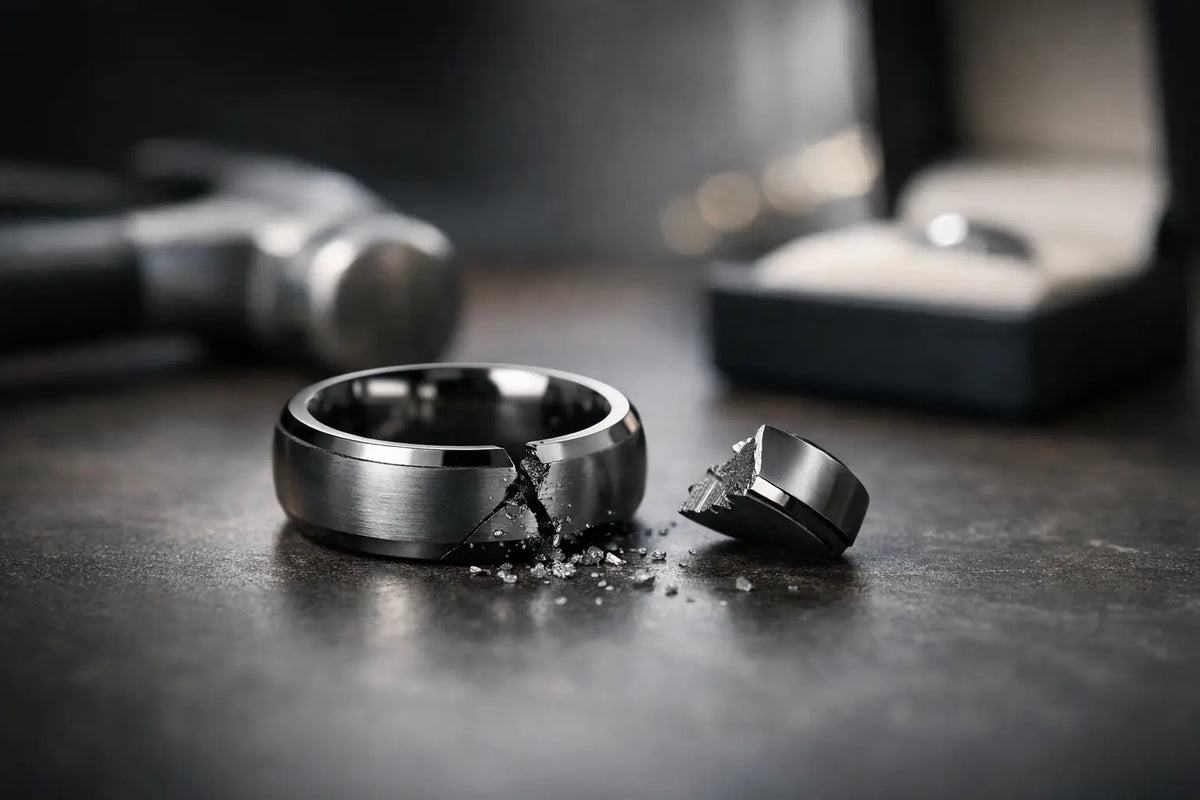
A tungsten ring can look flawless after years of daily wear, then crack after one hard drop onto a tile floor. That surprise leads many people to ask: why do tungsten rings break if tungsten is known as one of the toughest ring materials? The answer is in the difference between hardness and flexibility.
Tungsten carbide rings are exceptionally scratch-resistant, which makes them a favorite for active hands and low-maintenance wedding bands. But unlike gold, sterling silver, or platinum, tungsten does not bend under extreme force. When an impact exceeds what the material can absorb, it may chip, crack, or break instead.
That is not necessarily a defect. It is a trade-off built into the material - and one worth understanding before choosing a ring meant to carry your story every day.
Why Do Tungsten Rings Break Instead of Bend?
Jewelry-grade tungsten is usually tungsten carbide, a dense compound made by combining tungsten with carbon and a binding metal. It is remarkably hard, often far more resistant to surface scratches than traditional precious metals. Keys, countertops, and ordinary day-to-day friction are unlikely to leave the kind of wear marks that softer rings collect over time.
That same hardness comes with brittleness. Think of the difference between a steel spring and a ceramic tile. A spring can flex and return to shape. A tile resists scratching and pressure, but a sharp blow can make it fracture. Tungsten behaves more like the second example.
A gold ring might dent or bend when it takes a major hit. A tungsten ring is more likely to stay perfectly round through ordinary use, yet crack when struck at just the wrong angle with enough force. Neither response is automatically better. It depends on whether you value a ring that can be reshaped after damage or one that holds its polished shape and resists scratches for years.
The Most Common Reasons Tungsten Rings Break
A hard impact on a rigid surface
The most common cause is a sudden, concentrated impact. Dropping a tungsten band on concrete, stone, porcelain, or tile can create enough force to chip an edge or split the ring. The risk rises if the ring lands directly on its edge rather than flat against the surface.
The same can happen during hands-on work. A ring caught between heavy equipment, hit with a metal tool, or slammed against a hard corner may be exposed to forces far beyond normal daily wear. Tungsten is durable, but it is not indestructible.
Pressure from crushing or pinching
Tungsten can withstand a great deal, but it does not respond well to extreme compression or a severe pinch. Closing a car door on your hand, getting a ring caught in machinery, or applying intense force with tools can cause a fracture.
This is also why removing any ring before weightlifting, construction work, mechanical repairs, climbing, or operating equipment is a smart habit. The concern is not only protecting the ring. A ring can catch on an object and injure your finger, regardless of what material it is made from.
A sharp strike at the edge
A ring's edges are particularly vulnerable because the force of impact is concentrated in a smaller area. A beveled tungsten band can still chip if it strikes a hard surface in one precise spot. Wider designs may also experience more leverage when they hit an edge.
Small chips can sometimes remain mostly cosmetic. A visible crack, a rough edge, or a ring that has split should be treated as a sign to stop wearing it. Damaged jewelry can snag clothing or irritate skin.
Construction and material quality
Not every tungsten ring is made to the same standard. The quality of the tungsten carbide, the proportion and type of binding material, the thickness of the band, and the finishing process all influence its performance. A properly made band should feel substantial and have a consistent finish without weak-looking seams or uneven edges.
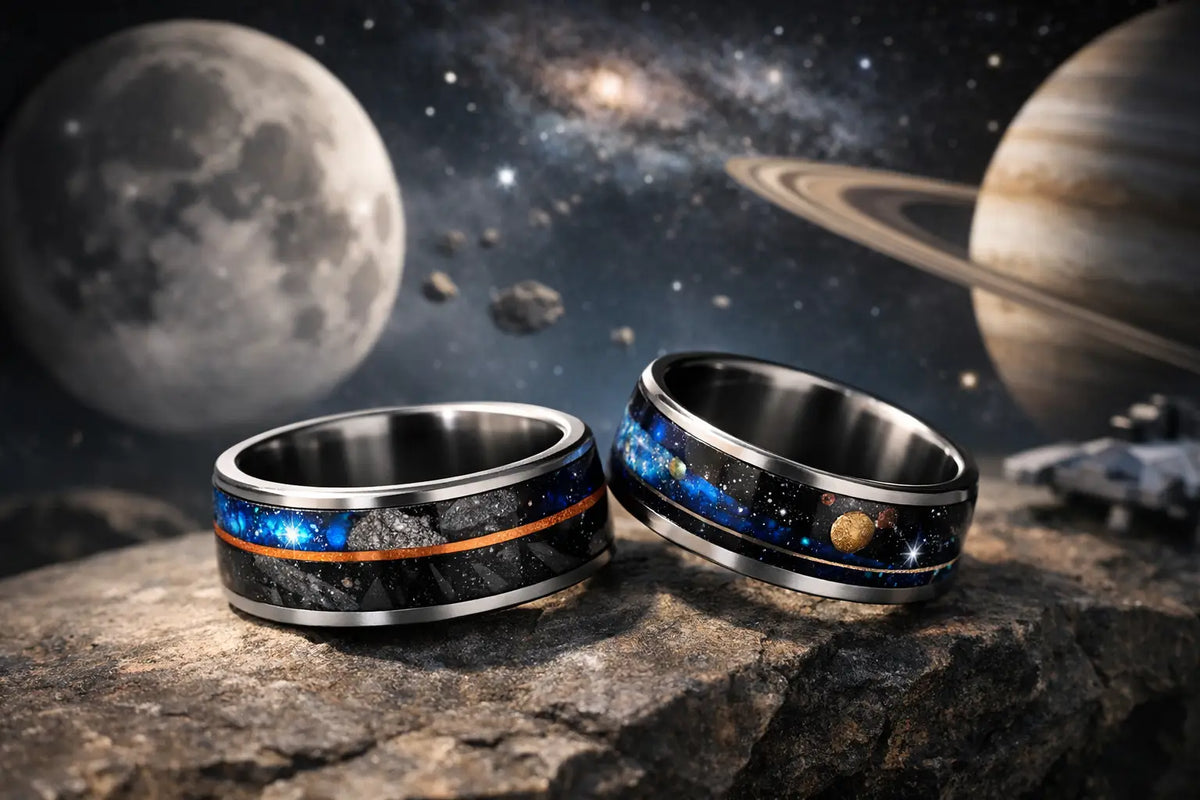
Design details matter too. Rings with meteorite, opal, wood, glow powder, crushed crystal, or other inlays pair a strong tungsten base with materials that have their own care needs. The tungsten may resist scratches beautifully, while an exposed inlay can be more sensitive to impact, chemicals, or prolonged water exposure. Handmade rings should be judged as complete pieces, not only by the hardness of their core material.
An incorrect ring size
A ring that is far too tight does not usually crack simply because it is tight. However, forcing it on or off, prying it with a hard object, or using excessive pressure to remove it can put the band at risk. More importantly, a tight ring can become uncomfortable or unsafe if your fingers swell.
Tungsten rings generally cannot be resized in the way gold or platinum bands can. Getting the size right before ordering is one of the best forms of protection for both your comfort and the life of the ring. If you are between sizes, band width, knuckle size, climate, and daily swelling all deserve consideration.
What Tungsten Rings Handle Very Well
It helps to keep the risk in perspective. Tungsten rings are not delicate jewelry. For many people, they are an excellent everyday choice precisely because they resist the wear that makes softer metals look aged quickly.
A well-made tungsten band typically handles routine handwashing, office work, errands, cooking, and ordinary contact with household surfaces very well. Its polish can remain strikingly crisp, and darker finishes or distinctive inlays can give a wedding band a bold, personal look without requiring constant polishing.
The material is especially appealing to people who want a ring that feels solid and substantial. Tungsten has noticeable weight, which many wearers associate with quality and permanence. For a wedding band, promise ring, or anniversary gift, that physical presence can be part of the meaning.
How to Protect a Tungsten Wedding Band
Tungsten care is simple, but it benefits from common sense. Take the ring off before activities where your hand could be crushed, pinched, or hit hard. Store it separately from other jewelry when you are not wearing it, ideally in a soft pouch or lined box, so a drop does not turn into a chipped edge.
Clean a plain tungsten ring with mild soap, warm water, and a soft cloth. Avoid harsh cleaners, abrasive pads, and chemical exposure, especially if your design includes opal, wood, meteorite, glow material, or a handcrafted inlay. Those accent materials may need gentler care than the tungsten itself.
If your ring is damaged, resist the temptation to test it by squeezing, tapping, or trying to bend it. Tungsten is not repairable through traditional resizing or reshaping methods. Depending on the damage and the design, replacement is often the practical option.
Are Tungsten Rings a Good Choice for Everyday Wear?
For the right wearer, absolutely. Tungsten is a strong choice when scratch resistance, a substantial feel, and a clean, modern profile matter most. It is particularly well suited to people who do not want to polish their ring regularly or worry about small surface scuffs from daily life.
The trade-off is that tungsten needs respect around high-impact situations. If you work in a job where your hands are regularly exposed to crushing force or powerful tools, removing your ring during work is wise. If you want a band that can be resized decades from now, a traditional metal may better fit your plans.
At Decazi, handcrafted statement rings are designed to make material part of the story - whether that means a sleek tungsten foundation or an inlay that feels connected to the night sky, the natural world, or a shared memory. Choosing the right ring means choosing both the look you love and the care routine that lets it stay part of your life.
A Strong Ring Still Deserves Thoughtful Care
Tungsten breaks for the same reason a hard gemstone can chip: extraordinary hardness does not mean unlimited flexibility. With accurate sizing, a quality-crafted design, and the habit of removing it before high-impact activities, a tungsten ring can remain a striking daily reminder of what matters most.