How to Choose Space Inspired Wedding Rings
A wedding band can be beautiful without looking like every other band in the case. Space inspired wedding rings give couples a way to wear a real story: material formed beyond Earth, a flash of galaxy-like color, or an inlay that recalls the moon’s quiet surface. The appeal is not simply novelty. It is choosing a symbol of commitment that feels as individual as the relationship it represents.
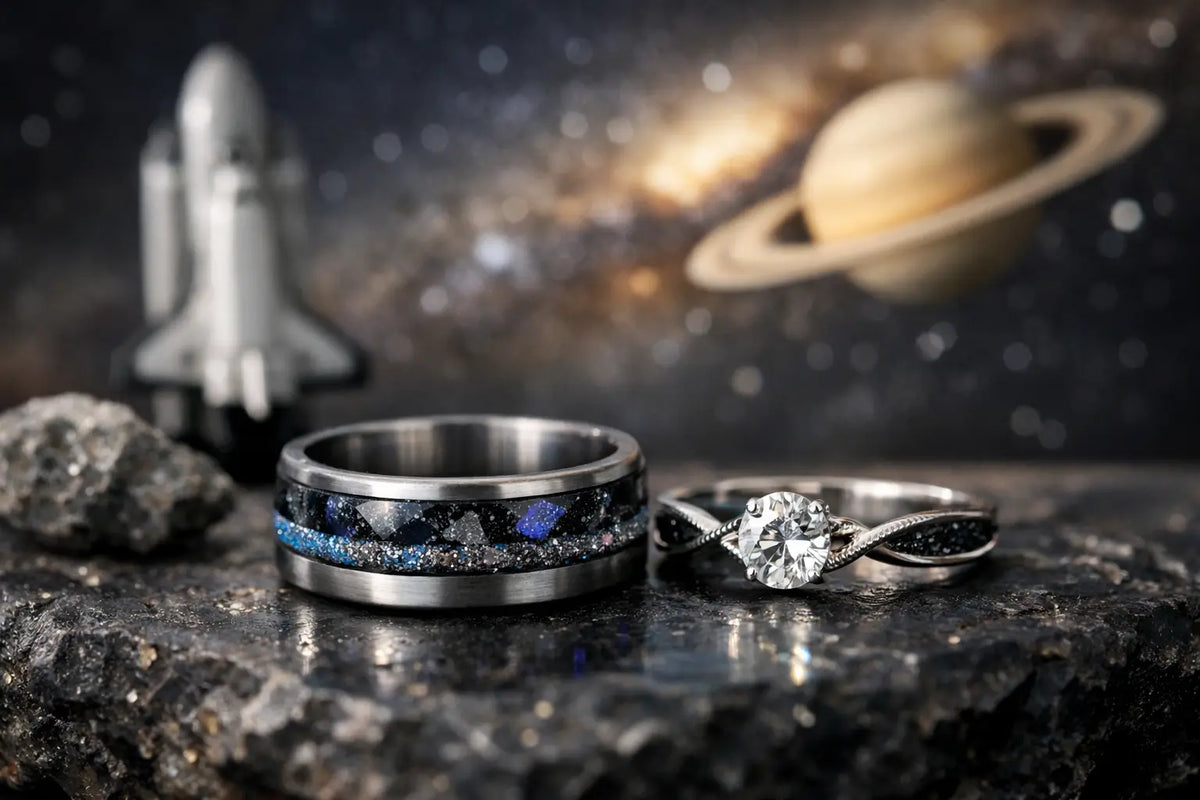
For some, that means authentic meteorite with its naturally occurring crystalline pattern. For others, it is moon dust set beneath a protective finish, opal that shifts color like a distant nebula, or a deep black tungsten band punctuated by celestial materials. The right choice comes down to your style, your routine, and how much care you want your ring to require over decades of wear.
What Makes Space Inspired Wedding Rings Meaningful?
Celestial designs carry a sense of scale that traditional materials cannot always offer. A meteorite may have traveled through space for millions of years before becoming part of a handcrafted ring. Moon dust can turn a simple band into a personal reminder of curiosity, possibility, and the feeling that your partnership has no fixed limits.
That symbolism works especially well for couples who want more than a standard gold or diamond-first design. A space-inspired band can mark the place you met under the stars, a shared love of astronomy or science fiction, a proposal during a special trip, or simply the fact that you have built a life that does not follow a conventional script.
The material story matters, but so does wearability. A meaningful wedding ring should still feel good on your hand, hold up to daily life, and suit the way you dress. That balance is where thoughtful craftsmanship makes the difference.
Start With the Ring Base
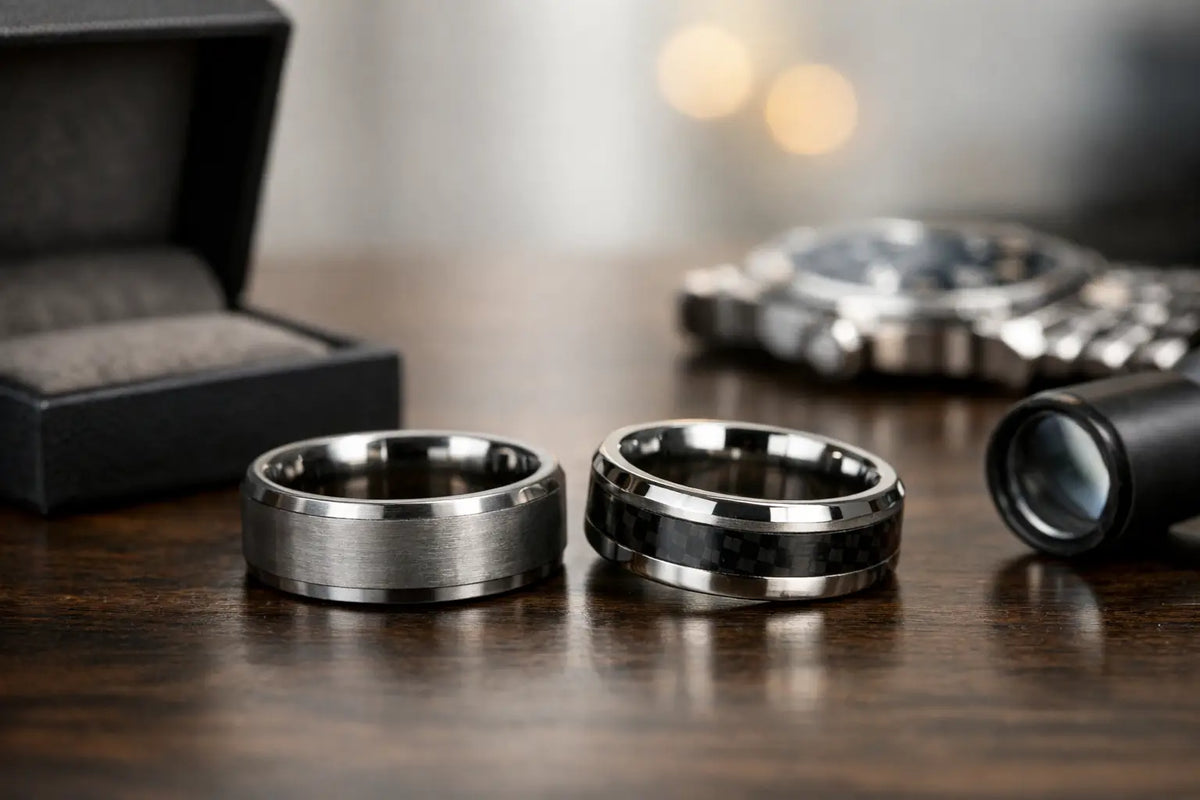
The inlay may catch the eye first, but the base material determines much of a ring’s everyday feel, weight, and durability. For statement wedding bands, tungsten and ceramic are popular choices because they create a clean, modern backdrop for meteorite, moon dust, opal, crystal, and glow details.
Tungsten for substantial daily wear
Tungsten bands have a satisfying weight and strong resistance to everyday scratching. Their darker tones, including black and gunmetal finishes, make vivid inlays stand out sharply. A strip of opal or a meteorite center can look especially dramatic against a polished or brushed tungsten profile.
The trade-off is sizing. Tungsten cannot be resized in the way many precious-metal rings can, so confirming your size before ordering is essential. Finger size can shift with heat, cold, travel, exercise, and time of day. If you are between sizes, the ring width and comfort-fit interior should be considered alongside the number on the sizer.
Ceramic for a lighter, sleek profile
Ceramic offers a smooth, lightweight alternative for people who do not enjoy the heft of tungsten. It is a natural fit for minimalist black bands and high-contrast celestial inlays. Like tungsten, ceramic is hard and scratch resistant, but it should not be treated as indestructible. A hard impact on tile, stone, or concrete can damage a ring made from a rigid material.
For active hands, either base can be a practical choice. The deciding factor is often personal preference: tungsten feels substantial and bold, while ceramic feels lighter and streamlined.
Choose a Celestial Material That Fits Your Story
Not every space-inspired ring gives the same visual effect. Some are subtle enough for a classic wardrobe; others are designed to start conversations. Think about whether you want your band to reveal its character up close or make an immediate statement from across the room.
Meteorite has a pattern no workshop can copy
Authentic meteorite is prized for its natural metallic structure, often seen as angular or crosshatched markings created over an extraordinary length of time. No two pieces present exactly the same pattern, which gives each ring a one-of-a-kind character.
Meteorite is ideal for someone who wants a direct connection to space rather than a space-themed look. It usually has a restrained, silvery appearance that works well with black tungsten, wood accents, or a fine line of opal. Because meteorite contains iron, it benefits from sensible care. Remove the ring before swimming, hot-tub use, or prolonged exposure to moisture, and dry it promptly if it gets wet. This is not high-maintenance jewelry, but it is a real-material consideration worth knowing before you buy.
Moon dust creates a quiet cosmic texture
Moon dust inlays have an understated, tactile-looking appeal. Depending on the design, they can appear smoky gray, charcoal, silver-flecked, or softly luminous. They are a strong choice for couples who love celestial symbolism but prefer a less literal style than stars, planets, or engraved constellations.
Look for a carefully sealed inlay. A protective clear finish allows the material to be worn as part of a wedding band while preserving the texture and color that make it special. Moon dust also pairs beautifully with meteorite, crushed opal, and glow details for a band that feels layered rather than overly busy.
Opal and crystal bring the nebula effect
For color lovers, opal is hard to beat. Its flashes of blue, green, violet, and fire-like orange can resemble a galaxy caught in motion. Crushed opal inlays are particularly compelling in rings because their color changes as the hand moves through different light.
This choice is less about literal space material and more about celestial atmosphere. An opal band can be refined and elegant in a narrow inlay, or unapologetically bold when combined with a dark base and wider profile. Since inlays are individual by nature, expect variation. The color play you see in your ring will have its own pattern and intensity, which is part of the appeal.
Think About Width, Finish, and Everyday Comfort
A ring’s silhouette can completely change how its materials read. Narrow bands tend to make meteorite and moon dust feel discreet and polished. Wider bands give a designer more room to show texture, color, or multiple inlay materials. They can also feel more present on the hand, especially for anyone unaccustomed to wearing jewelry.
A brushed finish softens reflections and creates an industrial, understated mood. A polished finish brings contrast and makes color-rich inlays look brighter. Faceted edges, beveled profiles, and comfort-fit interiors are not just visual details. They affect how the band catches light and how easily it slides over the knuckle.
If you work with your hands, consider a lower-profile ring with a smooth surface and protected inlay. If your band is primarily a style piece for office wear, events, or a less hands-on routine, you may be happy with a wider design that puts the material front and center. Neither approach is better. It depends on how you want the ring to live with you.
Buying Handmade Rings Online With Confidence
A handcrafted ring should feel personal, but online ordering still calls for practical checks. Read the material description closely and make sure it explains what is authentic, what is inlaid, and how the ring should be cared for. Review the size guidance before placing an order, particularly for tungsten and ceramic bands that cannot be conventionally resized.
Photos are useful for understanding design direction, but handmade materials naturally vary. Meteorite patterns, opal color, wood grain, and mineral texture will not be identical from one ring to the next. That variation is evidence that you are choosing a piece with real character, not a mass-produced print.
It also helps to buy from a maker that is transparent about production, policies, reviews, and support. Decazi creates handcrafted statement rings for couples drawn to unusual materials, with made-to-order options and an Etsy storefront available for shoppers who prefer marketplace-backed purchase protection. Those details can make an unconventional choice feel much easier to make.
A Ring Worth Looking Down At
The best space-inspired wedding band is not necessarily the one with the most materials or the loudest color. It is the one that still feels right when you look at it years from now: a small, durable reminder that your commitment has its own history, its own texture, and its own place in the universe.