How to Buy Opal Rings That Feel Personal
An opal ring can hold a whole universe in one small inlay: flashes of blue like open water, green like northern lights, or fiery orange that changes with every turn of your hand. That is exactly why knowing how to buy opal rings matters. No two pieces look exactly alike, and the right choice comes down to more than picking the brightest color in a product photo.
Whether you are choosing a wedding band, anniversary gift, promise ring, or a statement piece simply because it feels like you, look for a ring that balances visual magic with materials and construction that suit real life.
Start With the Opal Look You Love
Opal is prized for play-of-color, the shifting flashes that appear as the stone catches light from different angles. Some opals show a calm wash of blue and green, while others reveal bright red, orange, pink, or electric violet. A ring does not need every color to be beautiful. It needs a color story that feels personal.
For a cool, celestial look, blue and green opal paired with black tungsten, ceramic, or meteorite can feel especially striking. White opal has a brighter, more classic appearance and can suit someone who likes a lighter ring. Darker backgrounds often make an opal’s color stand out more dramatically, while lighter settings create a softer effect.
Pay attention to the photos and videos provided by the seller. Opal naturally changes under different lighting, so a trustworthy listing should show the ring from more than one angle. Expect some variation, especially with handmade pieces. That variation is not a flaw - it is part of what makes an opal ring feel one of a kind.
Know What Type of Opal You Are Buying
The word opal can describe several materials, and being clear about the difference helps you shop with confidence. Natural opal is mined from the earth and is loved for its rarity and organic character. It can also be more delicate and more expensive, particularly in larger stones.
Many modern statement rings use lab-created opal, also called synthetic opal. This material is made to recreate the luminous play-of-color people love about opal, often with a more consistent appearance and a more accessible price. It is a thoughtful choice for buyers who want bold color in an everyday ring without treating it like a fragile heirloom gemstone.
You may also see crushed opal inlays. Rather than one large cabochon stone, tiny pieces of opal are set into a channel and sealed beneath a protective finish. This style works beautifully in contemporary wedding bands because it creates a continuous band of color while keeping the opal recessed and protected.
There is no universally better option. Natural opal is about rarity and geological history. Lab-created or crushed opal is often about vivid color, design flexibility, and daily wear practicality. The key is transparent material descriptions. If a listing does not clearly identify what kind of opal it uses, ask before purchasing.
Choose a Setting Built for Your Lifestyle
Opal is the visual centerpiece, but the ring’s base material determines much of its day-to-day feel. If you work with your hands, exercise often, or want a wedding band you rarely need to remove, look beyond the inlay and consider the ring body carefully.
Tungsten is a popular choice for its substantial weight, scratch resistance, and modern finish. It makes an especially good match for an opal inlay because the dark, polished, brushed, or hammered surface can frame the color beautifully. Ceramic is lightweight and sleek, offering a smooth, contemporary feel. Other materials, such as Damascus steel, meteorite, or wood, bring their own texture and story to the ring.
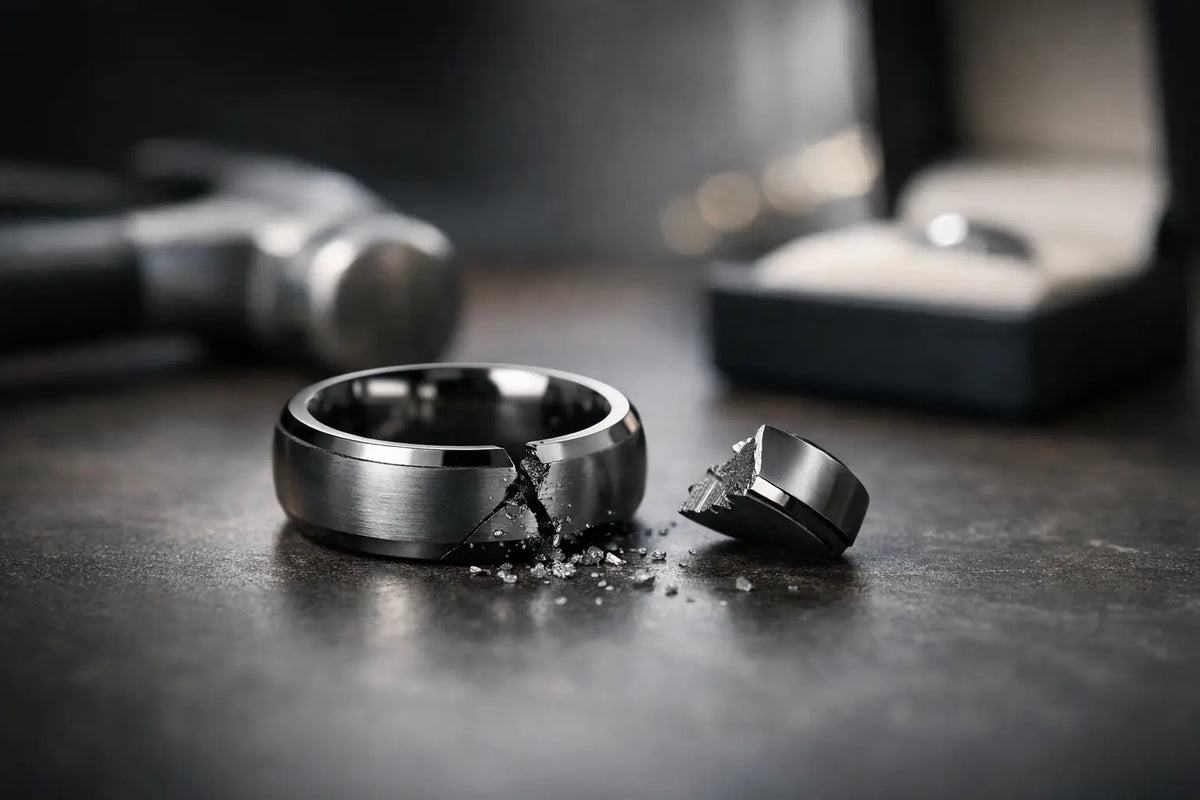
No material is invincible. Tungsten is highly scratch resistant but can crack under a sharp enough impact, and it generally cannot be resized. Ceramic also needs care around hard impacts. A softer metal may be easier to resize, but it can show surface wear faster. Think honestly about how the ring will be worn, not only how it will look on the day you open the box.
For opal itself, a protected inlay is often the most practical choice. Look for designs where the material sits below or close to the edge of the band, rather than raised high above it. A smooth, sealed surface helps shield the opal from knocks, moisture, and everyday grime.
How to Buy Opal Rings in the Right Size
Ring size is where an exciting purchase can become frustrating if you guess. This is especially true for tungsten, ceramic, and other alternative-material bands that cannot be resized like traditional gold rings.
Measure your finger when it is at a normal temperature. Fingers can swell after exercise, heat, salty meals, or long travel, and they can be smaller when cold. If you are between sizes, the better choice depends on the band width and your preferred fit. Wider bands usually feel tighter, so some people need a slightly larger size than they wear in a thin ring.
A professional sizing at a local jeweler is the most reliable starting point. If you are ordering as a surprise, borrow a ring the recipient already wears on the same finger whenever possible. Do not use a ring from a different hand as an exact reference - finger sizes can differ more than people expect.
Before ordering, review the seller’s sizing guidance and exchange policy. A brand that makes rings to order should explain what happens if the fit is not right. This is a practical detail, but it is also a sign of a seller that wants you to enjoy the ring for years rather than simply complete a transaction.
Look Closely at Craftsmanship and Finishing
A beautiful opal inlay should feel intentional from every angle. Check whether the ring’s edges appear smooth, whether the inlay is evenly set, and whether the surface finish looks clean around the entire band. Product descriptions should tell you the band width, materials, finish, and production process, not just use dramatic color language.
Handmade rings can have slight variations in pattern, especially when they combine natural materials such as opal, meteorite, wood, crystal, or fossil inlays. That is part of their appeal. Still, the quality standard should remain high: a comfortable interior, securely finished inlay, and a design that looks balanced rather than uneven.
Reviews are useful here because they reveal what photos cannot always show. Look for customer comments about fit, color accuracy, comfort, durability, packaging, and communication. Buyer photos can also help you see how the opal looks outside a studio setting.
Ask the Questions That Protect Your Purchase
Buying jewelry online should feel exciting, not uncertain. Before you commit, make sure you can answer a few straightforward questions: What materials are in the ring? Is the opal natural, lab-created, or crushed inlay? Is the band resizable? How long will handmade production take? What is the return or exchange process?
It is also worth checking how the ring will be packed and shipped, particularly if it is intended as a proposal or anniversary gift. Clear timelines matter when the date is meaningful. Decazi, for example, focuses on handmade-to-order designs and offers an Etsy storefront option for shoppers who prefer marketplace-backed purchase protection.
Be cautious if a listing makes big claims without specifics. These are common warning signs:
- The opal type is never identified.
- Photos are heavily filtered or show only one angle.
- Ring dimensions and sizing details are missing.
- Policies for exchanges, damage, or delivery are difficult to find.
Care for the Ring You Chose
Even a durable alternative-metal band benefits from gentle habits. Remove an opal ring before heavy lifting, contact sports, harsh cleaning, swimming, or applying lotions and chemicals directly around the inlay. Store it separately from other jewelry when possible, especially pieces with sharp edges.
For routine cleaning, use a soft, dry cloth. If the maker recommends it, a lightly damp cloth can remove everyday residue, but avoid soaking the ring or using ultrasonic cleaners unless the specific construction is confirmed safe for that method. Opal inlays and protective resins deserve a little extra care, and that care helps preserve their color and shine.
The best opal ring is not necessarily the most expensive or the most colorful one on a screen. It is the one that fits comfortably, suits the life it will be part of, and carries a color story you will still want to turn toward the light years from now.