
Can Wedding Bands Be Resized?
The moment a wedding band feels too tight or starts spinning around your finger, the question gets very real: can wedding bands be resized? The honest answer is yes, sometimes - but it depends entirely on what the ring is made of, how it was built, and how much of a size change you need.
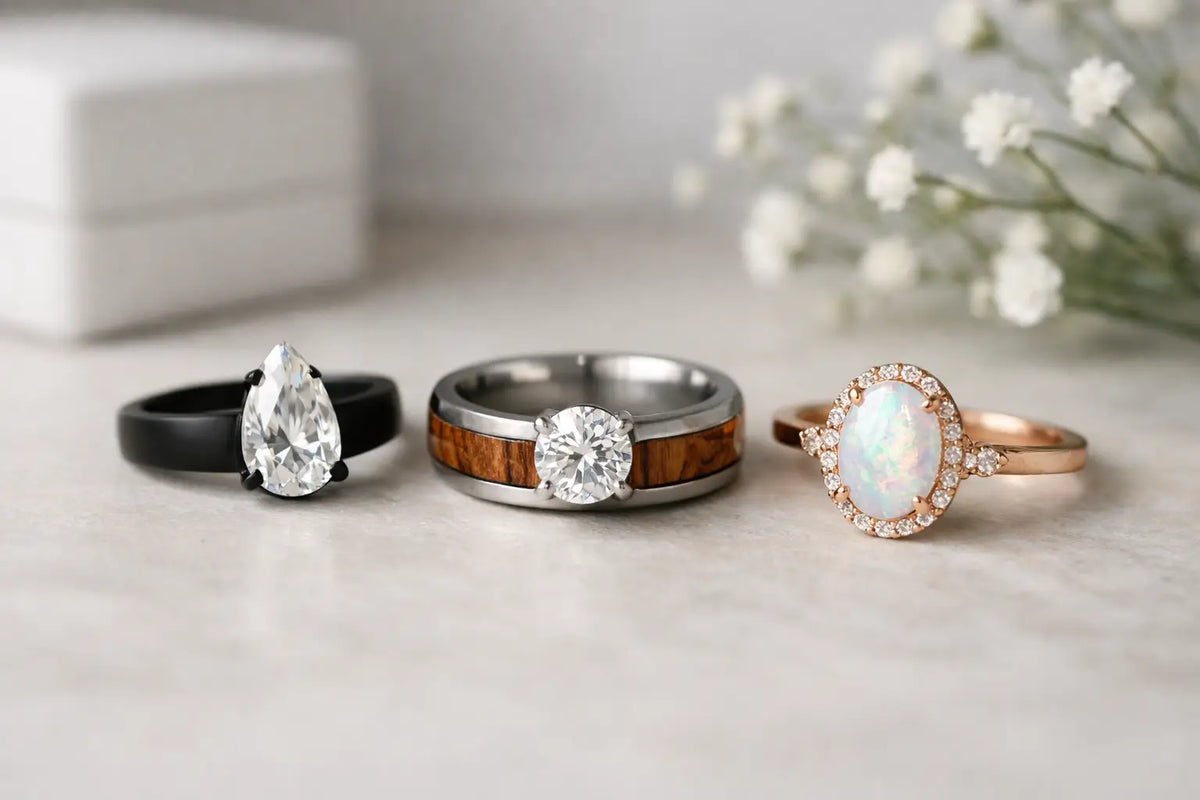
That matters even more when you love distinctive rings. A simple plain gold band gives a jeweler one set of options. A handcrafted ring made with tungsten, ceramic, meteorite, opal, dinosaur bone, wood, or glow inlays is a different conversation. The more unique the material story, the more carefully resizing has to be handled.
Can wedding bands be resized for every material?
Not every wedding band can be resized in the traditional sense. Classic precious metals like gold, platinum, and silver are usually the easiest to adjust because jewelers can cut, add, or remove metal and then refinish the band. That is the version of resizing most people picture.
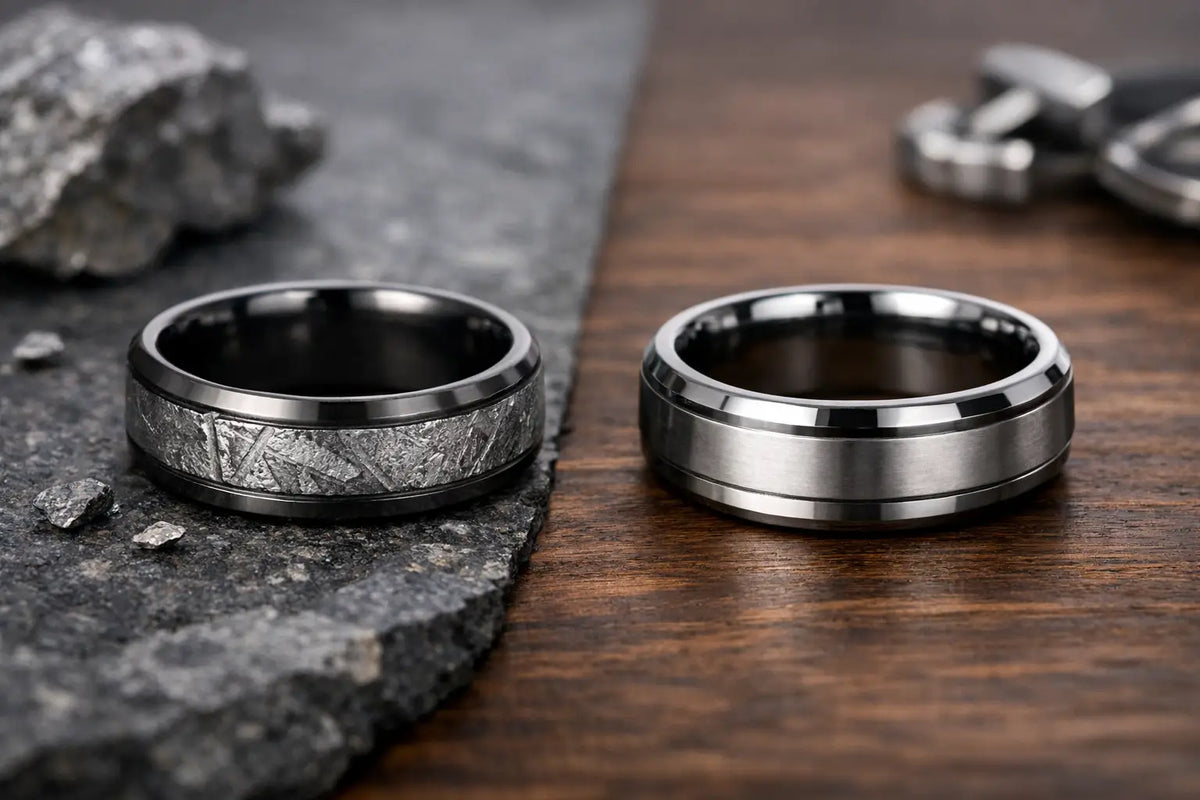
But many modern bands are built for strength, visual impact, or rare material combinations rather than easy modification. Tungsten is a great example. It is incredibly scratch resistant and popular for men’s wedding bands because it keeps its shape and finish so well. The trade-off is that tungsten cannot usually be resized by stretching or cutting the way gold can.
Ceramic rings face a similar issue. They are lightweight, sleek, and highly resistant to wear, but they are not made to be resized in a traditional jewelry bench setup. Damascus steel varies by construction, but complex patterned bands and rings with specialty inlays may also have limits.
Once you add materials like meteorite, opal, crushed stone, antler, dinosaur bone, moon dust, or wood, resizing becomes even more case-specific. These rings often involve channels, adhesives, protective finishes, and layered construction. A jeweler is not just changing a ring size - they are trying to preserve a small piece of wearable art.
When resizing a wedding band usually works
If your wedding band is made from gold, platinum, or sterling silver and has a simpler construction, resizing is often very doable. A jeweler can size it up by adding material or size it down by removing a small section and soldering the band back together.
This is usually most successful when the change is modest, such as a half size or one full size. Some bands can go a bit further, but larger jumps may affect the shape, comfort, thickness, stone settings, or design balance.
A plain band is easier than one with engraving all the way around. Likewise, a ring with a single material is easier than one with multiple inlays or a continuous pattern that would be interrupted by cutting the band.
If your ring has gemstones, a hammered finish, a carved profile, or an eternity-style design, a jeweler may still be able to resize it, but the process gets more specialized. In those cases, the question is less can it be resized and more can it be resized without changing the look you fell in love with.
Why some wedding bands cannot be resized
The short version is structure. Some materials are too hard to cut and rework safely, while others are too brittle to stretch. In other cases, the ring may contain natural or decorative elements that could crack, separate, or become misaligned during the process.
Tungsten and ceramic are the two materials most shoppers hear about here, and for good reason. They are durable in daily wear, but that durability does not translate into flexibility at the jeweler’s bench. Instead of forcing a risky repair, many brands simply replace the ring in a new size.
Inlay rings can also be difficult. If a band features meteorite, opal, wood, or fossil material, resizing may disturb the inlay channel or compromise the seal that protects it. Even if a jeweler is willing to attempt it, the result may not look as clean as the original handmade finish.
That does not mean these bands are a bad choice. It just means sizing accuracy matters more on the front end. For distinctive wedding bands, getting the right fit from the start is part of protecting the design.
Signs your wedding band needs a different size
A ring should feel secure without feeling punishing. You want a little resistance over the knuckle, but once the ring is on, it should sit comfortably without pinching or leaving deep marks.
If your finger throbs, the ring is hard to remove, or you avoid wearing it because it feels restrictive, it is too small. If it slides off with soap and water, spins constantly, or feels like it could disappear in cold weather, it is probably too large.
Finger size also changes more than most people expect. Heat, exercise, travel, salt intake, pregnancy, weight fluctuation, and even time of day can affect fit. That is why a band that fit perfectly in winter can suddenly feel snug in July.
Before you assume you need resizing, wear the ring for a few days under normal conditions and pay attention to patterns. A temporary fit issue and a true size mismatch are not always the same thing.
What to do if your wedding band cannot be resized
If the answer to can wedding bands be resized is no for your specific ring, you still have options. The best one is often a same-style replacement in the correct size. For modern bands made from tungsten, ceramic, or mixed materials, this is usually the cleanest solution because it preserves the design exactly as intended.
In some situations, a jeweler may suggest sizing beads, a ring guard, or a temporary adjuster for a band that is slightly too large. These are more common for traditional metal rings, but they can help if you are dealing with a minor fit issue and do not want to replace the ring right away.
For a ring that is too tight, there are fewer safe shortcuts. Forcing it on and off every day is hard on your finger and hard on the ring. If the material is non-resizable, exchanging it for the correct size is usually the better long-term move.
This is one reason many buyers choose handcrafted brands that are transparent about sizing, materials, and customer support. With statement bands, confidence before purchase matters just as much as craftsmanship after the ring arrives.
How to choose the right size before you buy
The easiest resize is the one you never need. If you are shopping for a wedding band, especially in unconventional materials, do not guess your size based on an old fashion ring or a rough tape measure reading.
Get sized professionally if you can. If you are ordering online, use a reliable ring sizer and check your measurement more than once. Measure when your hands are at a normal temperature, not right after a workout or on a freezing morning. If the band you want is wider than average, you may need a slightly larger size because wide bands fit more snugly.
It also helps to think about lifestyle. If you work with your hands, spend time in heat, or know your fingers swell, build that into your decision. A comfort-fit interior can make a meaningful difference in how a ring feels throughout the day.
For handcrafted rings with special inlays, this step is especially worth the extra care. Brands like Decazi create bands that are meant to stand out and tell a story, and the best way to enjoy that story daily is to start with a fit that feels right from day one.
Can wedding bands be resized without damaging the design?
Sometimes yes, sometimes no. That is the real answer. A skilled jeweler can often resize traditional metal bands with very little visible change, especially if the design is simple. But the more complex or rare the material mix, the more risk enters the picture.
If your band has a continuous pattern, a fragile inlay, or a material known for being non-resizable, preserving the original design may mean replacing rather than resizing. That can sound disappointing at first, but it is often the smarter way to protect the look, structure, and symbolism of the ring.
A wedding band is not just another accessory. It is something you plan to wear through ordinary days, big anniversaries, and everything in between. If you are choosing a ring with bold materials and a one-of-a-kind feel, treat sizing as part of the design decision, not an afterthought.
The right wedding band should feel like it belongs on your hand - secure, comfortable, and ready to stay with you for the long haul.