
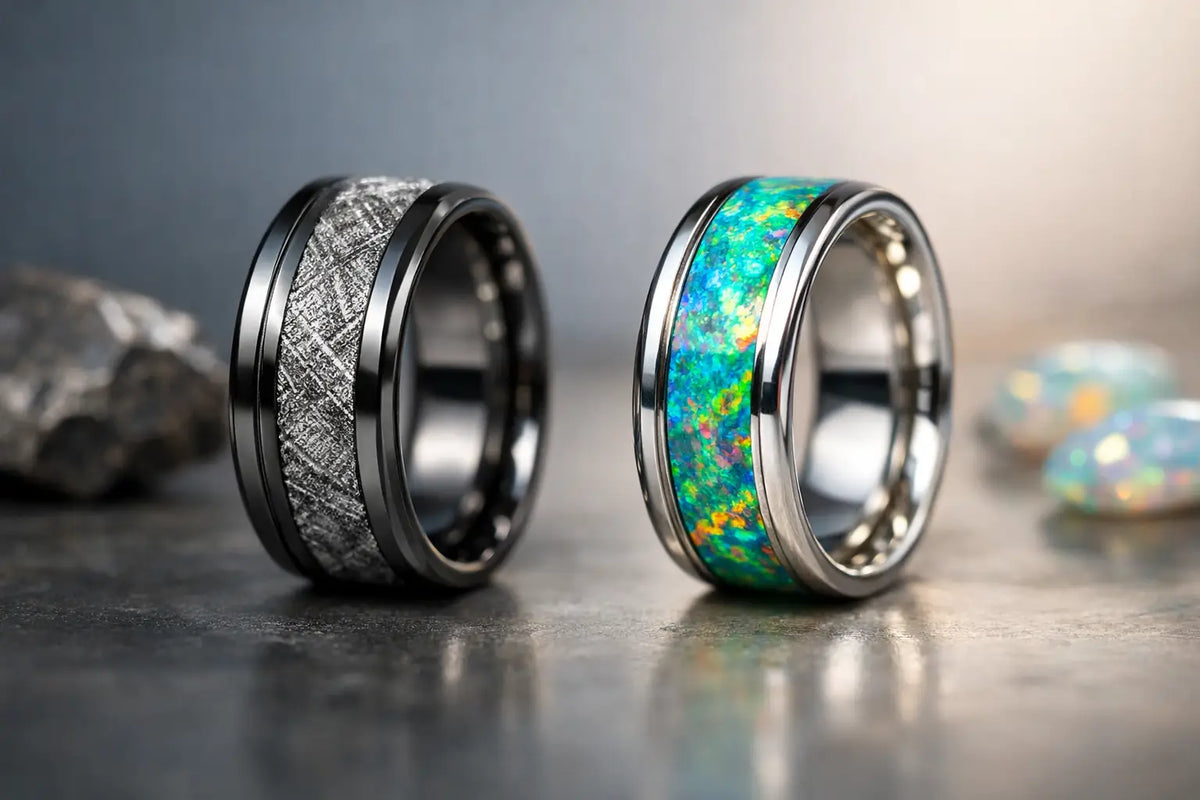
Meteorite Ring Versus Opal Ring: Which to Choose?
A ring can say something before anyone asks about it. A meteorite band carries a fragment of material older than Earth, while an opal band catches the light with shifting flashes of color. When choosing a meteorite ring versus opal ring, the better option is less about a universal winner and more about the story, lifestyle, and look you want to wear every day.
For a wedding band, promise ring, anniversary gift, or personal statement piece, both materials offer far more character than a standard polished metal band. They simply express that character in very different ways.
Meteorite Ring Versus Opal Ring: The Visual Difference
Meteorite has a presence that feels grounded, raw, and quietly extraordinary. Many meteorite ring designs feature iron meteorite with naturally occurring crystalline markings known as Widmanstätten patterns. These angular, interlocking lines are formed over millions of years as metal cools in space. No two sections look precisely alike, which gives each ring an individual character.
The color palette is usually cool and earthy: silvery gray, charcoal, gunmetal, and black. Meteorite pairs especially well with tungsten, ceramic, black titanium, Damascus steel, or dark wood accents. It tends to appeal to someone who prefers texture and detail over sparkle, or who wants a wedding band that feels substantial without looking traditional.
Opal takes the opposite approach. It is all about color movement. Depending on the opal used, an inlay may flash blue, green, violet, red, orange, or pink as the ring moves. A dark base can make those colors look especially bright, while white or light opal often creates a softer, luminous effect.
An opal ring is ideal for someone who wants their jewelry to feel expressive at a glance. It can be romantic, playful, cosmic, ocean-inspired, or dramatic depending on the colors in the inlay. For couples choosing matching rings, opal also gives more room to coordinate personal color preferences while keeping a shared overall design.
The Story Behind Each Material
A meteorite ring makes a powerful choice for people drawn to rarity and scale. You are wearing material that traveled through space and survived an extraordinary journey before becoming part of a handmade piece of jewelry. That makes meteorite especially meaningful for a relationship that has endured distance, change, or a once-in-a-lifetime meeting.
It also works beautifully as a symbol of permanence. The material may be ancient, but the ring marks a very current promise: a wedding day, anniversary, proposal, or commitment to yourself. For many shoppers, that contrast is exactly the point.
Opal carries a more emotional and personal kind of symbolism. Its colors can remind someone of a favorite place, a birth month, a shared trip, the night sky, or a loved one’s eyes. Because no two opal patterns show color in exactly the same way, it feels naturally suited to relationships that do not fit a standard mold.
Neither story is more meaningful than the other. Meteorite says, “Our story is extraordinary.” Opal says, “Our story is full of color.” Some of the most memorable custom designs bring both ideas together through a meteorite center or accent paired with a vivid opal inlay.
Durability Depends on the Whole Ring Design
The material inside a ring matters, but so does the structure around it. A meteorite or opal inlay set into a strong tungsten, ceramic, titanium, or steel band behaves differently from a fully exposed gemstone ring. When comparing options, look at the core metal, how the inlay is set, and whether a protective finish is part of the design.
Meteorite and everyday care
Meteorite used in jewelry often contains iron and nickel. That iron content is part of what creates its signature pattern, but it also means meteorite deserves thoughtful care. Prolonged moisture, saltwater, chlorine, harsh cleaners, and stored humidity can encourage oxidation in some meteorite components.
A quality meteorite ring is typically treated and sealed to help protect its surface. Still, it is smart to remove it before swimming, showering, washing dishes, or working with chemicals. Dry it promptly if it gets wet, and store it in a dry place. This is a small care routine, but it matters if you want that space-born pattern to stay crisp for years.
Meteorite is a strong choice for someone who appreciates a ring with a real material story and does not mind giving it occasional attention. If you want a band that can be worn through every chore, workout, and beach day without thought, ask about a protected meteorite inlay and choose a durable core material.
Opal and everyday care
Opal is softer than most metals used for ring cores, so its long-term wearability depends heavily on its setting. An exposed natural opal can be more vulnerable to scratches, sharp impacts, and sudden temperature changes. Inlay-style opal rings can offer more practical protection because the opal sits within the band rather than rising high above it.
Many contemporary statement bands use carefully set opal fragments or lab-created opal inlays beneath a smooth protective surface. These designs can be an appealing balance of color and everyday practicality, but they still deserve respect. Avoid striking the ring against hard surfaces, exposing it to harsh chemicals, or wearing it for heavy manual work.
For shoppers who want brilliant color with a lower-maintenance feel, ask what type of opal is used and how it is protected. Natural opal, lab-created opal, crushed opal inlay, and composite materials can all have different visual qualities and care needs. Transparency about those details helps you choose confidently.
Which Style Feels Most Like You?
Meteorite often suits a minimalist who still wants something unusual. It looks at home with black, gray, navy, forest green, and neutral wardrobes, and it has a tactile, industrial edge that works well for people who do not usually wear flashy jewelry. It is also a natural favorite for science lovers, stargazers, travelers, and anyone drawn to materials with a real past.
Opal tends to suit the color-forward wearer. Even a narrow opal inlay can become the focal point of an outfit, especially when paired with a darker ring core. It is a strong choice for someone who wants their band to invite compliments, show personality from across the room, or coordinate with colorful tattoos, accessories, or clothing.
That said, style is not limited by gender or occasion. A black tungsten ring with a bright blue opal inlay can feel bold and modern on anyone. A slim meteorite band can be refined enough for an engagement ring stack. The best ring is the one that feels right when you picture reaching for it every morning.
Practical Buying Details to Consider
Before selecting either material, start with accurate sizing. Many durable ring cores, especially tungsten, cannot be resized in the same way as gold. Measuring carefully before ordering is one of the easiest ways to avoid disappointment.
Then consider your daily routine. If you work with tools, lift weights, spend time around water, or use cleaning products often, choose a design with a protected inlay and plan to remove it during higher-risk activities. A meaningful ring can be worn often without being worn through everything.
Finally, think about contrast. Meteorite looks striking against polished black ceramic, brushed tungsten, and Damascus steel. Opal can be chosen for a subtle single-color glow or a high-flash rainbow effect. Band width matters, too: wider bands give complex materials more room to show their detail, while narrow bands create a quieter, more refined look.
Choosing a Ring With a Story You Will Keep Wearing
A meteorite band offers ancient texture, cosmic symbolism, and a cool, understated finish. An opal band brings color, light, and a more openly expressive kind of romance. Both can become unforgettable wedding bands or gifts when they are made with care and chosen for the person wearing them.
If you are torn between them, do not force the decision into a durability contest or a color contest. Picture the ring after the proposal, after the anniversary dinner, and during an ordinary Tuesday morning. The material that still feels like a little piece of your story is the one worth wearing.


