
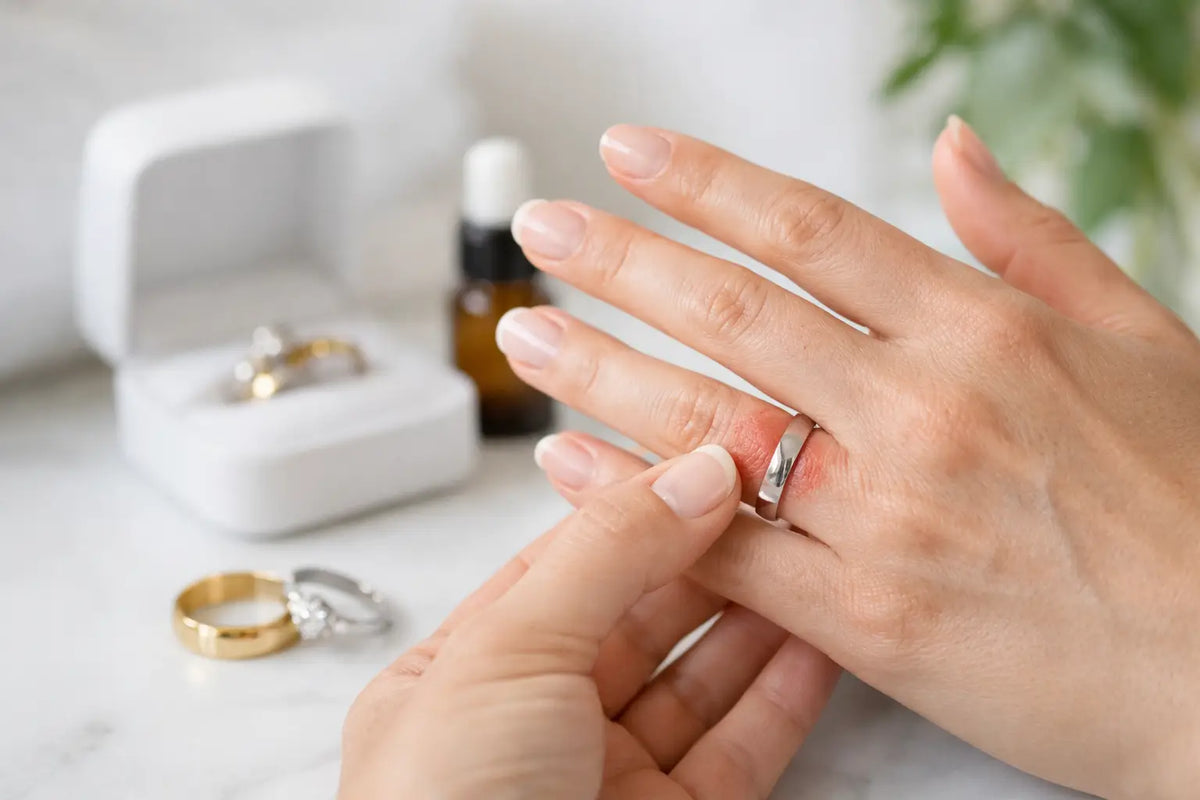
Wedding Band Metal Allergy Guide for Skin
A ring is meant to be part of your everyday life, not the reason you keep reaching for hand cream or taking it off at night. This wedding band metal allergy guide helps you separate a true metal sensitivity from common skin irritation, then choose a band that feels as good as the story behind it. Whether you love a clean black ceramic ring or a meteorite inlay with a little piece of the cosmos inside, the right material choice starts with knowing what touches your skin.
Wedding Band Metal Allergy Guide: Start With the Cause
Redness, itching, flaking, small blisters, or a dark mark beneath a ring can all be frustrating, but they do not automatically mean you are allergic to the band. Contact dermatitis is the broad term for a skin reaction caused by something touching the skin. It can be allergic, meaning your immune system reacts to a particular substance, or irritant, meaning sweat, soap, lotion, friction, and trapped moisture have simply overwhelmed the skin barrier.
A reaction that appears where the ring sits, returns after wearing certain jewelry, and takes days to settle can point to an allergy. Nickel is the most common jewelry-related trigger. Cobalt and chromium may also cause reactions for some people. These metals can appear in alloys, steel, plating, and the binders used in some ring materials.
Irritation tends to be more situational. A ring that fits tightly can trap water after washing your hands. Soap residue and sanitizer can stay under the band, especially during hot weather, workouts, or jobs that require frequent handwashing. Even a metal you have worn comfortably for years can become irritating if the area stays damp.
If you have a severe, persistent, spreading, or painful rash, remove the ring and speak with a dermatologist. Patch testing is the clearest way to identify a true metal allergy, and it is far more useful than guessing from a product label.
Which Metals Are Most Likely to Cause a Reaction?
The answer is rarely as simple as the name printed on a listing. Many jewelry metals are alloys, which means they are blended with other metals for strength, color, or workability. The details matter.
Nickel-containing alloys are the main concern for people with known nickel sensitivity. Some white gold contains nickel, while other white gold uses palladium instead. Yellow gold can also contain different alloy metals depending on its karat and color. Lower-karat gold usually contains a higher proportion of non-gold alloy metals, so it is not automatically the better choice for sensitive skin.
Stainless steel is durable and affordable, but it commonly contains nickel and chromium. Some people wear it without a problem, while others react quickly. Damascus steel is particularly individual because it is made from layered steels. Its dramatic pattern is part of the appeal, but anyone with nickel, chromium, or iron-related sensitivity should ask about the specific alloy and approach it carefully.
Tungsten is often chosen for its satisfying weight and exceptional scratch resistance. Many tungsten carbide rings are made with a nickel binder and are a better option for nickel-sensitive wearers than older cobalt-bound formulas. Still, “tungsten” alone is not a complete allergy answer. Ask what binder is used and whether the inside of the band has any plating or inlay material.
Skin-Friendly Wedding Band Materials to Consider
For a confirmed metal allergy, the safest direction is usually a material with minimal allergenic metal exposure rather than a vague “hypoallergenic” claim. Hypoallergenic means less likely to cause a reaction, not guaranteed to work for every person.
Titanium is a popular choice because it is lightweight, strong, and widely considered biocompatible. It has a clean, modern look and is a natural fit for someone who wants a low-maintenance daily band. The trade-off is that titanium is difficult to resize, so accurate sizing matters before ordering.
Niobium is another excellent option for sensitive skin. It is lightweight, corrosion-resistant, and can be anodized into rich colors without relying on surface paint. It is less common in statement-ring collections than titanium or tungsten, but it is worth seeking out when sensitivity is the first priority.
Platinum, particularly high-purity platinum, is often well tolerated and has a naturally white appearance that does not depend on plating. It is a precious metal with a soft, substantial feel. It also comes with a higher price and can develop a satin-like patina over time, which some couples love and others prefer to polish away.
Ceramic is a compelling nonmetal option. Quality jewelry ceramic is smooth, lightweight, scratch-resistant, and does not contain nickel. Black ceramic, white ceramic, and colored ceramic can create a bold, streamlined look without traditional metal against the skin. Like tungsten, ceramic cannot generally be resized, and it can crack under a sharp, severe impact even though it handles everyday scratching beautifully.
Silicone can be useful for work, exercise, or hands-on activities when you need a flexible alternative. It is not a replacement for the heirloom-quality feel of a handcrafted wedding band, but it can give your primary ring a break during situations where moisture, impact, or safety are concerns.
Unconventional Inlays Need a Closer Look
A ring can hold dinosaur bone, opal, petrified wood, moon dust, crystal, or meteorite and still be comfortable to wear. What matters is the ring’s construction. Is the inlay sealed beneath a smooth protective layer? Does the base metal touch the skin? Is the interior a different material from the exterior? Those questions reveal more than a material name alone.
Meteorite is especially meaningful for couples who want a band with a literal connection to space, but many meteorites contain iron and nickel. A meteorite inlay set into a nickel-safe tungsten, titanium, or ceramic ring may limit direct skin contact, yet it is not the same as calling the entire design allergy-proof. If your nickel allergy is strong or clinically confirmed, choose a design where the meteorite is fully sealed and the comfort-fit interior is a material you know you tolerate, or select a different celestial-inspired inlay.
Natural materials also have care needs. Opal, wood, and fossil inlays bring incredible color and texture, but they should not be soaked in harsh cleaners or exposed repeatedly to chemicals. That is a durability consideration, not an allergy issue, but it matters when you are choosing a band for daily wear.
At Decazi, handcrafted designs are built around unusual materials and visual stories, so it is always worth confirming the precise core material, inlay placement, and finish before choosing a ring for sensitive skin.
How to Buy With More Confidence
Tell the maker about your specific allergy, not just that you have “sensitive skin.” If you know nickel is the issue, say so. If patch testing identified cobalt or chromium, include that too. A trustworthy answer should address the actual material composition and not rely only on a broad hypoallergenic label.
Ask whether the ring has plating, what metal forms the interior surface, and whether any inlays are fully sealed. If you are deciding between two materials, choose the option with the simplest skin-contact story. A smooth titanium or ceramic interior is easier to evaluate than a band with multiple unknown alloy layers.
Fit is part of comfort as well. Your ring should slide over the knuckle with gentle resistance and rest securely without squeezing. Fingers swell with heat, salt, travel, and activity, so sizing on a calm, normal day is smarter than sizing immediately after a workout or when your hands are cold.
For an especially cautious approach, wear a small sample of the material against your skin only if the maker can provide one and your dermatologist agrees it is appropriate. Do not try to “push through” a reaction to see whether it improves. Allergic reactions can worsen with repeat exposure.
If Your Current Ring Is Causing a Rash
Remove the ring for a few days and gently clean both the band and the skin. Wash away soap residue, dry the finger completely, and avoid putting the ring back on while the area is inflamed. If the rash clears and returns only with that band, the material or finish deserves a closer look.
If it happens with every ring, moisture and irritation may be playing a bigger role. Dry beneath the band after handwashing, take it off for lotions and household cleaning, and make sure the fit is not too snug. But do not self-diagnose indefinitely. A dermatologist can help distinguish eczema, fungal irritation, contact allergy, and other conditions that can look similar.
Your wedding band should feel personal, durable, and easy to live in. When you choose the material with your skin, lifestyle, and favorite design details in mind, you can wear the symbol without worrying about the sensation underneath it.


