Best Alternative Engagement Ring Materials
The ring that gets a quiet "that’s beautiful" is nice. The ring that makes someone ask, "Wait - what is that made of?" tends to be unforgettable. That is exactly why more couples are looking beyond traditional gold-and-diamond formulas and asking about the best alternative engagement ring materials for a piece that feels personal, rare, and genuinely theirs.
An alternative material does more than change the look of a ring. It changes the story. A meteorite inlay carries a piece of outer space. Dinosaur bone adds fossil history you can actually wear. Opal shifts color with movement and light, while tungsten and ceramic bring a modern, grounded feel that suits everyday life. The right choice depends on what matters most to you - durability, symbolism, texture, color, price, or the kind of reaction you want when someone sees it for the first time.
What makes the best alternative engagement ring materials?
A beautiful material is not automatically the right one for an engagement ring. This piece is meant to be worn often, handled constantly, and noticed up close. So the best alternative engagement ring materials tend to do three things well: they create a distinct visual identity, they hold up to real life reasonably well, and they feel emotionally meaningful rather than gimmicky.
That last part matters. A ring can be unusual without feeling random. If you love astronomy, moon dust or meteorite can feel deeply personal. If you want something earthy and organic, petrified wood or opal may be a better fit. If you care most about a strong, low-fuss base, tungsten or ceramic often makes more sense than softer traditional metals.
There is always a trade-off. Some materials are incredibly durable but more understated. Others are visually dramatic but need a little more care. The best choice is usually the one that matches both your style and your lifestyle.
Best alternative engagement ring materials for style and durability
Tungsten
Tungsten is one of the strongest starting points for an alternative engagement ring. It has a satisfying weight in the hand, a sleek modern appearance, and excellent scratch resistance compared with many traditional metals. For people who want a ring that feels substantial and can handle daily wear, tungsten is an easy favorite.
It also works especially well as a base for inlays. Meteorite, opal, crushed crystal, wood, or glow materials all stand out beautifully against tungsten’s darker or steel-toned finish. The trade-off is that tungsten is very hard but not endlessly flexible. It is not resized the way gold often can be, so getting the right fit from the start is important.
Ceramic
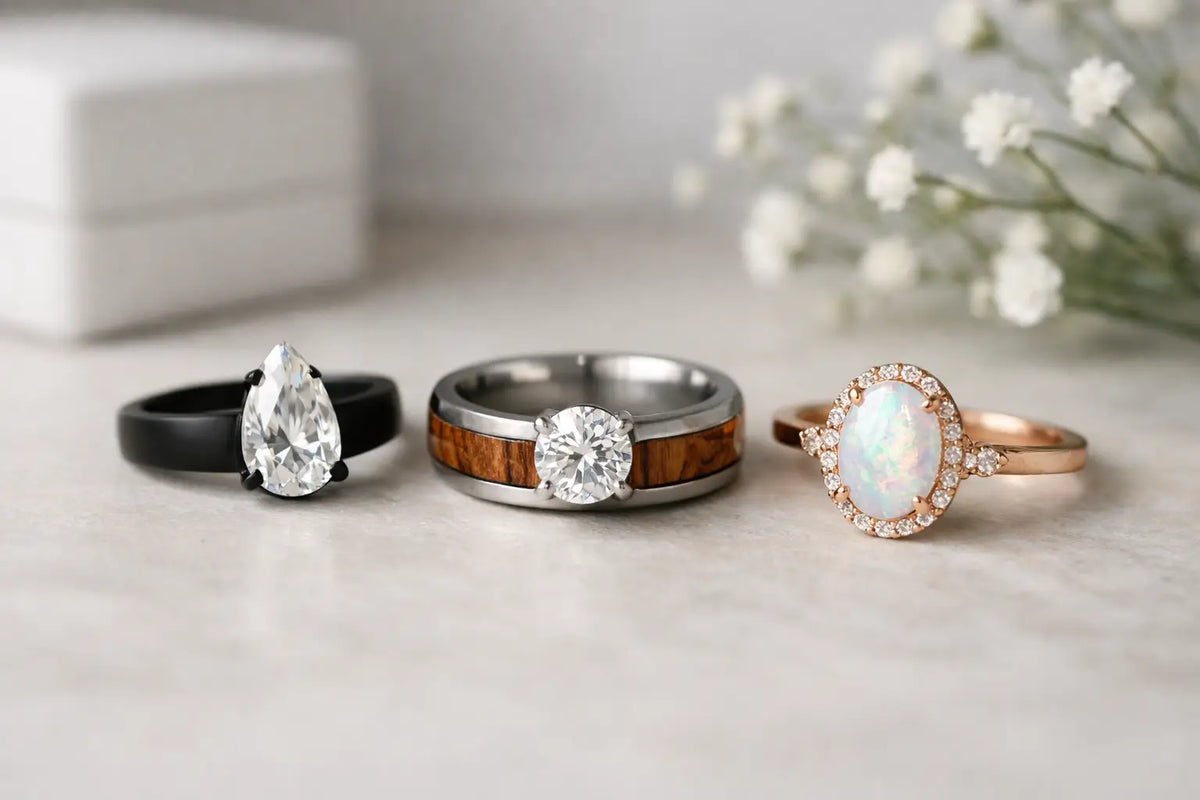
Ceramic rings have a clean, contemporary look that feels lighter than tungsten but still polished and durable. Black ceramic, in particular, gives engagement rings a bold minimalism that pairs well with colorful inlays or more unusual materials.
If you want something smooth, lightweight, and modern, ceramic deserves a serious look. Like tungsten, it is better chosen in the correct size upfront rather than with future resizing in mind. It is ideal for buyers who want a strong visual statement without the higher maintenance of softer materials.
Damascus steel
Damascus steel has movement built into it. Its signature flowing grain pattern gives the ring character before any inlay is even added. For someone who likes texture, craftsmanship, and a slightly rugged but refined look, Damascus steel often feels more alive than a plain band.
It is also a strong choice for people who want an engagement ring that does not resemble a traditional jewelry-store design. The patterning makes every piece feel more individual, which is part of the appeal.
Rare and meaningful materials that stand out
Meteorite
Meteorite is one of the most compelling options if you want a ring with a built-in story. It has a distinct natural pattern that cannot be manufactured in quite the same way, and the idea of wearing material formed beyond Earth gives it a kind of emotional scale that few ring materials can match.
Visually, meteorite works beautifully with darker metals and cooler palettes. It feels futuristic, collectible, and surprisingly wearable. The practical consideration is care. Meteorite is best appreciated by buyers who are happy to follow simple maintenance guidance so it keeps looking its best over time.
Moon dust
Moon dust speaks to a different kind of symbolism. It is subtle, intriguing, and ideal for someone drawn to celestial themes without wanting a flashy look. In an engagement ring, it often reads as intimate rather than loud - more personal treasure than statement piece.
That makes it a great choice for someone who wants meaning woven into the ring in a way that feels special to the wearer first, and eye-catching to everyone else second.
Dinosaur bone
Few materials start conversations like dinosaur bone. It has texture, pattern, and serious rarity, but it also feels grounded and organic rather than theatrical. For buyers who love natural history, fossils, or pieces that carry a sense of age and permanence, dinosaur bone can be incredibly meaningful.
No two sections look exactly alike, which adds to the ring’s individuality. It is a choice for people who do not want their engagement ring to blend into a row of standard settings.
Petrified wood
Petrified wood offers a softer, earth-driven kind of character. It connects to nature, time, and transformation, which makes it especially fitting for a commitment piece. The look is more understated than meteorite or opal, but that is part of its charm.
If you want a ring with warmth and natural patterning, petrified wood can feel deeply personal without trying too hard.
Alternative engagement ring materials for color and visual impact
Opal
Opal is for people who want movement and color. It can flash blue, green, red, and gold depending on the light, which gives the ring a vivid, almost magical presence. In an engagement ring, opal feels expressive and romantic without looking conventional.
The trade-off is straightforward: opal is not chosen because it is the toughest material in the category. It is chosen because nothing else looks quite like it. If visual personality is high on your list and you are comfortable treating your ring with a bit more care, opal can be a stunning option.
Crystals and gemstone inlays
Crushed crystal and gemstone inlays open up a lot of design freedom. They can add sparkle, color, symbolism, or a custom palette that means something to a couple. This route is especially appealing if you want the ring to feel artistic and custom rather than standard.
Because the base metal often does much of the structural heavy lifting, crystal and gemstone inlays can create a strong balance between beauty and wearability. It depends on the specific design, but for many buyers this is where they find the sweet spot between durability and self-expression.
Glow materials
Glow materials are playful, unexpected, and better than they sound if you have only seen novelty versions elsewhere. When used thoughtfully, they add a subtle hidden effect that makes the ring feel personal and distinctive. They are less about tradition and more about character.
For some couples, that little extra surprise is exactly the point. An engagement ring does not have to follow old rules to feel meaningful.
How to choose the right material for your relationship
The smartest way to choose is to start with daily life, then layer in style. If the wearer is hard on jewelry, a tougher base like tungsten, ceramic, or Damascus steel usually makes more sense than leading with a softer, more delicate centerpiece. If the emotional story matters most, materials like meteorite, moon dust, dinosaur bone, and petrified wood often carry more resonance than standard precious metals ever could.
It also helps to think about whether you want the ring to feel bold or intimate. Opal and crystal inlays catch the eye immediately. Moon dust and wood-based materials can feel more private and symbolic. Neither is better. They just say different things.
And then there is comfort in buying. Alternative materials can feel unfamiliar at first, which is why craftsmanship and transparency matter so much. A handcrafted ring made to order, with clear material information and real buyer confidence behind it, tends to remove a lot of hesitation. That is one reason brands like Decazi connect with couples looking for something rare but still wearable and approachable.
The best alternative engagement ring materials are the ones with a story
The strongest engagement ring choices are not always the most traditional or the most expensive. They are the ones that feel instantly right when you see them - the ones that reflect how you love, what you value, and what kind of piece you actually want to wear every day. If that leads you to tungsten with meteorite, ceramic with opal, or a fossil-based inlay no one else in your circle has, that is not a compromise. That is the whole point.
Choose the ring that feels like it could only belong to your story.