Tungsten Rings Versus Titanium Rings Compared
A wedding band can look nearly identical on a screen yet feel completely different once it is on your hand. When comparing tungsten rings versus titanium rings, the real choice is not simply which metal is stronger. It is about weight, finish, daily comfort, your work and hobbies, and whether you want a band that feels substantial or nearly weightless. Both are excellent alternatives to traditional precious metals, but they earn their reputation in different ways.
Tungsten Rings Versus Titanium Rings at a Glance
Tungsten rings are typically made from tungsten carbide, a dense material known for a sleek polish and exceptional resistance to everyday scratching. A tungsten band has a satisfying, noticeable weight. For many people, that solid feel is part of the appeal: it makes the ring feel intentional, permanent, and substantial without relying on a traditional gold or platinum look.
Titanium is much lighter. It is a strong metal with a low density, so a titanium ring can be easy to forget you are wearing. That makes it a natural choice for people who dislike the feeling of jewelry, use their hands constantly, or simply want a minimal band with a clean, modern profile.
Neither material is automatically better. Tungsten suits the person who wants a polished, weighty statement ring with outstanding scratch resistance. Titanium suits the person who values lightness, toughness, and an understated feel. The best band is the one that matches how you want it to wear every day.
Durability Means Different Things
“Durable” can be misleading because tungsten and titanium handle force differently. Tungsten carbide is extremely hard. It resists surface scratches far better than most conventional jewelry metals, helping a polished band stay crisp and refined through ordinary wear. If you work at a desk, travel often, or want a ring that keeps a fresh-looking finish with minimal fuss, this is a meaningful advantage.
That hardness comes with a trade-off. Tungsten is less flexible than titanium. A sharp, severe impact can crack or break a tungsten ring, particularly if it hits a hard surface at the right angle. This is uncommon in normal wear, but it matters for people in high-impact trades, climbing, contact sports, or hands-on mechanical work.
Titanium is not as scratch-resistant as tungsten, but it is highly tough and more flexible under impact. Rather than cracking, it is more likely to pick up small marks over time. Many titanium wearers appreciate that lived-in patina, while others prefer the more consistently polished look of tungsten. A brushed titanium finish can make minor wear less noticeable from the start.
Scratch Resistance Versus Impact Resistance
Think of tungsten as the better choice for preserving a pristine surface, while titanium is the more forgiving choice when a ring may take a hard knock. Neither is indestructible, and neither should be worn during activities where rings can snag, pinch, or become dangerous. Removing your ring for heavy lifting, machinery work, and certain sports is good practice regardless of material.
Weight and Everyday Comfort
The weight difference is often the deciding factor. Tungsten feels dense because it is dense. A wide tungsten band has real presence, which can be especially appealing for a wedding ring, anniversary gift, or statement piece meant to feel as memorable as it looks. Some people love noticing it throughout the day. Others find that sensation distracting, especially if they have never worn a ring before.
Titanium offers the opposite experience. Its lightness is a major comfort benefit for people who type, exercise, play instruments, or work with their hands. A wider titanium band can remain comfortable because it does not carry the same weight as a comparable tungsten ring.
Band shape matters just as much as metal. A comfort-fit interior, with gently rounded edges inside the band, can make either material feel smoother over the knuckle and more natural during long wear. If comfort is your top concern, choose the correct width and profile before focusing only on the metal.
Style, Finish, and Meaningful Details
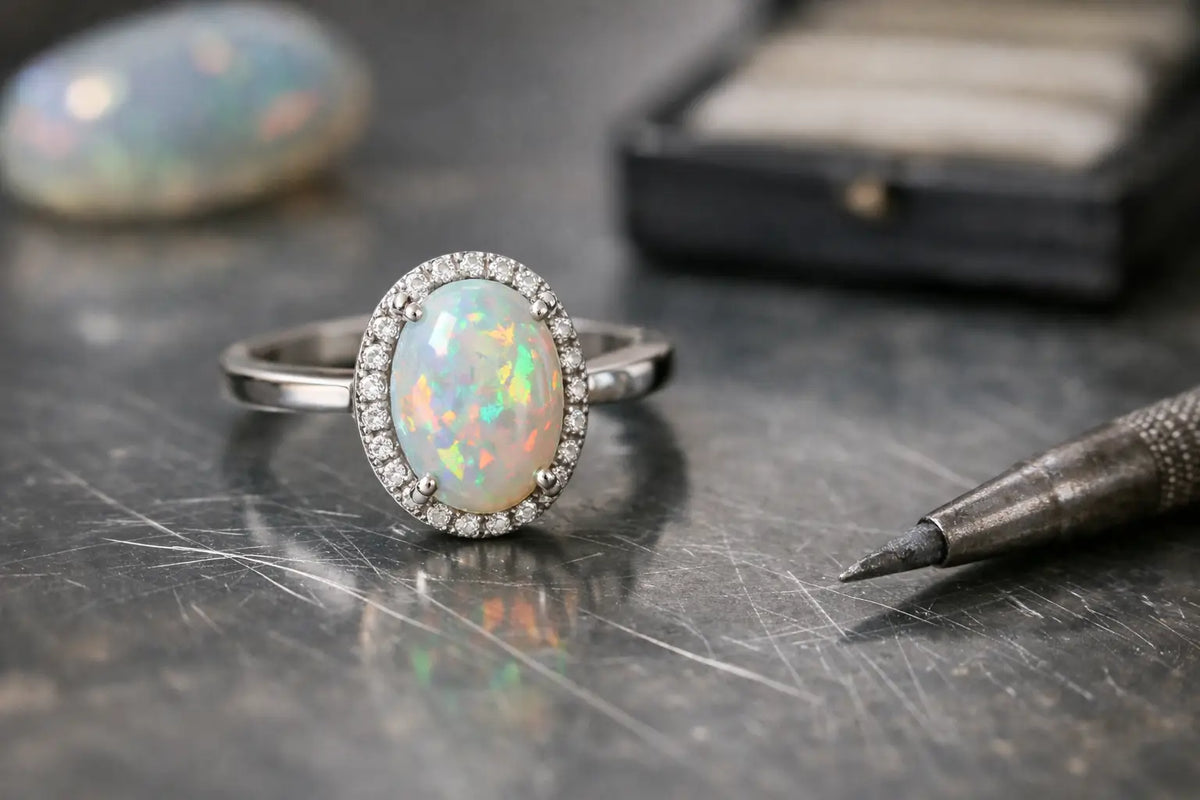
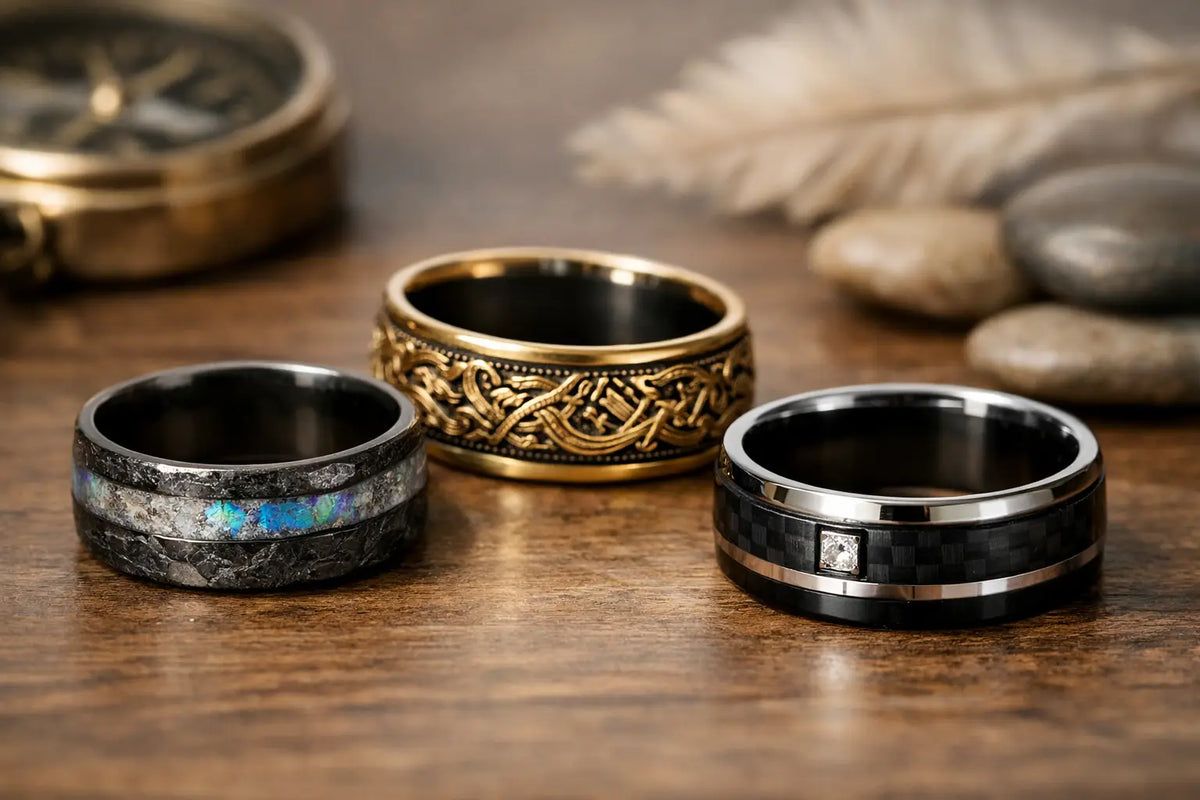
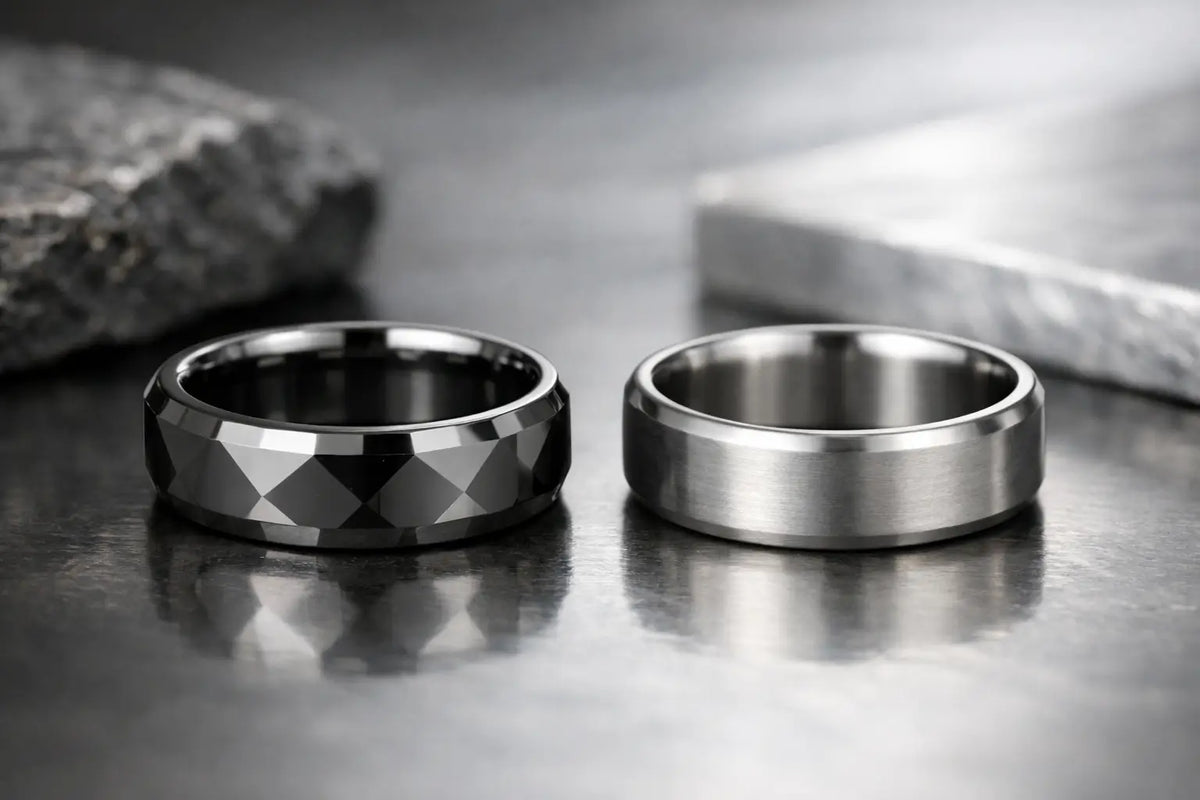
Tungsten has a refined visual confidence. Its naturally substantial presence works beautifully with high-polish black, silver, gold-tone, or rose-tone finishes, as well as brushed textures and bold beveled edges. It also provides a striking foundation for distinctive inlays, such as meteorite, opal, crushed crystal, glow materials, or fossil-inspired details. The contrast between a sleek tungsten frame and a rare, tactile inlay creates a ring with a story built into it.
Titanium leans more minimal and industrial, though it can be just as expressive. Its gray tone has a softer, more muted character than polished tungsten. Titanium can also be anodized in color, which appeals to shoppers looking for blue, purple, or other unconventional accents. That said, colored surface treatments can wear differently over time depending on exposure and use.
For a ring that is meant to start conversations, tungsten often creates the stronger visual impact. For a band that feels quietly personal and effortlessly light, titanium has a compelling simplicity. Consider what you want someone to notice first: the material’s presence, an inlay’s story, or the clean restraint of the design.
Sizing Is Especially Important
Tungsten rings generally cannot be resized. Their hardness makes traditional resizing impractical, so getting the size right before ordering is essential. A proper ring sizer is more reliable than guessing from an old band, especially when changing to a wider style. Fingers also change slightly with temperature, hydration, exercise, and time of day, so measure when your hands are at a comfortable, normal temperature.
Titanium is also difficult to resize. While limited resizing may be possible for some plain titanium designs, it is not a routine option, and rings with inlays, detailed finishes, or complex construction are typically not candidates. Treat both materials as rings that should be purchased in the correct size from the beginning.
A ring should move over the knuckle with gentle resistance, then sit securely without squeezing. If you are between sizes, the right choice can depend on band width and fit profile. A wider band often feels tighter than a narrow one in the same size. Taking time with sizing protects the excitement of receiving a handmade ring and helps ensure it becomes an easy part of daily life.
Skin Sensitivity and Practical Considerations
High-quality tungsten carbide and titanium are commonly chosen by people who are sensitive to traditional jewelry alloys. Titanium is particularly well regarded for its skin-friendly properties. Still, sensitivities vary, and finishes, plating, inlay materials, or trace alloy components can affect individual experiences. If you have a known metal allergy, review the full material details of the specific ring rather than assuming every design will feel the same.
People also ask about emergency removal. Medical professionals have methods and tools for different ring materials. Tungsten can be fractured under controlled pressure, while titanium may require specialized cutting equipment. The practical takeaway is simple: tell medical staff what your ring is made from if an emergency occurs, and avoid wearing any ring in situations where hand injuries are a realistic risk.
Which Ring Fits Your Life?
Choose tungsten if you want a weighty band, a highly scratch-resistant surface, and a bold foundation for finishes or story-rich inlays. It is especially appealing for someone who wants their wedding band to feel substantial every time they put it on.
Choose titanium if lightness is nonnegotiable, your lifestyle calls for greater impact tolerance, or you prefer a subtle, streamlined look. It can be an excellent first ring for someone who is unsure whether they will enjoy wearing jewelry at all.
At Decazi, the most memorable rings are not defined by a single material. They are defined by the detail that feels like yours, whether that is a dark polished tungsten edge, an ancient meteorite pattern, a flash of opal, or a band that is so light you barely notice it. Let the ring’s daily feel matter as much as its first impression, and you will choose a piece that remains meaningful long after the occasion that brought you to it.