
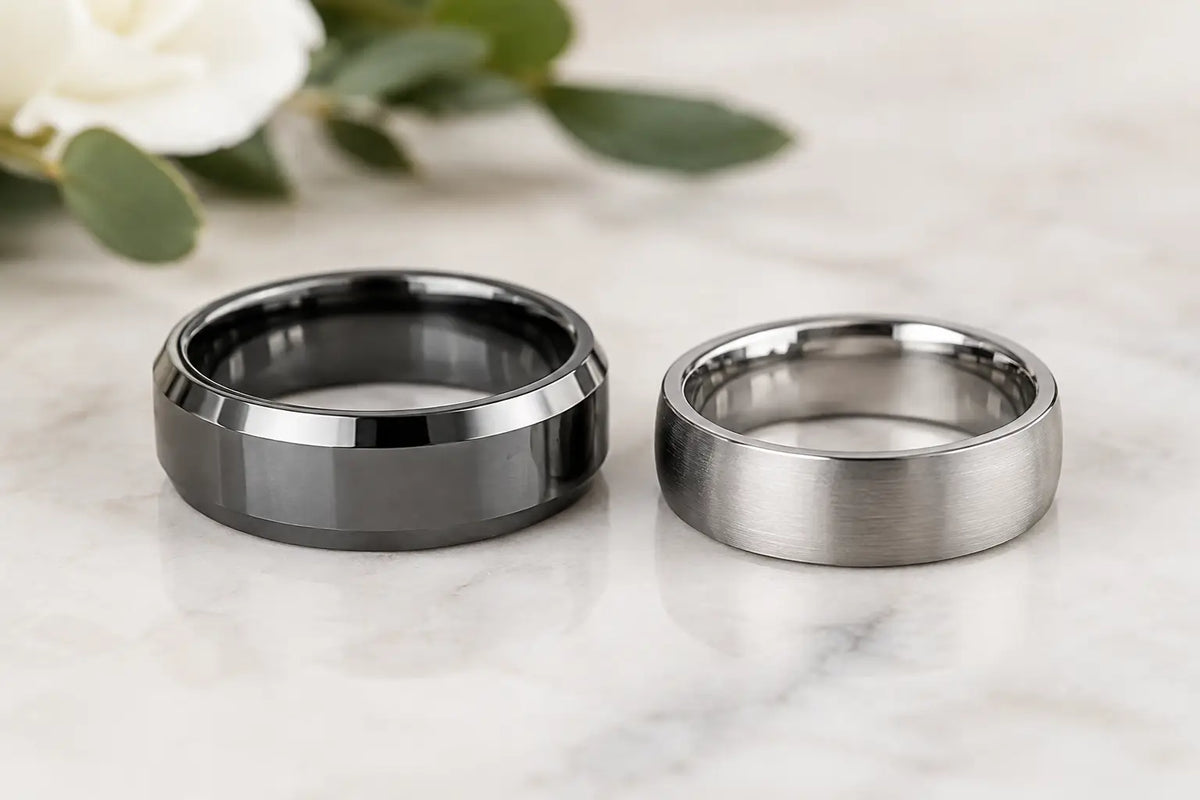
Tungsten Titanium Comparison for Wedding Rings
A wedding band has to feel right before it can mean everything. That is where a thoughtful tungsten titanium comparison helps: these two modern metals can look equally sleek at first glance, yet they wear, weigh, and age in noticeably different ways. The best choice is not about which material is universally better. It is about the ring that fits your daily life, your comfort preferences, and the story you want to wear.
Both tungsten and titanium are popular alternatives to traditional gold and silver, especially for couples who want something durable, distinctive, and easier to personalize with dramatic inlays. But they have very different personalities. Tungsten feels substantial and polished. Titanium feels light, capable, and almost effortless on the hand.
Tungsten Titanium Comparison: The Differences That Matter
Tungsten and titanium are both valued for strength, but strength does not mean exactly the same thing in each material. Tungsten carbide is exceptionally hard and highly resistant to everyday scratching. Titanium is strong for its weight and handles active wear extremely well, though its surface can develop small scratches over time.
The larger distinction is how each metal responds to force. Tungsten is hard but can be brittle under an unusually sharp impact. It is designed to resist everyday wear beautifully, but it is not meant to bend. Titanium is more flexible and less likely to crack from impact, although it can dent or mark more readily than tungsten.
For most people, neither material requires constant worry. The decision comes down to whether you value a crisp, highly scratch-resistant finish or an ultra-light ring that is ready for hands-on days.
Weight and everyday comfort
Put a tungsten ring and a titanium ring in separate hands, and the difference is immediate. Tungsten has a satisfying, solid weight. Many wearers love that presence because it makes the ring feel substantial and intentional. A wide tungsten wedding band can feel especially bold, making it a natural fit for someone who enjoys statement jewelry.
Titanium is remarkably lightweight. It is an excellent option for people who rarely wear rings, work with their hands, exercise often, or simply dislike feeling jewelry on their fingers. A titanium band can offer a broad, confident silhouette without the heft of a heavier metal.
There is no wrong preference here. If you like a ring that reminds you it is there, tungsten is compelling. If comfort means forgetting you are wearing it, titanium may win.
Scratch resistance and the finish you want to keep
Tungsten is one of the most scratch-resistant materials used in contemporary rings. Its polished surface can maintain a clean, refined appearance through routine wear better than softer metals. That makes it a strong choice for a high-shine black, silver, gunmetal, or gold-toned band, as well as rings that frame colorful opal, crushed crystal, meteorite, or glow inlays.
Titanium is not fragile, but it is softer at the surface than tungsten. Fine marks can develop, particularly on polished finishes. For many people, that is not a drawback. A gently worn titanium ring can gain character over time, much like a favorite leather jacket. Matte, brushed, hammered, and textured titanium finishes also help make small signs of wear less noticeable.
If preserving a pristine polished look matters most, tungsten generally has the edge. If you appreciate a ring that becomes more personal through wear, titanium has its own appeal.
How Tungsten and Titanium Work With Creative Inlays
Modern wedding bands are about much more than metal alone. A ring with meteorite, dinosaur bone, moon dust, wood, or opal carries a visual story that a plain band cannot. Both tungsten and titanium can be used as foundations for expressive inlay designs, but their look and feel set a different stage.
Tungsten's density gives an inlay ring a strong visual frame. Dark tungsten can make bright blue opal, fire-like crushed crystal, or glowing material look more vivid. Silver tungsten creates a clean contrast with meteorite patterns, wood grains, and fossil textures. Its weight also complements designs meant to feel bold and collectible.
Titanium offers a more technical, understated foundation. Its naturally gray tone pairs beautifully with cosmic materials, black accents, and cooler color palettes. Because titanium is light, it can be a smart choice for wider bands with detailed inlays when comfort is the first priority.
The inlay itself deserves just as much attention as the base metal. Natural materials can have variation in color, pattern, and texture. That is part of the charm. A handcrafted ring should not look factory-identical to every other ring, especially when its design includes meteorite, petrified wood, or other materials shaped by time and nature.
Sizing, Resizing, and the Need to Get It Right
This is the practical point shoppers should know before ordering. Tungsten rings cannot be resized. Titanium rings are also difficult to resize and are commonly replaced rather than altered. That makes accurate sizing essential for either material.
Measure your finger when your hands are at a normal temperature and not swollen from exercise, heat, or a salty meal. If you are choosing a wide band, remember that wider rings can feel more snug than narrow bands in the same size. A comfort-fit interior can help the ring slide over the knuckle more easily while still sitting securely at the base of the finger.
For a wedding band, it is worth slowing down here. The right size makes a ring feel like part of you. The wrong size can turn even the most meaningful design into something you hesitate to wear.
Allergies and Skin Sensitivity
Titanium is widely known for being hypoallergenic and is often a reassuring option for people with sensitive skin. It is commonly chosen by those who have reacted to certain jewelry metals in the past.
Tungsten rings are usually made from tungsten carbide combined with binding materials. The exact composition can vary by maker, and some formulas may include nickel or cobalt. Many people wear tungsten comfortably, but anyone with a known metal allergy should check the specific material details before choosing a ring.
A ring also needs occasional cleaning, regardless of metal. Warm water, mild soap, and a soft cloth are usually enough for routine care. Avoid harsh chemicals, abrasive cleaners, and unnecessary knocks against hard surfaces, particularly if the ring includes a natural or gemstone-based inlay.
Which Ring Is Right for You?
Choose tungsten if you want a weighty, confident band with excellent scratch resistance and a polished look that stays sharp through everyday life. It is especially appealing for someone drawn to bold widths, dark finishes, and richly contrasting inlay designs.
Choose titanium if you want exceptional lightness, a skin-friendly metal, and a ring that feels easy during work, travel, fitness, and active routines. It is ideal for the wearer who wants strength without the sensation of extra weight.
At Decazi, the most memorable rings are often the ones that balance the practical choice with the personal one. Maybe tungsten is the right frame for a meteorite band that reflects your shared love of the night sky. Maybe titanium is the natural fit for a partner who never takes their ring off, whether they are at the gym, on the road, or building something with their hands.
Your wedding band does not have to follow tradition to hold lasting meaning. Choose the metal that feels natural on your hand, then choose the materials that make the ring unmistakably yours.


