Comfort Fit Versus Standard Fit for Rings
A ring can feature meteorite, opal, dinosaur bone, or a one-of-a-kind glow inlay, but the part you feel most often is the inside. That is why comfort fit versus standard fit matters so much when choosing a wedding band, promise ring, or everyday statement piece. The difference is subtle when you look at a ring from the outside, yet it can change how easily it slides over your knuckle, sits through a long workday, and feels after years of wear.
What Comfort Fit and Standard Fit Actually Mean
The terms describe a ring’s interior profile, not its exterior design or material. A comfort-fit ring has a gently rounded inner surface. Rather than lying flat against the finger from edge to edge, the metal or ceramic curves inward slightly near the center. This creates less surface contact with your skin.
A standard-fit ring usually has a flatter interior. It rests more evenly across the finger, creating a traditional, close-to-the-finger feel. Many people love that secure, familiar sensation, particularly with slimmer bands.
Neither profile is automatically better. The right choice depends on your finger shape, preferred band width, daily routine, and the kind of sensation you want from a ring that may rarely leave your hand. Since fit language can vary between jewelers, it is always wise to check the product details rather than assuming every ring labeled “standard” or “comfort” has the exact same interior shape.
Comfort Fit Versus Standard Fit: How They Feel
The easiest way to picture a comfort-fit ring is to imagine a smooth, soft arch on the inside of the band. Because the center does not press flat against the entire finger, many wearers describe it as easier to put on and take off. This can be especially welcome if your knuckles are slightly larger than the base of your finger or your fingers change size with heat, activity, travel, or salt intake.
A standard-fit band tends to feel more present on the finger. That is not a flaw. Some people prefer the grounded feel of a flat interior, and a standard profile can feel especially natural in a narrow ring. If you have worn traditional jewelry for years, it may be exactly what you expect a band to feel like.
The contrast is often more noticeable in wider rings. A 4 mm band has relatively little interior surface touching your finger, so the difference may be modest. At 8 mm, 10 mm, or wider, a comfort-fit interior can reduce the sensation of a broad band wrapping tightly around the finger. For bold tungsten, ceramic, Damascus steel, or inlay wedding bands, that small curve can make a meaningful difference in everyday wear.
Why comfort fit is popular for wedding bands
Wedding bands are designed for the long run. You may wear yours while typing, driving, cooking, lifting, traveling, and sleeping. A comfort-fit interior helps many people forget they are wearing it, which is precisely the point.
It can also make a substantial ring feel less bulky. That matters when you are drawn to expressive materials - perhaps a galaxy-like opal, fragments of ancient dinosaur bone, or a strip of meteorite with a story far bigger than the band itself. You should not have to choose between a distinctive design and a wearable one.
When standard fit may be the better choice
Standard fit remains a strong option for people who want a classic profile, are choosing a slim band, or prefer a close, secure feel. It can be a practical choice for stacking rings as well, since flatter profiles may sit more neatly beside another band depending on the designs.
If your fingers are fairly consistent in size and your knuckles do not create a difficult entry point, standard fit may feel perfectly comfortable. Personal preference is real here. One person’s “barely there” fit can feel too loose to someone else.
Sizing Is More Important Than the Profile
A comfort-fit interior does not eliminate the need for careful sizing. In fact, ring sizing deserves extra attention with durable alternative materials such as tungsten and ceramic. These rings are made to hold their shape beautifully, but many cannot be resized in the way a traditional gold band can. Getting the size right before the ring is crafted is the best path to confidence.
Start with a proper ring sizer or an accurate measurement from a reputable jeweler. Measure at a normal time of day, when your hands are neither very cold nor swollen from exercise or heat. If possible, check your size more than once. A finger can change throughout the day, and a size that feels perfect on a chilly morning may feel restrictive after an afternoon outside.
Band width matters, too. Wider bands cover more of the finger, so they can feel tighter than a thin ring in the same size. Some wearers choose a slightly larger size for a broad band, but there is no universal adjustment that works for everyone. Your knuckle size and preferred fit should guide the decision.
Most importantly, follow the sizing guidance for the exact ring you are ordering. An interior curve, width, edge style, and design construction can all affect the final feel. If you are between sizes, it is worth asking questions before placing an order rather than hoping a tighter band will break in over time. A ring does not truly “break in” like a pair of boots.
The Exterior Edges Matter Too
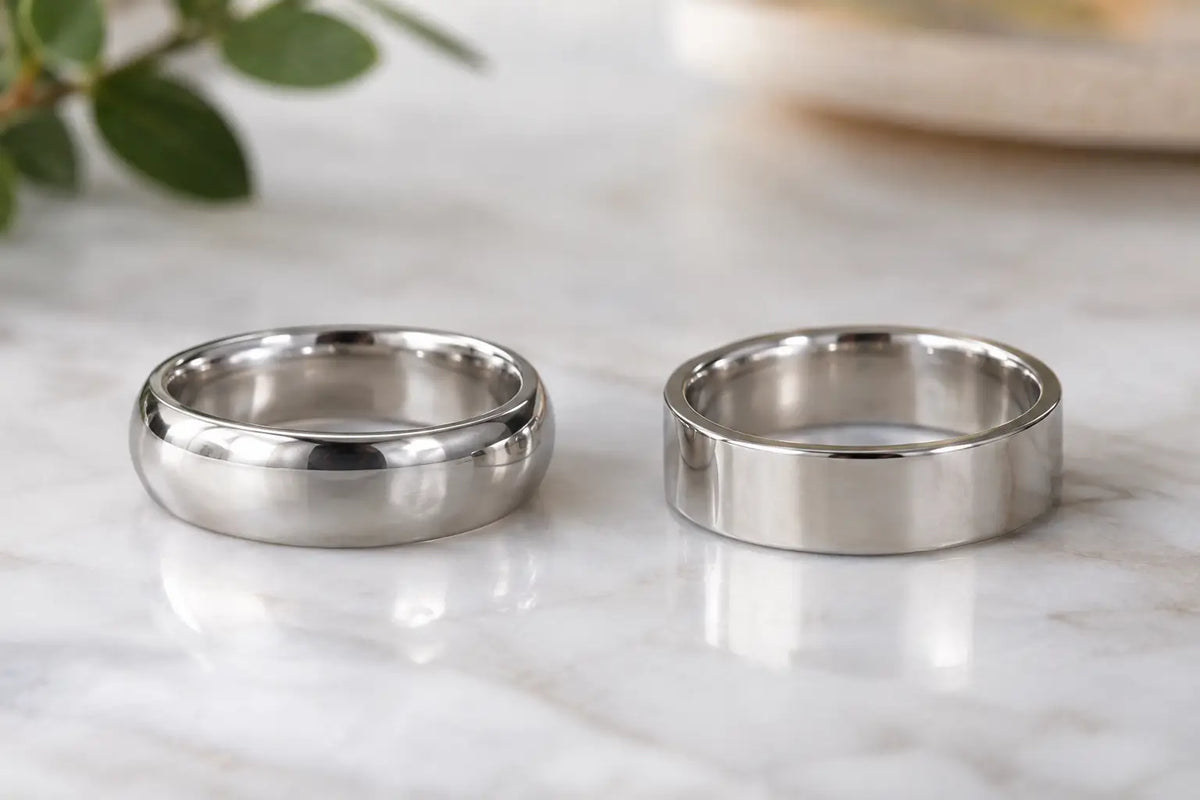
Interior fit gets most of the attention, but the edges of a band also affect comfort. A beveled edge slopes gently from the center toward the sides, creating a sleek, dimensional look. Rounded edges feel softer against neighboring fingers, while crisp flat edges offer a sharper, more architectural style.
These details influence both appearance and sensation. A wide black ceramic ring with rounded edges and a comfort-fit interior may feel remarkably smooth, while a flat-edged standard-fit tungsten band can feel bold and structured. Neither choice is wrong. Think of the profile as part of the design language, just like the material or inlay.
For rings with tactile details - such as crushed crystal, wood grain, opal color play, or glow material - a thoughtfully finished interior and edge profile helps keep the experience focused on the beauty of the piece rather than unwanted pressure points.
Choose Based on Your Real Life, Not Just a Product Photo
When comparing profiles, consider when and how the ring will be worn. If you work with your hands, lift weights, spend time outdoors, or simply dislike anything snug around your finger, comfort fit may be the more natural match. It is also a popular choice for first-time ring wearers who are unsure how a wider wedding band will feel.
If you prefer a traditional profile, plan to wear a narrow band, or want a ring that feels firmly settled in place, standard fit may suit you beautifully. The best choice is the one you will be happy to reach for every morning.
It also helps to be honest about your style. A dramatic meteorite-and-opal ring already carries visual presence. Pairing it with a comfort-fit interior can make that statement easier to wear every day. On the other hand, a simple slim band with a standard interior may deliver exactly the understated, familiar feel you want.
A Few Practical Fit Checks Before You Order
A well-fitting ring should slide over the knuckle with gentle resistance, then rest securely without pinching. It should not spin constantly, leave a deep indentation, or require a struggle to remove at the end of the day. Minor changes in fit from temperature are normal, but ongoing tightness is a sign to reconsider the size.
Avoid measuring with string, paper, or a loose ring from another finger if you can. Those methods can be useful as a rough starting point, but they often miss the small differences that matter in a finished band. A proper sizer and the ring maker’s guidance are far more dependable, especially for a handmade-to-order piece.
At Decazi, distinctive materials are meant to be more than a conversation starter. They are meant to become part of your daily life. Whether you choose a comfort-fit curve or a standard-fit interior, taking a moment to match the profile to your hand makes room for the story of the ring to shine.
The right band should feel personal in every sense: rare in its materials, meaningful in what it represents, and comfortable enough that wearing it becomes second nature.