Fossil Rings With a Story Millions of Years Old
A ring can mark the day you met, the promise you made, or the life you are building together. Fossil rings add another layer to that story: a material formed over millions of years, shaped into something made for your hand. For couples and collectors who want more than a conventional gold band, that sense of age, rarity, and connection is hard to replace.
The appeal is not just that these rings look different. Fossil materials bring natural pattern, earthy color, and real variation to every design. No two sections of dinosaur bone or petrified wood display exactly the same cell structure, grain, or mineral tones. That makes a fossil ring feel personal before you have even added an engraving or chosen a matching band.
What Makes Fossil Rings So Special?
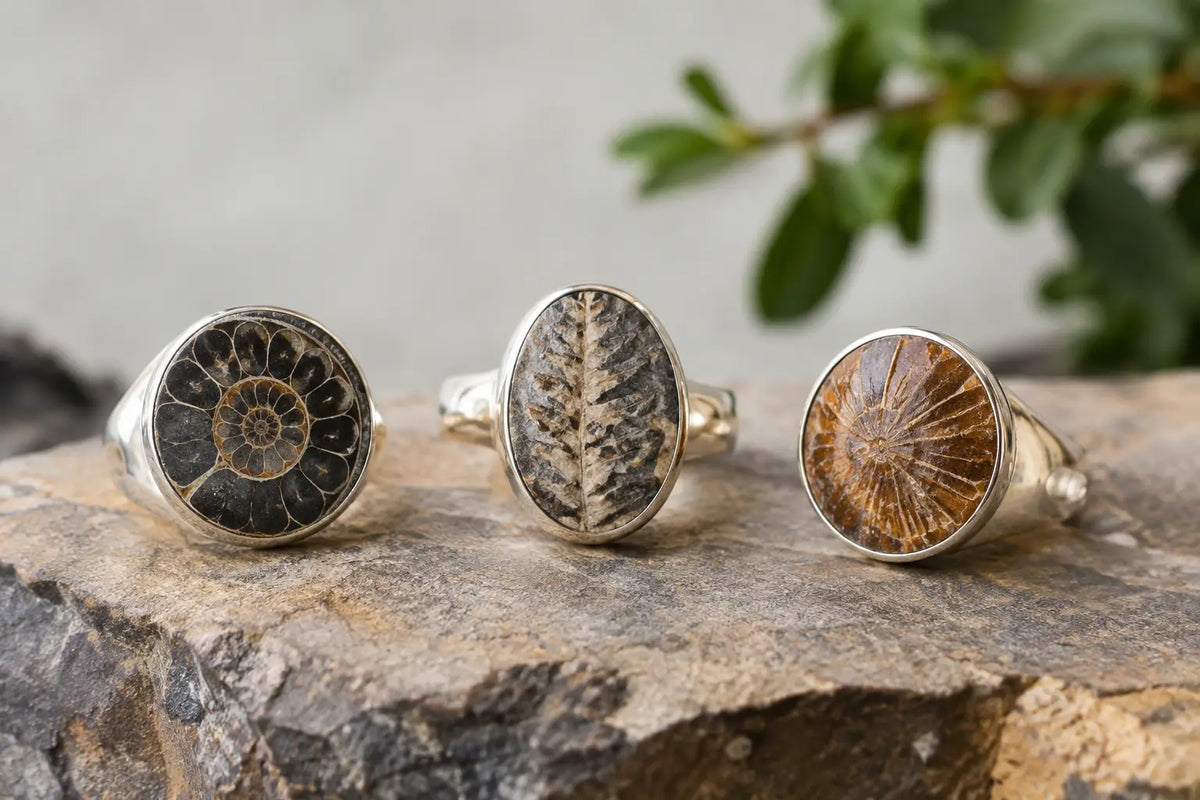
Fossil-based jewelry is a meeting point between natural history and modern craftsmanship. Depending on the design, the focal material may be dinosaur bone, petrified wood, ammonite, or another preserved natural specimen. For many statement rings and wedding bands, dinosaur bone and petrified wood are especially popular because their patterns remain visible after careful cutting and polishing.
Dinosaur bone is not simply old bone. Over an extraordinary span of time, the original organic material is replaced by minerals. The result is fossilized bone with small, distinctive cells that can reveal shades of brown, black, red, blue, green, or cream. Petrified wood goes through a similar transformation, preserving the appearance of wood grain while becoming stone.
That transformation gives fossil materials their visual character, but it also means they need thoughtful design. A handmade ring may pair a fossil inlay with tungsten, ceramic, titanium, or another strong band material. The setting helps protect the inlay while allowing the fossil's color and texture to remain the star.
A Ring Material With Real Meaning
People choose fossil rings for different reasons, and that is part of their charm. A dinosaur bone wedding band can represent endurance, a relationship that has stood the test of time, or simply a shared love of science, museums, and the natural world. Petrified wood can feel grounding and organic, especially for someone drawn to forests, travel, or earthy style.
For an anniversary or promise ring, fossil material can be a way to step outside expected jewelry traditions without losing emotional weight. The ring still carries a commitment, but it does so in a design that feels unmistakably yours. It is an especially fitting choice for couples who never wanted matching plain bands just because that was the default.
There is also a collector's appeal. A genuine fossil inlay has an origin story that cannot be manufactured from scratch. Its patterns were created by geological processes, not printed onto a surface. That distinction matters to buyers who want their jewelry to feel rare rather than merely unusual.
How Fossil Inlay Rings Are Made for Daily Wear
Natural materials require a different approach than solid metal jewelry. Fossil sections are selected, cut, shaped, and placed into a channel or inlay area within the ring. Skilled makers often stabilize the material and seal it with a protective finish, such as a clear resin, to help create a smooth, wearable surface.
The base band matters just as much as the inlay. Tungsten is a popular choice because it is highly scratch-resistant and has a satisfying, substantial feel. Ceramic offers a sleek, lightweight alternative with a smooth finish, while titanium can suit someone who prefers a lighter metal ring. Each material changes the final look and wearing experience.
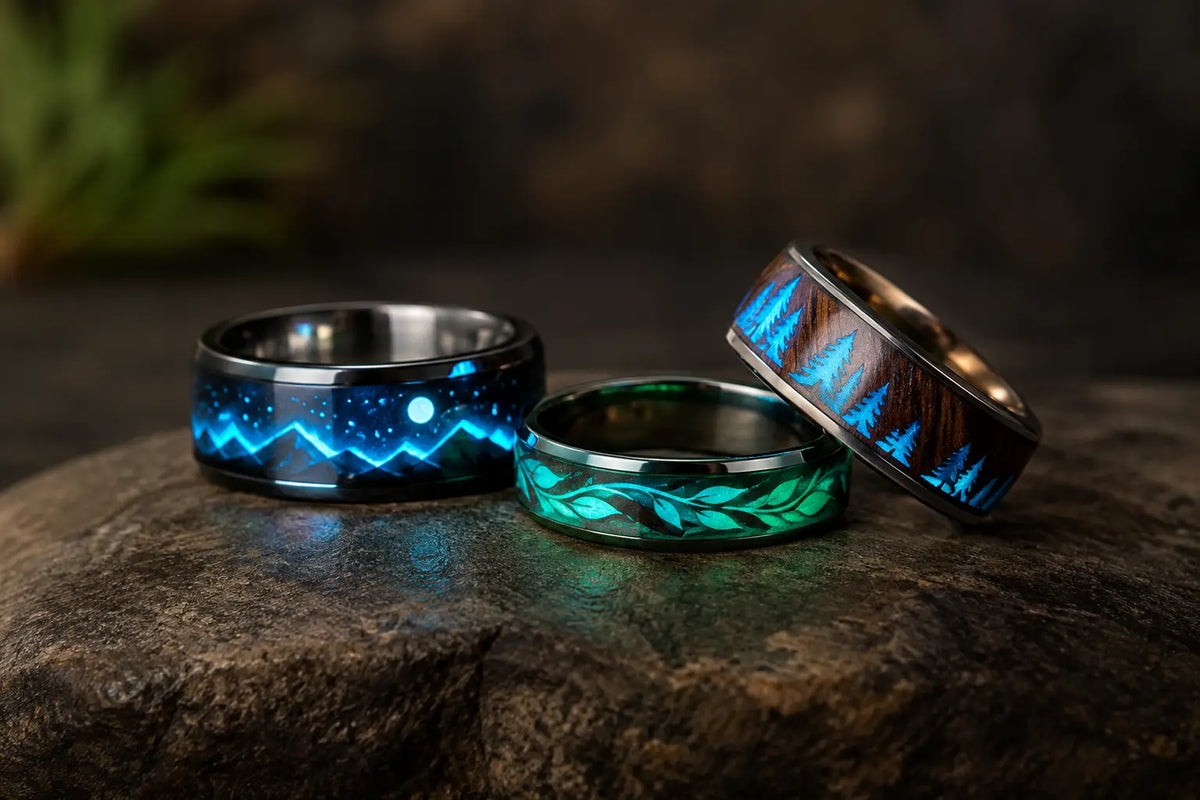
A wider band can give a fossil pattern more room to show its detail, while a narrower ring can feel understated and easy to stack. Some designs frame the fossil with metallic edges. Others combine it with opal, crushed crystal, meteorite, or glow accents for a bolder, more colorful effect. There is no single right choice. It depends on whether you want the fossil to be a quiet detail or the first thing people notice.
Durability Is About Design and Care
A well-made fossil ring is designed to be worn and enjoyed, but it is not indestructible. Tungsten may resist everyday scratches exceptionally well, yet a fossil or gemstone inlay should still be treated with care. The same is true of rings with opal, wood, or other natural materials.
Take your ring off before heavy lifting, contact sports, using harsh chemicals, or hands-on work where it could take a hard impact. Avoid prolonged exposure to strong cleaners, chlorine, and solvents. For routine cleaning, use a soft cloth and mild soap with water, then dry the ring thoroughly. Do not use abrasive brushes or ultrasonic cleaners unless the maker specifically confirms they are safe for that exact design.
These habits are simple, but they protect the details that made you choose the ring in the first place. A fossil inlay is a piece of natural history, not a disposable accessory.
Choosing the Right Fossil Ring
Start with the story you want your ring to tell. Dinosaur bone is often the natural pick for someone fascinated by prehistoric life or looking for a dramatic, textured pattern. Petrified wood may be better for a warmer, more subtle design. If you like contrast, look for a fossil inlay alongside a dark tungsten band or a bright opal stripe. If you prefer a more grounded look, choose neutral mineral tones with brushed metal edges.
Then consider lifestyle. Someone who works with their hands, exercises frequently, or rarely removes a ring may appreciate a protected inlay set into a durable tungsten or ceramic band. A person who sees jewelry as an occasional statement piece may have more freedom to choose delicate visual details. Neither approach is better, but being honest about daily wear prevents disappointment later.
Fit deserves equal attention. Wider bands generally feel tighter than thin rings in the same size, and comfort-fit interiors can make a substantial band easier to wear. Measure at a time when your hands are not especially cold or swollen, and avoid guessing based on a ring worn on another finger. Since materials such as tungsten cannot usually be resized in the same way as gold, getting the size right before ordering is particularly valuable.
Ask About the Materials, Not Just the Look
Photos can show color and pattern, but a confident purchase comes from knowing what is inside the ring. Look for clear descriptions of the band material, the specific fossil used, the type of protective finish, and whether the piece is handmade to order. Because fossil patterns naturally vary, product images should be understood as a guide to the style rather than a promise of an identical pattern.
That variation is a strength, not a flaw. Your ring should have the same overall design language you chose, while retaining its own natural markings. At Decazi, that individuality is part of what makes unconventional materials feel so meaningful in a wedding band or gift.
It is also wise to review care guidance, sizing support, production timing, and purchase protection before placing an order. Distinctive jewelry should still come with straightforward information. A beautiful material earns more trust when the buying process feels clear.
Fossil Rings for Weddings, Gifts, and Personal Milestones
A fossil ring does not need a special occasion to be worthwhile, but it is remarkably suited to meaningful ones. As a wedding band, it offers a lasting alternative to traditional metal-only styles. As an anniversary gift, it says that the relationship has history and depth. As a promise ring, it can be a visible reminder that what matters does not have to look like everyone else's version of love.
These rings also make memorable gifts for paleontology fans, outdoor enthusiasts, geology lovers, and anyone who has always been drawn to objects with a story. The best choice is not necessarily the loudest design. It is the one that reflects the person who will wear it, whether that means rich dinosaur bone cells, quiet petrified wood grain, or a fossil inlay paired with a flash of opal.
Choose a ring that feels good on the hand, suits the life it will be worn through, and carries a story worth telling when someone asks about it. That is where an ancient material becomes something entirely personal.