How to Design Custom Rings That Feel Personal
Most custom rings go wrong in one of two places: they look amazing but do not hold up to real life, or they are practical but miss the emotional spark that made you want a custom piece in the first place. If you are wondering how to design custom rings that actually feel personal, wearable, and worth making, the sweet spot is always where story meets structure.
That matters whether you are designing a wedding band, a promise ring, an anniversary gift, a memorial piece, or just a ring that feels more like you than anything in a standard display case. A custom ring should not only look different. It should mean something when you put it on, and it should still make sense six months and six years later.
How to design custom rings starts with the reason
Before you think about metal, inlays, width, or finish, get clear on why this ring exists. That sounds simple, but it shapes every design choice that follows. A wedding band worn every day has different demands than a statement ring for occasional wear. A memorial ring may need subtle symbolism, while an anniversary design might call for materials that feel rich in color and texture.
Start with the emotional center. Maybe you want a ring that reflects a shared love of space, the outdoors, ancient history, or a specific chapter of your relationship. Maybe you want matching bands that coordinate without being identical. Maybe you want something bold enough to stand out but not so loud that it stops feeling timeless.
This is where custom design gets exciting. Instead of starting with jewelry trends, start with personal meaning. Meteorite can feel cosmic and rare. Dinosaur bone carries age, texture, and a sense of wonder. Opal brings color play and softness. Petrified wood feels earthy and grounded. Glow inlays can make a ring more playful, modern, or symbolic. The right material is not just decorative. It tells the story.
Pick a base material that fits your lifestyle
The foundation of the ring matters more than many people expect. If the center of your design is an unusual inlay or collectible material, the base should support it visually and structurally.
Tungsten is a favorite for everyday wear because it is highly scratch resistant, substantial in hand, and naturally modern-looking. It works especially well for people who want a ring with weight and durability. Ceramic has a clean, sleek look and often feels lighter on the hand, which some people prefer. Damascus steel brings a layered, patterned surface that already has character before any inlay is added.
There is no single best choice for everyone. If you work with your hands, durability will matter more. If comfort is your priority, weight and profile may matter more. If you want a ring with a darker, more dramatic look, black tungsten or ceramic may fit the vision better than brighter finishes. A good custom ring design is not built around what sounds impressive on paper. It is built around how the piece will actually be worn.
Choose one focal material, not five competing ideas
A lot of custom rings become cluttered because the design tries to include every meaningful element at once. More symbolism does not always create a better ring. Usually, the strongest rings have one clear focal point and one or two supporting details.
If you love the cosmic feel of meteorite, let that material lead. If you are drawn to opal because of its movement and color, build around that. If dinosaur bone is the reason the ring feels special, give it room to be seen. A ring does not need to prove it is custom by showing everything at the same time.
Think in layers of attention. What should someone notice first? The color flash of opal? The texture of fossil material? The deep pattern of Damascus steel? Once you answer that, the rest of the design gets easier. Secondary elements should support the main material, not compete with it.
Shape, width, and profile change the entire look
Two rings can use the same materials and still feel completely different because of width and shape. This is one of the most overlooked parts of custom design.
A wider band creates more visual impact and gives detailed inlays more room to show. That can be great for statement rings or bold wedding bands. A narrower band tends to feel more understated, lighter, and sometimes more comfortable for people who are not used to wearing jewelry.
Then there is the profile. A domed band feels classic and soft. A flat band looks cleaner and more contemporary. Beveled edges add sharpness and definition. Rounded inner comfort fit styles often make a noticeable difference for daily wear.
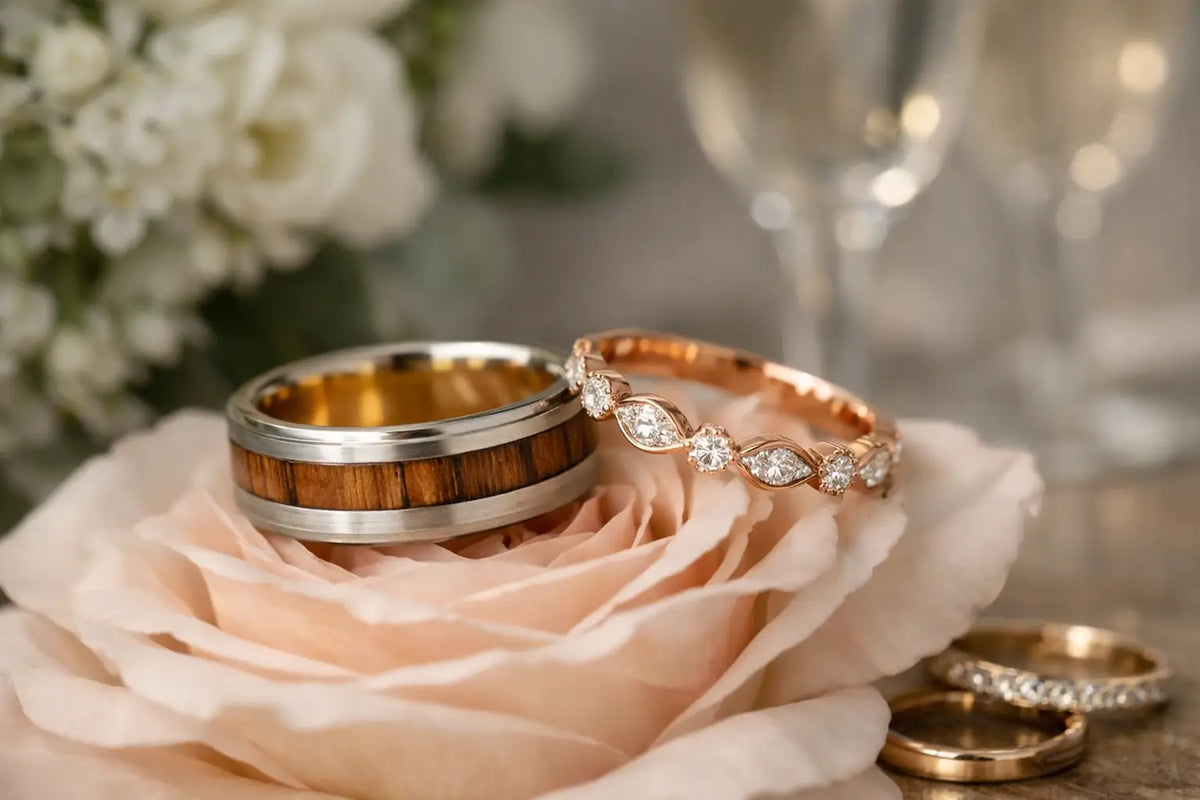
This is also where matching sets can be handled well. Couples do not need identical rings to look connected. Shared materials with different widths or profiles often feel more personal than exact copies. One partner may want a wider tungsten band with meteorite, while the other prefers a slimmer profile with the same inlay. The relationship is visible without forcing the same design onto two different people.
Think about contrast and texture
The best custom rings usually have some kind of contrast. That could be dark against bright, matte against polished, smooth against rugged, or subtle base metal paired with a vivid inlay.
Texture matters because rings are tactile objects. You see them, but you also feel them constantly. A polished surface reads cleaner and dressier. A brushed or matte finish often feels more grounded and can hide daily wear a bit better. Crushed opal has an energetic, colorful shimmer, while petrified wood or dinosaur bone brings a more organic pattern. Glow materials shift the ring into something playful and surprising, especially for people who want a piece that changes character in low light.
Contrast also helps unusual materials feel intentional. A black tungsten band with bright opal can look dramatic and modern. A silver-toned base with meteorite may feel more celestial and crisp. Earthy inlays often shine when paired with a darker frame that gives them depth.
How to design custom rings that stay wearable
This is the practical checkpoint people should take seriously. A ring can be beautiful in a product mockup and still not be the best choice for your routine.
Ask yourself how often you will wear it, what your hands do all day, and how much visual attention you actually want. If the ring is for daily wear, comfort and durability should lead the conversation. If it is for special occasions, you may be able to go bolder with width, texture, or unusual combinations.
It also helps to be honest about your style. If you wear mostly minimal pieces, a ring with multiple bright inlays may feel exciting at first but less natural long term. If your style already leans expressive, a quiet design may end up feeling too safe. Custom design works best when it reflects your real taste, not a fantasy version of who you think you should be.
Use symbolism with restraint
One reason people love custom rings is that they can hold meaning that is not obvious to everyone else. That private significance is part of the appeal.
You do not need to explain every detail through the design itself. A ring can represent a night sky, a shared hiking trip, a memorial, or a major life promise without becoming overly literal. Sometimes one meaningful material says more than engraved sentences, birthstones, and multiple symbolic colors all stacked together.
Subtlety tends to age well. Rings that leave a little room for interpretation often feel more elegant and more lasting. If the story matters deeply to you, it is already there. The design does not need to shout it.
Work backward from confidence, not just creativity
A custom ring is personal, but it is also a purchase you want to feel good about. That means design is only part of the process. Fit, craftsmanship, finish quality, and material handling all matter just as much.
If you are ordering online, clear sizing guidance, strong customer reviews, and transparent production details should carry real weight. Handmade rings with uncommon materials need thoughtful construction, not just interesting concepts. The goal is not simply to invent something unusual. It is to create a ring that feels well made, intentional, and worthy of the meaning attached to it.
That is why the best custom pieces are rarely the busiest ones. They are the ones where every decision makes sense together: the base material, the focal inlay, the width, the finish, and the story behind it. At Decazi, that balance is what makes unconventional rings feel not just striking, but genuinely wearable.
If you are designing your own ring, trust the idea that keeps pulling you back. The right custom design usually does not feel random or forced. It feels like recognition - like you finally found the version of the ring that should have existed all along.