Guide to Meteorite Ring Care for Everyday Wear
A meteorite ring is not just a striking wedding band or statement piece. It carries material that traveled through space long before it became part of your story. This guide to meteorite ring care explains how to protect that rare texture and distinctive etched pattern while wearing your ring with confidence.
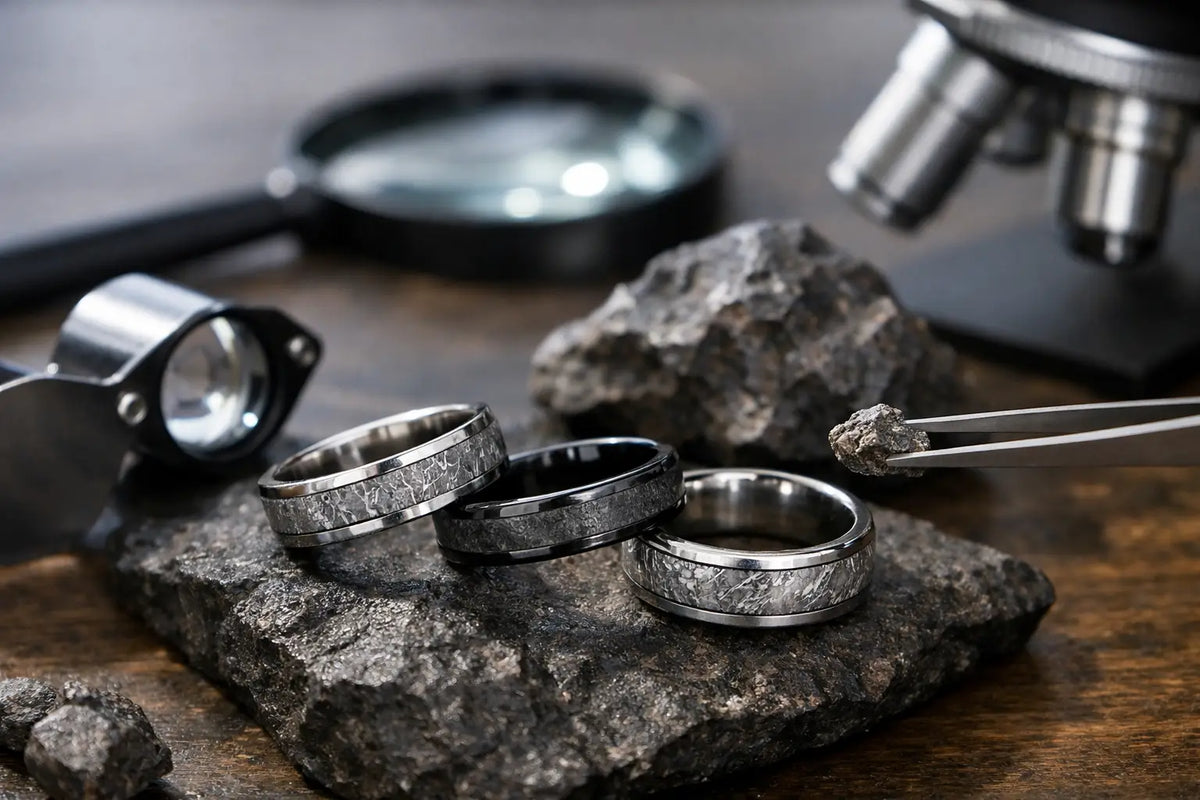
Meteorite is an iron-rich natural material, often chosen for its dramatic Widmanstatten pattern: the crystalline lines revealed when the surface is carefully etched. That pattern is real, individual, and impossible to duplicate exactly. It also means meteorite deserves more thoughtful care than a standard solid metal band.
Why meteorite rings need different care
Most meteorite used in jewelry contains iron and nickel. Iron can oxidize when it is repeatedly exposed to moisture, salt, chemicals, or humid storage conditions. Oxidation may first appear as tiny orange-brown spots, darkening, or a rougher-looking area in the pattern.
That does not mean a meteorite ring is too delicate for everyday life. Many handcrafted designs pair meteorite with highly durable materials such as tungsten or ceramic, and the meteorite itself is often treated and sealed during production. Still, the inlay or exposed meteorite section remains the part that needs your attention. Think of it like caring for a fine leather item: it is made to be used and enjoyed, but it will look its best when you avoid the situations that wear it down unnecessarily.
The exact care routine depends on the ring’s construction. A meteorite inlay protected within a tungsten band may handle daily wear differently than a ring with a broad exposed meteorite surface. Finishes, coatings, and companion materials such as opal, wood, or glow inlay can also change what is safe to use. When in doubt, follow the maker’s care instructions rather than testing a cleaning method yourself.
Guide to meteorite ring care: daily habits that matter
The simplest rule is this: keep your ring dry when you can, and remove it before messy, chemical-heavy, or high-impact tasks. A little mindfulness goes a long way toward preserving the original finish.
Take your meteorite ring off before showering, swimming, washing dishes, using a hot tub, applying lotions, or cleaning with household products. Chlorine, salt water, bleach, hand sanitizer residue, and strong soap can all affect the protective finish over time. Sweat is also mildly salty, so it is smart to remove the ring for intense workouts, yard work, or long days at the beach.
You do not need to panic if you get caught in the rain or wash your hands while wearing it. Dry the ring promptly with a soft, clean cloth. The concern is repeated or prolonged exposure, especially when moisture sits in the edges of an inlay or under the ring against your skin.
A good everyday routine is wonderfully uncomplicated: put your ring on after you have finished grooming and applying products, then take it off before sleep if you tend to use overnight skincare or if the ring might knock against a bedside table. This also helps prevent accidental scratches from daily contact with harder surfaces.
How to clean a meteorite ring safely
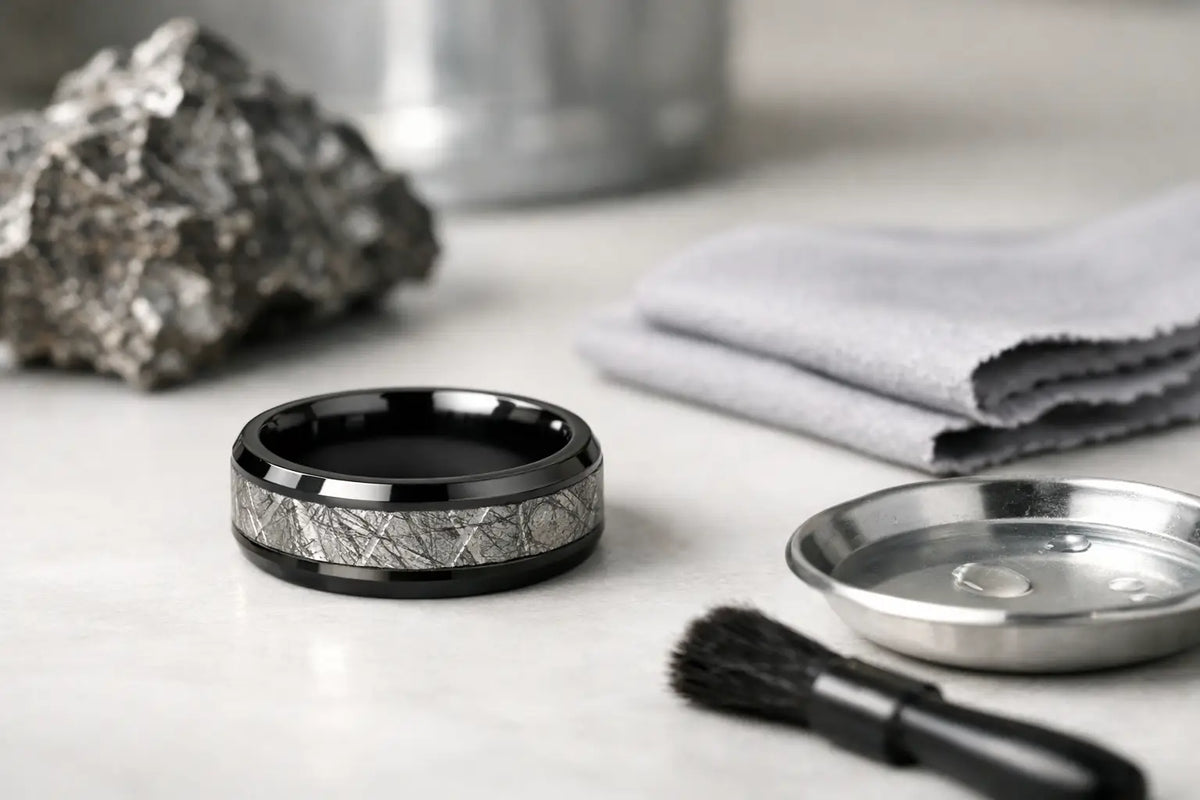
For light cleaning, begin with a dry microfiber jewelry cloth. Gently wipe the meteorite and the rest of the band to remove fingerprints, skin oils, and dust. Avoid aggressive rubbing, especially along etched lines or around inlays.
If the ring needs more than a dry wipe, use a slightly damp soft cloth and clean only the affected area. Dry it immediately and thoroughly with a second cloth. Do not soak the ring in water, and do not leave it on a towel to air-dry.
Skip ultrasonic cleaners, steam cleaners, jewelry dips, polishing compounds, and abrasive cloths unless the maker specifically confirms they are safe for your exact design. These methods can strip a coating, alter an etched finish, loosen certain inlay materials, or leave residue in narrow seams. A cleaner that works well for a plain gold band is not automatically right for a meteorite ring.
Be especially careful with popular at-home fixes. Toothpaste, baking soda, vinegar, lemon juice, and metal polish may sound harmless, but they are too abrasive or reactive for many meteorite finishes. Oils are another mixed bag. Some people use them to temporarily deepen the pattern’s appearance, yet the wrong product can collect dust, create uneven color, or interfere with a professional refinishing later on. Only use a protectant if it was recommended for your ring’s particular meteorite treatment.
Protect the pattern from scratches and impact
Meteorite is meaningful, but it is not invincible. The material can be vulnerable at exposed edges, and the broader ring design may include other materials with different hardness levels. Tungsten, for example, resists everyday scratching beautifully but can crack under a sharp, forceful impact. Opal and crystal inlays need an even gentler approach.
Remove your ring for weightlifting, construction work, home repairs, rock climbing, woodworking, or any activity where it could be pinched, struck, or dragged across a rough surface. It is also wise to take it off before handling dumbbells, tools, and sporting equipment. Preserving your band is not about keeping it in a box. It is about choosing the right moments to wear it.
If your ring is a wedding band, consider keeping a simple silicone backup band for travel, workouts, and hands-on work. That lets you keep the symbolism close without exposing your meteorite ring to the harshest parts of your day.
Store your meteorite ring the right way
Never toss a meteorite ring into a bathroom dish or leave it beside a sink. Bathrooms tend to hold humidity, and moisture is exactly what iron-rich materials do not need. After cleaning or wearing the ring in warm weather, make sure it is fully dry before putting it away.
Store it in a fabric-lined ring box, a soft pouch, or a separate compartment in a jewelry case. Keeping it apart from other pieces prevents scratches, particularly from diamonds and hard metal edges. For long-term storage, choose a cool, dry location rather than a damp drawer, garage, or windowsill.
If you live in a very humid climate or plan to store the ring for a season, a small desiccant packet nearby can help reduce ambient moisture. Keep the packet separate from the ring rather than pressed against it. This is a practical precaution, not a substitute for checking that the ring is clean and dry first.
What to do if you see rust or discoloration
Do not scrub at a brown spot or try to polish it away. Meteorite rings can often be professionally cleaned, re-etched, and resealed, but DIY abrasion may make the repair more complicated. The original pattern is part of the ring’s character, so preserving it is worth a careful approach.
If you notice orange spotting, dark patches, lifting around an inlay edge, or a change in texture, stop wearing the ring until you can contact the maker or a jeweler experienced with meteorite jewelry. Take a clear photo in natural light and describe when you first noticed the issue. That information can help determine whether the ring needs a simple refinishing service or more detailed repair.
A meteorite ring should feel personal, not precious in the stressful sense. Wear it for the moments that matter, dry it after moisture, and give it a safe place to rest when life gets hands-on. Those small habits help the piece keep telling its extraordinary story for years to come.