9 Best Unconventional Wedding Band Materials
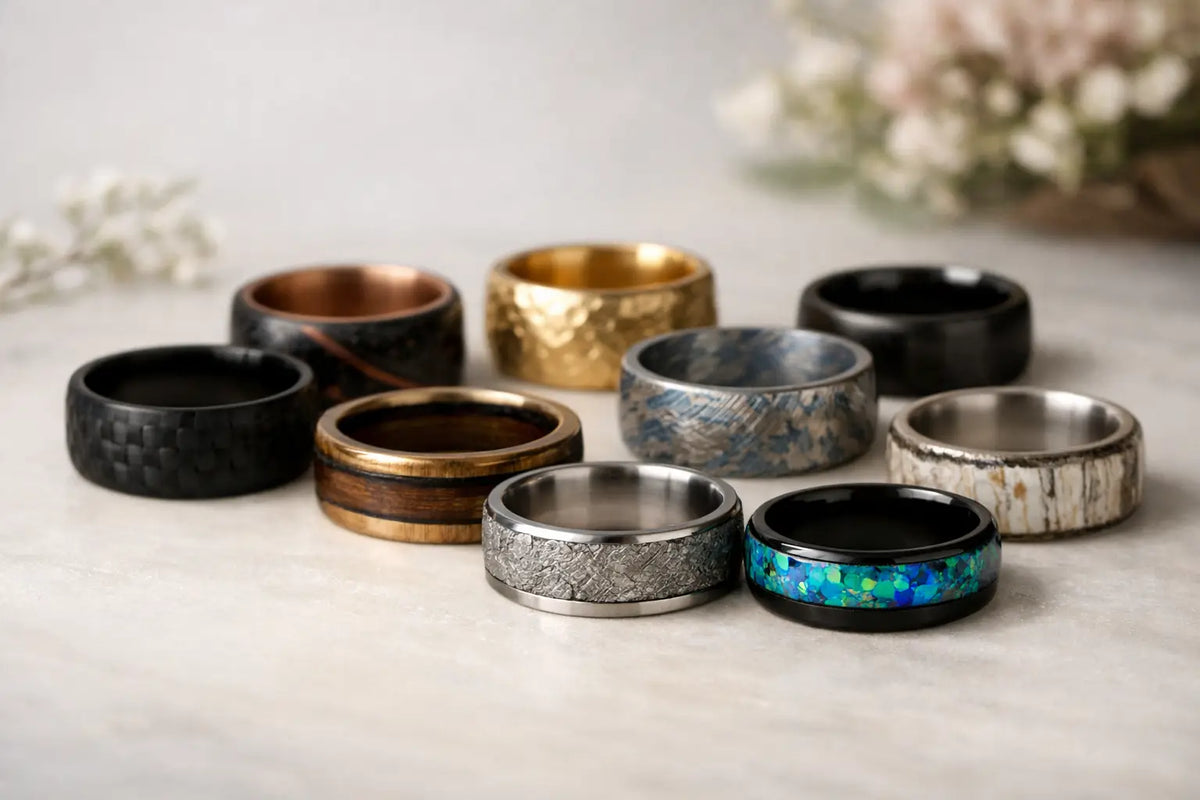
The ring that makes you stop scrolling usually is not plain gold. It is the one with a slice of meteorite, a flash of opal, a fossil pattern, or a dark metal finish that actually feels like you. That is exactly why more couples are searching for the best unconventional wedding band materials - not just for looks, but for symbolism, durability, and a story worth wearing every day.
Traditional bands still have their place, but they are not the only way to mark a marriage. If you want something more personal, tactile, and memorable, the material matters as much as the design. Some rings lean cosmic. Some feel earthy and ancient. Others are all about modern strength. The right choice depends on your style, your lifestyle, and how much character you want built into the band.
What makes the best unconventional wedding band materials?
A beautiful ring is easy to fall for in a photo. Living with it every day is a different question. The best unconventional wedding band materials need to do more than look interesting. They should feel comfortable, hold up to regular wear, and still carry the meaning that drew you in the first place.
That means there is rarely one perfect material for everyone. If you work with your hands, a tougher base like tungsten or ceramic may make more sense than a softer, more delicate inlay. If symbolism is your top priority, meteorite, dinosaur bone, or petrified wood can make the ring feel deeply personal in a way plain metal often does not. The sweet spot is finding a material that balances visual impact with real-life wearability.
9 best unconventional wedding band materials to consider
Tungsten
Tungsten has become a favorite for good reason. It is dense, substantial, and highly scratch resistant, which makes it especially appealing for everyday wear. It also has a clean, modern look that works well on its own or as a base for more unusual inlays.
If you want a band that feels durable and reassuringly solid, tungsten is hard to beat. The trade-off is that it is extremely hard, which means it can crack under a severe impact rather than bend. For many buyers, that is still a worthwhile exchange for the toughness and polished finish it offers.
Ceramic
Ceramic wedding bands have a sleek, lightweight feel that surprises people the first time they try one on. They are often chosen for their contemporary style, especially in black or crisp white finishes. Ceramic is also very scratch resistant, so it tends to keep its clean appearance well.
The main thing to know is that ceramic is more brittle than a metal like gold. It performs well in normal daily wear, but it is not the best pick if your ring is likely to take heavy knocks. For someone who wants a minimalist look with an unconventional edge, though, ceramic is a strong option.
Damascus steel
Damascus steel brings pattern and texture into the spotlight. Instead of a flat, uniform surface, you get flowing lines that make each ring feel more organic and one of a kind. It has a handcrafted character that appeals to people who want something masculine, distinctive, or a little less polished in the traditional sense.
It is worth remembering that Damascus steel can need more care than some alternative metals, depending on the finish and construction. Moisture and harsh chemicals are not ideal. Still, if you love visible craftsmanship and want a band with movement and depth, it offers a lot of personality.
Meteorite
Meteorite is one of the most compelling choices for couples who want meaning built right into the material. The natural patterning is not manufactured. It comes from a piece of space that has traveled for millions of years before becoming part of a ring. That alone gives it a kind of gravity that standard metals rarely match.
Meteorite works especially well as an inlay paired with a durable base. That combination gives you the visual rarity without relying on the meteorite alone for structure. The main trade-off is maintenance. Because meteorite contains iron, it should be treated with care to help prevent rust over time.
Moon dust
Moon dust has a softer, more poetic appeal than meteorite, but it still carries that same cosmic sense of wonder. It is often used in inlays or blended finishes that create a subtle shimmer rather than a dramatic pattern. For couples who love the symbolism of space but want something understated, moon dust can feel beautifully personal.
This is not the kind of material you choose for brute toughness. You choose it because the story matters. A moon-inspired ring can feel romantic without slipping into anything overly traditional, which is exactly what many modern couples want.
Dinosaur bone
Dinosaur bone is impossible to ignore. It has age, texture, and a natural mosaic-like pattern that feels both rugged and rare. If you want a wedding band that starts conversations, this is one of the strongest contenders.
Because it is a fossil material, dinosaur bone is usually set into a tougher base ring rather than used alone. That gives you better everyday durability while preserving the color and pattern that make it so special. It is a bold choice, but for the right person, bold is the point.
Opal
Opal is for the buyer who wants color and movement. Few materials change with the light the way opal does. It can flash blue, green, red, or violet depending on the angle, which makes a ring feel lively and expressive instead of static.
The caution here is simple: opal is more delicate than many alternative materials. It can be a wonderful wedding band choice, but it is best for wearers who are willing to be a little more mindful. If your priority is maximum toughness, there are better options. If your priority is unforgettable color, opal deserves a hard look.
Petrified wood
Petrified wood carries a grounded, natural kind of beauty. It gives you the look of wood grain, but with the mineralized structure of a fossil. The result is a ring that feels earthy and refined at the same time.
This material often appeals to couples who want nature symbolism without going rustic. Like dinosaur bone, it is usually used as an inlay inside a stronger band. That makes it easier to enjoy the visual warmth of wood tones while still getting the practical support of a durable base.
Crushed stone and crystal inlays
Crystals and crushed stone inlays open up a huge range of visual possibilities. You can go dark and dramatic, bright and colorful, or subtle with a texture that catches light in a more understated way. This category works well for buyers who want a ring that feels customized rather than conventional.
Durability depends a lot on how the inlay is set and what base material supports it. That is why craftsmanship matters so much here. A well-made ring can give you a statement look without feeling fragile, especially when paired with tungsten or another sturdy foundation.
How to choose the best unconventional wedding band materials for your lifestyle
The best-looking ring is not always the best long-term match. If your hands are constantly in motion at work, lean toward materials known for scratch resistance and structural strength. Tungsten and ceramic usually make more sense for active daily wear than softer or more sensitive inlays.
If your ring is more about symbolism, then the decision shifts. Meteorite, moon dust, dinosaur bone, and petrified wood all bring a story that many couples connect with instantly. In that case, choosing a strong base with a meaningful inlay often gives you the best of both worlds.
It also helps to think about your comfort with maintenance. Some materials are close to carefree. Others need a little more attention to keep them looking their best. That does not make them bad choices. It just means the right ring is the one that fits your habits as naturally as it fits your finger.
Why craftsmanship matters with unconventional materials
With traditional plain bands, material choice does a lot of the work. With unconventional rings, construction matters just as much. The setting, sealing, finish, and base metal all affect how the ring performs over time.
That is why handmade quality can make a real difference. A rare material is only as wearable as the ring built around it. When the craftsmanship is thoughtful, unusual materials stop feeling risky and start feeling reliable enough for daily life. That is a big part of what makes these rings so appealing now. They offer personality without forcing you to give up practicality.
For many couples, the real answer to the best unconventional wedding band materials is not a single winner. It is the material that reflects your story, suits your routine, and still makes you look down at your hand and smile months later. If a wedding band can do that, it is doing much more than following tradition.