
How to Choose Statement Rings That Feel Like You
A statement ring should earn the second look, but it should also feel right when you reach for coffee, hold hands, or type through a busy afternoon. Learning how to choose statement rings is less about following one style rule and more about matching a bold design to your hand, your routine, and the story you want to wear. The best piece feels memorable without feeling like a costume.
Start With the Story You Want the Ring to Tell
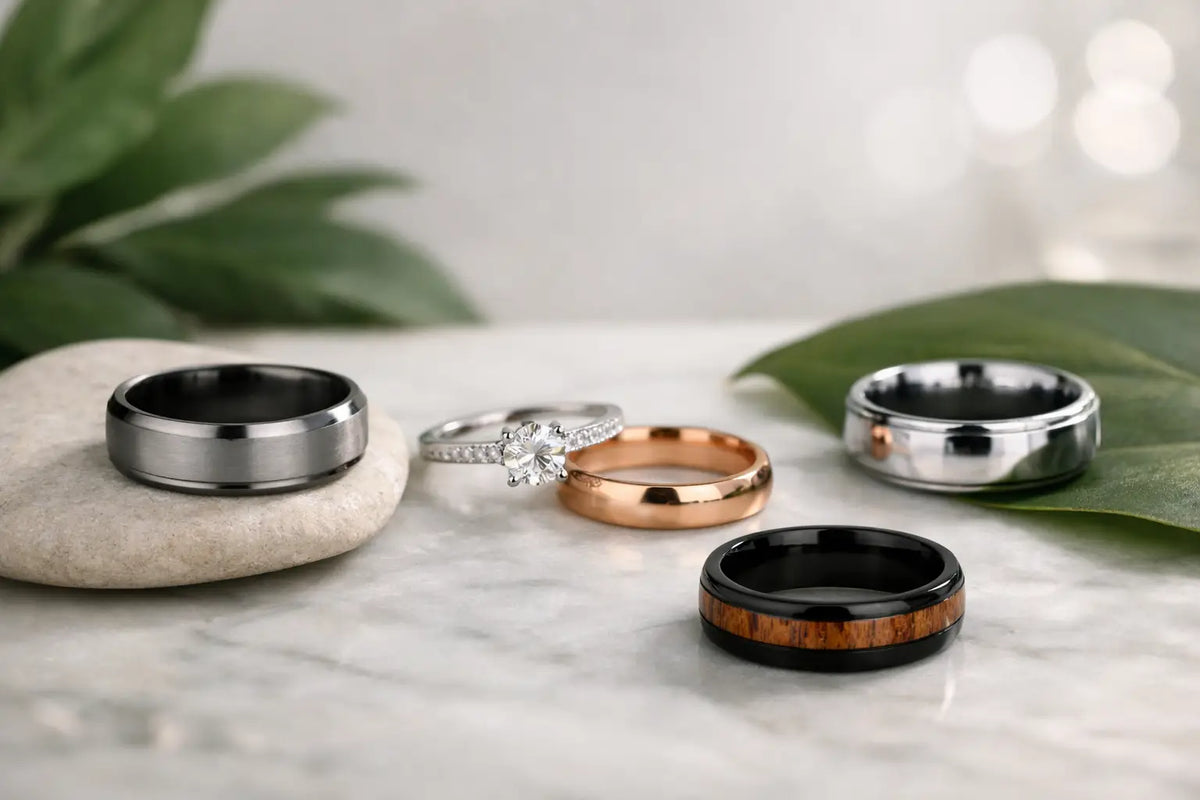
Statement jewelry has presence, but presence can mean different things. A black tungsten ring with a clean beveled edge can make a sharp, modern statement. A band with meteorite, dinosaur bone, moon dust, opal, or crushed crystal tells a more personal story before you say a word. Neither approach is better. The right choice depends on whether you want your ring to feel understated and unusual or visibly colorful and expressive.
For a wedding band or engagement ring, consider the meaning you will still connect with years from now. A meteorite inlay can represent a once-in-a-lifetime connection. Dinosaur bone and petrified wood bring a sense of history. Opal and glow materials offer color, movement, and a little unexpected magic. For an anniversary, promise ring, or gift, the material can reflect a shared memory, a favorite place, or simply the recipient's unmistakable style.
A statement ring does not need a dramatic origin story to matter. It can be the ring that finally feels more like you than a traditional gold band ever did.
How to Choose Statement Rings for Your Everyday Style
Before focusing on the most unusual material, look at the jewelry and clothes you already wear. If your wardrobe leans minimalist, a dark ceramic or tungsten band with one distinctive inlay may be the perfect contrast. If you wear layered necklaces, vintage denim, colorful nails, or mixed metals, you may enjoy a wider band with opal, crystal, or a detailed Damascus steel pattern.
Think about the colors you naturally repeat. Cool tones such as silver, black, blue, and gray often pair easily with meteorite, blue opal, and moon dust designs. Warm earth tones work beautifully with dinosaur bone, wood, coppery details, and certain opals. This is not a restriction. A bright ring can be exactly what brings a neutral outfit to life. It is simply helpful to choose a color palette you will be excited to see every day.
Also decide whether the ring will be your main focal point. A bold, wide ring generally looks best when it has room to stand on its own. If you love stacking, choose a profile that can sit comfortably beside slimmer bands. A statement ring can still be part of a set, but a crowded stack can hide the material details that made you fall in love with it.
Get the Width and Profile Right
Ring width has a major effect on how a design looks and feels. Narrower bands, often around 4 mm to 6 mm, create a quieter statement and can be an easy choice if you are new to wider jewelry. Bands around 7 mm to 8 mm are a popular middle ground, offering enough surface area for an inlay while remaining wearable for many people. Wider styles, often 10 mm and above, deliver maximum visual impact and make intricate materials easier to appreciate.
There is no rule that certain hands need certain widths. Try on different proportions if possible, or compare a strip of paper cut to your preferred width around your finger. The goal is to see what feels balanced to you. If you have not worn rings often, a moderate width may be more comfortable than starting with the boldest option.
Profile matters just as much. A domed ring has a rounded exterior and a classic feel. A flat band looks more architectural and modern. Beveled edges add definition, while a comfort-fit interior has a gently rounded inner surface that can make a wider band easier to wear. Small construction details often determine whether a ring becomes an everyday favorite.
Choose Materials That Suit Your Lifestyle
The most exciting material is not always the best material for every routine. Consider where your hands spend their time: at a desk, in the gym, outdoors, around tools, in a studio, or caring for children. Distinctive rings are made to be worn, but choosing thoughtfully helps protect the finish and preserves your comfort.
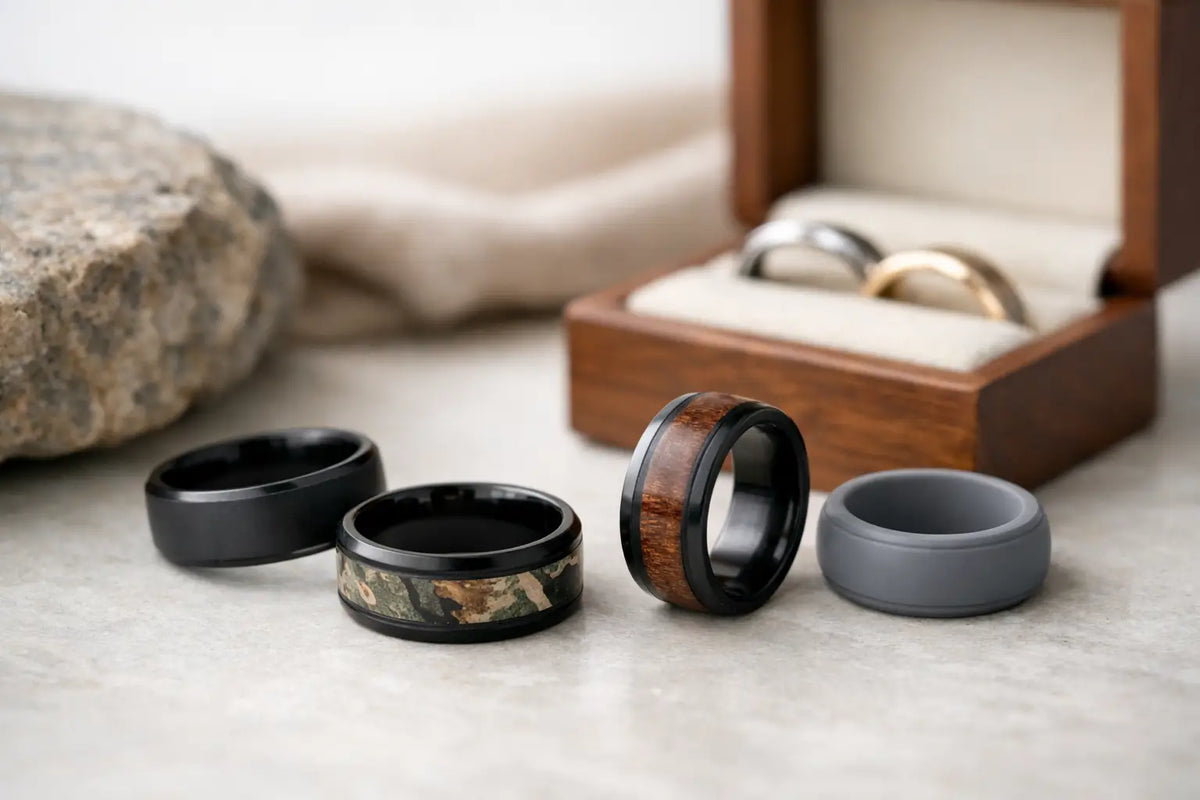
Tungsten is valued for its substantial feel and strong resistance to everyday scratching. It is an excellent option for people who like a weighty band and a polished, confident look. Ceramic offers a lighter feel and a sleek appearance that works especially well in black or white designs. Damascus steel brings intricate patterning and a rugged character, while inlays such as meteorite, opal, wood, fossil, and crystal introduce one-of-a-kind texture and color.
Every material involves a trade-off. Highly tactile inlays may need more mindful care than a plain metal band. Opal can be sensitive to harsh impacts and sudden temperature changes. Wood and fossil-based materials should not be treated like disposable accessories. Avoid wearing any ring during heavy lifting, contact sports, harsh chemical cleaning, or work that could expose it to a hard knock.
If you have known metal sensitivities, check the specific material details before ordering rather than assuming every silver-toned or black ring is the same. Your comfort matters as much as the design.
Do Not Guess Your Ring Size
A remarkable ring is only remarkable if you want to keep it on. Ring sizing can shift with temperature, hydration, exercise, and time of day, so measure when your hands are at a normal temperature. A ring should pass over the knuckle with a little resistance, then sit securely without pinching or spinning constantly.
Width changes fit. A wide 8 mm band can feel tighter than a thin ring in the same listed size because it covers more of the finger. If you are choosing a wide statement band, use a sizing method intended for wider rings or ask for guidance before ordering. This is especially valuable when selecting materials such as tungsten or ceramic, which generally cannot be resized in the way many traditional precious-metal rings can.
If the ring is a surprise gift, borrowing a ring that the recipient already wears on the same finger can help, but make sure it is measured professionally or with a reliable sizing tool. Guessing from shoe size, height, or a photo is rarely accurate enough for a meaningful purchase.
Think Beyond the First Photo
Online photos are useful for showing color and craftsmanship, yet natural materials can vary. That variation is part of their appeal. Meteorite patterns, wood grain, fossil textures, opal flashes, and crystal fragments will not look identical from ring to ring. If you want a piece with personality, a little variation is a feature, not a flaw.
Read the product details closely for width, profile, material composition, care guidance, and production timing. Handmade-to-order rings take skill and attention, and that process is worth understanding when you are purchasing for a wedding date, anniversary, or other fixed occasion. Leave room for delivery, sizing questions, and any personalization you want to include.
Trust should be part of the design decision, too. Look for clear policies, verified customer feedback, real material information, and a seller who explains what makes each ring durable and how to care for it. Decazi creates handcrafted designs around unusual, collectible materials because a ring can be both a daily accessory and a lasting conversation piece.
Let Confidence Be the Final Test
The right statement ring does not have to match every outfit or appeal to everyone who sees it. It should make sense on your hand and in your life. Maybe that means a minimal black band with a quiet meteorite line, or maybe it means a bright opal-and-crystal inlay that catches light from across the room.
Choose the one that still feels personal after the initial excitement fades. A great ring is not only bold because of what it is made from. It is bold because it gives you a small, lasting reminder of who you are, who you love, or the moment you decided ordinary was not for you.