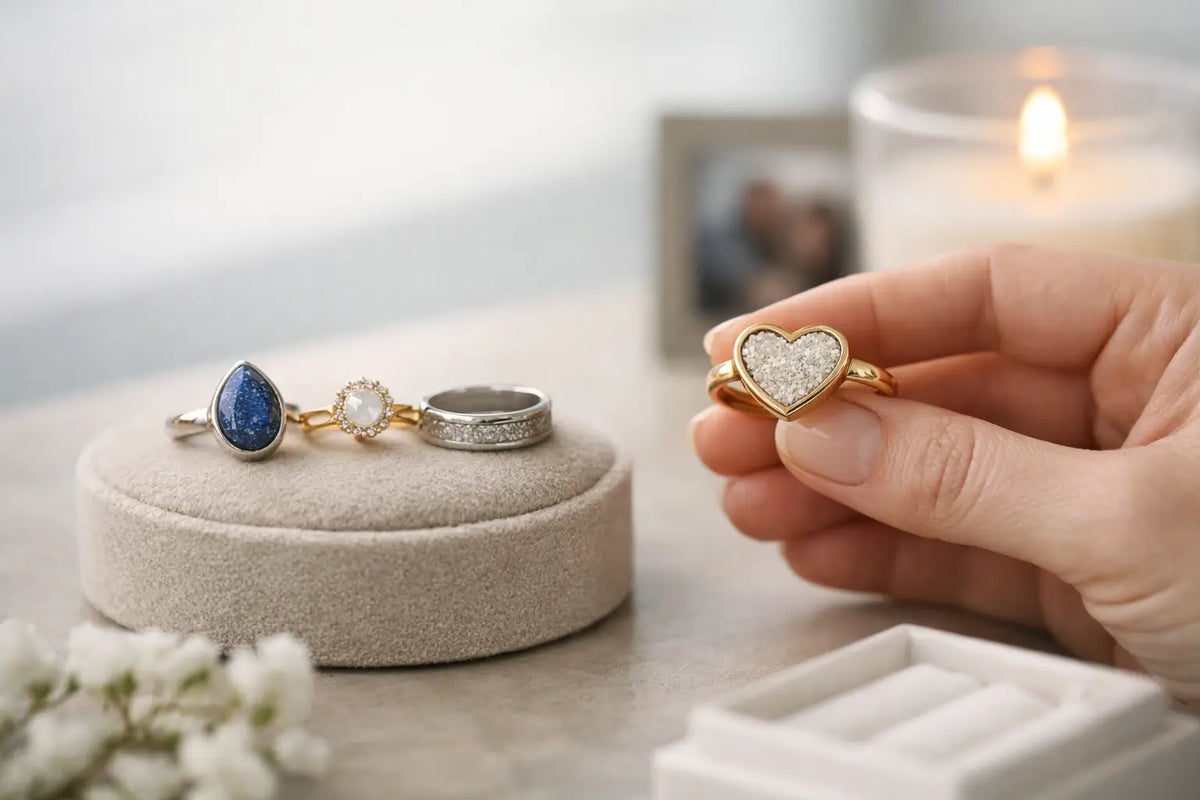

How to Measure Ring Size at Home Accurately
A ring can hold a piece of the night sky, a flash of opal, or even a fragment of ancient dinosaur bone. But none of that matters if it spins, pinches, or refuses to pass the knuckle. Knowing how to measure ring size accurately is the small step that makes a meaningful ring feel made for its person from the very first wear.
For the most reliable result, measure when your hands are at a normal temperature, not just after a workout, a hot shower, or time outside in the cold. Fingers naturally swell and shrink throughout the day, so a quick measurement taken at the wrong moment can be misleading.
How to Measure Ring Size With an Existing Ring
If the recipient already owns a ring that fits comfortably on the intended finger, this is usually the easiest at-home method. Choose a ring worn regularly, not one that only fits on a smaller or larger finger. A ring that fits the right hand may not fit the same finger on the left hand.
Lay the ring flat on a ruler and measure the inside diameter in millimeters. Measure straight across the center from one inner edge to the other. Do not include the metal itself. Then compare that inside diameter with a standard US ring-size chart.
Here are a few common reference points:
| US Ring Size | Inside Diameter |
|---|---:|
| 6 | 16.5 mm |
| 7 | 17.3 mm |
| 8 | 18.2 mm |
| 9 | 18.9 mm |
| 10 | 19.8 mm |
| 11 | 20.6 mm |
| 12 | 21.4 mm |
This method works particularly well for a surprise gift because it does not require asking the wearer to measure. For better accuracy, measure the ring two or three times. A difference of even half a millimeter can change the size.
Check the Ring’s Width Before You Copy Its Size
A slim 2 mm ring and a bold 8 mm wedding band do not feel the same on the finger. Wider bands cover more skin, creating a closer fit. If the new ring is substantially wider than the ring you measured, consider going up by a half size, especially if the wearer’s knuckles are prominent or their fingers tend to swell.
This is common with statement rings and wedding bands made from tactile materials like tungsten, ceramic, Damascus steel, or layered inlays. Their comfortable weight and presence are part of the appeal, but width should always be part of the sizing decision.
How to Measure Ring Size With Paper or String
No existing ring? A narrow strip of paper is better than stretchy string, dental floss, or ribbon. Soft materials can pull tight around the finger and produce a size that feels uncomfortably small.
Cut a strip of non-stretch paper about one-quarter inch wide. Wrap it around the base of the intended finger, where the ring will sit. It should feel snug but not tight. Mark the point where the paper overlaps, then lay it flat and measure the length in millimeters.
That measurement is the finger’s circumference. Compare it to a US ring-size chart, or use an online printable ring sizer only after confirming the print scale is accurate. A proper printable guide should include a test line or square so you can verify it printed at 100% scale.
Repeat the process at least twice, ideally at different times of day. If you get two nearby results, choose the larger measurement. A ring should glide over the knuckle with gentle resistance, then sit securely at the base of the finger without leaving a deep mark.
Avoid These Common Measuring Mistakes
The most common mistake is pulling the paper strip too tightly. A ring needs to clear the knuckle, not just fit at the finger’s base. Another is measuring in the morning, when many people experience mild swelling, or after hands have been chilled, when fingers can be temporarily smaller.
Be mindful of salt, heat, exercise, and travel as well. All can affect finger size for a few hours. Measure on a relaxed afternoon or evening with hands at a comfortable room temperature. If you are between sizes, a half size larger is often the safer choice for a wider band.
Use a Ring Sizer for the Most Confident Result
An inexpensive adjustable ring sizer is the best at-home tool because it works like a tiny belt around the finger. Slide it on, tighten it until it is comfortably snug, and make sure it can move over the knuckle. Read the indicated US size only after checking both positions.
Plastic multi-size ring sizers can work well too. Try the sizes around your expected fit and pay attention to how each one passes over the knuckle. The right size should not spin freely, but it should come off without force or discomfort.
A local jeweler can also size a finger in minutes. This is the most dependable option when ordering a significant wedding band, engagement ring, or custom piece. It is especially worthwhile when a person has large knuckles, tapered fingers, arthritis, or a size that falls between standard measurements.
Choosing the Right Fit for Different Ring Styles
The best ring size depends on the design, not just the number on the tag. A narrow stackable band can fit closer, while a wide comfort-fit band may need a little extra room. Comfort-fit interiors are gently rounded inside, so they can slide over the knuckle more easily than flat interiors of the same size.
For rings with a wide profile, plan for a half-size increase when the band is 6 mm or wider, particularly if the wearer has fuller fingers. That is a guideline rather than a rule. Someone accustomed to broad wedding bands may prefer their regular size, while someone who has only worn slim rings may notice the difference immediately.
Material also affects the buying decision. Tungsten and ceramic rings are exceptionally durable choices for daily wear, but they generally cannot be resized in the way many traditional precious-metal rings can. Getting the size right before ordering matters even more for these materials. A handcrafted inlay ring with meteorite, opal, crystal, moon dust, or petrified wood deserves the same careful fit as its story deserves.
How to Find a Ring Size for a Surprise Gift
A surprise ring requires a little quiet detective work. Borrow a ring the recipient wears on the correct finger and measure its inside diameter. If borrowing it feels risky, place it over a printed circle-size guide, trace its inside edge on paper, or take a clear photo beside a ruler for later comparison.
Ask a close friend or family member only if they can keep the surprise. You can also pay attention to which hand and finger the person uses for favorite rings. Engagement and wedding ring sizes are often guessed from another finger, but that is less accurate than many people expect.
When the gift carries real emotional weight, do not let secrecy force a poor fit. A discreet measurement is better than a dramatic reveal followed by a ring that cannot be worn. Decazi rings are handcrafted to tell a personal story, and a confident size helps that story begin comfortably.
A Final Fit Check Before You Order
Write down the finger, hand, measured size, band width, and method used. Those details prevent an easy mix-up later, especially when shopping for matching sets or ordering more than one ring. If your paper measurement says one size but an existing ring points to another, trust the ring that is known to fit on the correct finger, then account for any difference in band width.
A well-fitted ring should feel present but never distracting. It should stay put through the day, pass over the knuckle with a little resistance, and leave room for real life: warm hands, busy days, celebrations, and every ordinary moment that gives a meaningful ring its place.