Article: Inlay Rings Versus Solitaires for Modern Couples
Inlay Rings Versus Solitaires for Modern Couples
A ring can be a beautiful diamond on a clean band, or it can hold a sliver of meteorite, a flash of opal, or material formed long before either of you existed. When comparing inlay rings versus solitaires, the real choice is less about which style is better and more about what you want your ring to say every time you look at your hand.
A solitaire puts one center stone in the spotlight. An inlay ring builds its personality into the band itself, often through carefully set materials with color, texture, and a story. Both can mark an engagement, wedding, anniversary, promise, or milestone with lasting meaning. They simply create very different impressions.
Inlay Rings Versus Solitaires: The Visual Difference
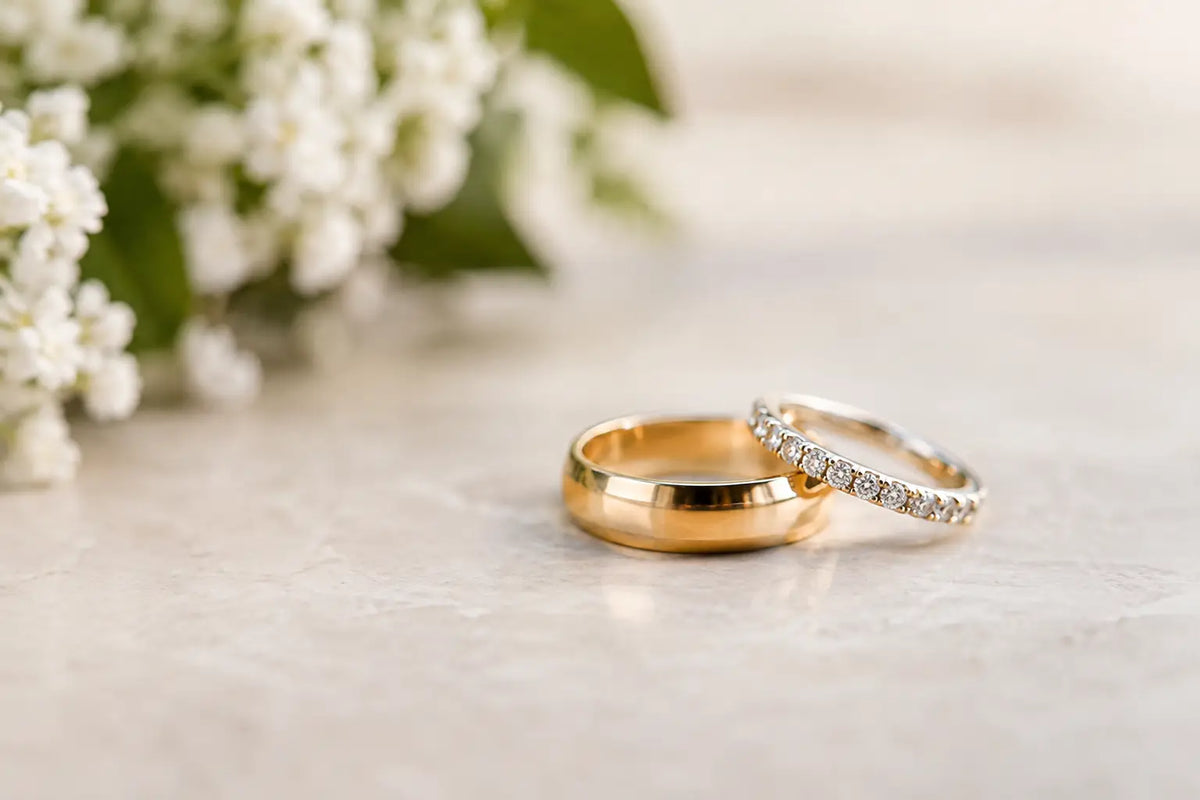
A solitaire is defined by a single prominent gemstone, traditionally a diamond, held above a plain or lightly detailed band. Its appeal is immediate: the stone catches light, the silhouette feels familiar, and the design has a timeless, polished presence. For someone who loves classic jewelry, a solitaire can feel effortlessly right.
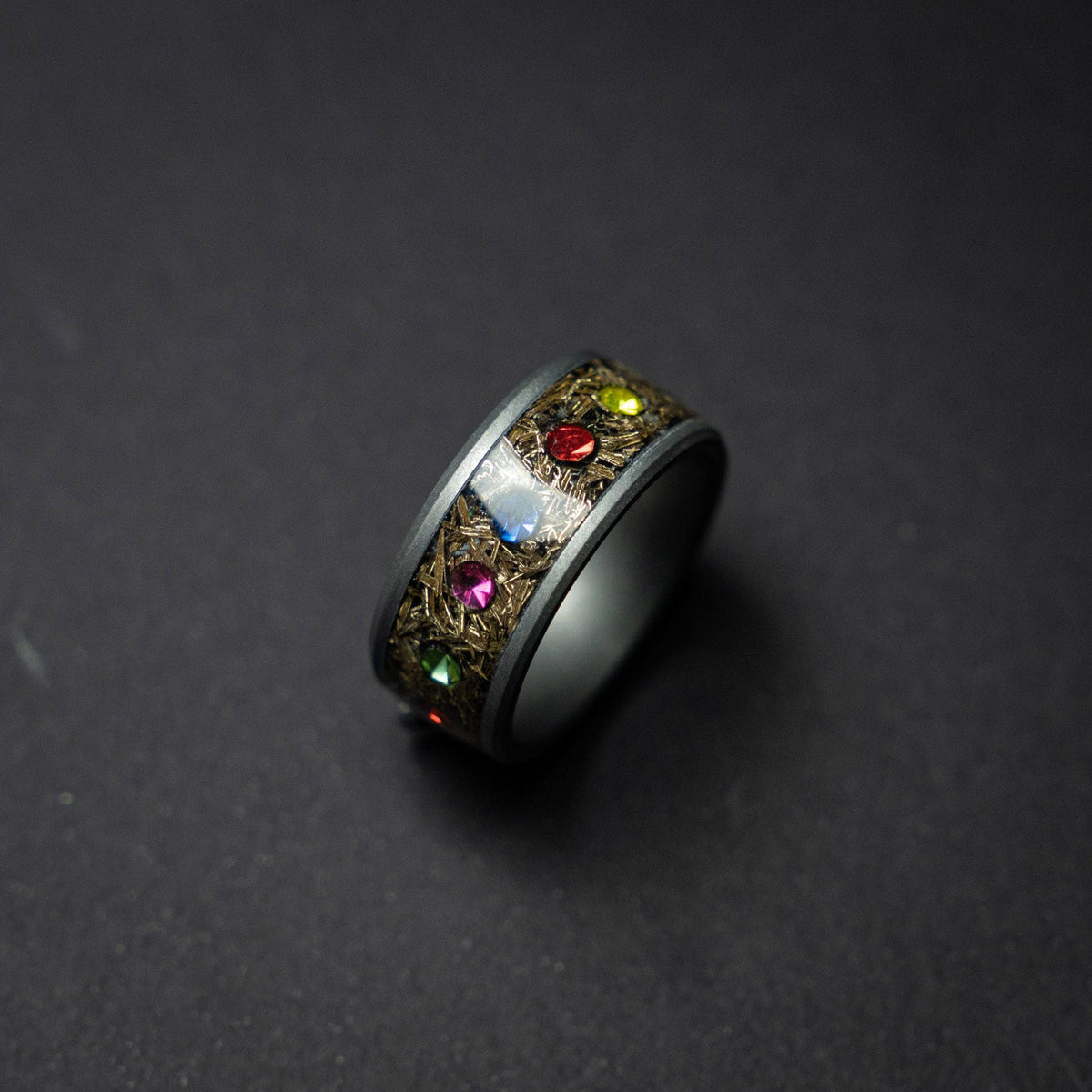
An inlay ring takes a more unexpected route. Instead of placing all attention on one raised center stone, artisans set material into channels in the band. The effect can be subtle and refined, such as a narrow opal line against tungsten, or bold and conversation-starting, such as dinosaur bone paired with meteorite or a vivid glow inlay.
This is why inlay rings often feel more personal at first glance. No two pieces of natural material display exactly the same pattern, color shift, or texture. A meteorite inlay may reveal crystalline markings, while petrified wood carries organic grain developed over immense time. The ring becomes more than an accessory. It becomes a small, wearable piece of a story.
Which Style Matches Your Personality?
Solitaire rings are a natural fit for people who want a traditional engagement-ring look, especially if they picture a center stone as the visual symbol of commitment. They pair easily with formal outfits, heirloom jewelry, and classic wedding bands. Their familiarity is part of their charm.
Inlay rings suit couples and individuals who prefer jewelry with an edge, a memory, or an unusual material behind it. You may be drawn to space, geology, history, the outdoors, or color that feels a little less expected than a clear gemstone. A moon dust or meteorite ring can appeal to someone with a cosmic connection. Opal can speak to a favorite color palette or a love of shifting light. A memorial inlay can make a deeply personal sentiment tangible.
Neither choice is restricted by gender or occasion. A solitaire can be worn as a daily statement ring, and an inlay band can be an engagement ring. The best fit is the one that feels like it belongs to the wearer rather than one that follows a jewelry rulebook.
Consider How You Want the Ring to Be Noticed
A solitaire is designed to catch attention from its raised stone and sparkle. It reads as traditional fine jewelry from across the room. An inlay ring usually earns a second look. At a distance, it may appear sleek and understated. Up close, the material reveals depth, pattern, and surprising color.
That difference matters if you want your ring to start conversations. People may recognize a diamond solitaire instantly, but they are likely to ask about the strip of meteorite, crushed opal, or dinosaur bone in an inlay band. For many wearers, explaining that story becomes part of the joy of owning it.
Everyday Wear, Comfort, and Durability
Style is only one part of the decision. A ring meant for everyday wear needs to work with your routine, whether that includes a desk, a gym, childcare, travel, or hands-on work.
Traditional solitaire settings raise the center stone above the finger. That height helps light enter the stone, creating the brilliance people love, but it can also make the ring more likely to catch on sweaters, hair, gloves, or equipment. Prong settings deserve periodic inspection because a loose or worn prong can put the gemstone at risk.
Inlay rings are often lower profile because their focal materials sit within the band. That can make them feel smoother and less intrusive for active hands. Bands made with tungsten or ceramic can offer strong scratch resistance, while the inlay is protected beneath a polished finish. Still, durability depends on the specific material combination and construction, not just the word “inlay.”
Some natural materials and gemstones need a little extra care. Opal, for example, has a different character than diamond and should be treated thoughtfully. A ring with a delicate inlay is still made to be worn, but it should not be treated like a tool. Remove it for heavy impact work, harsh chemicals, or activities where it could be struck against hard surfaces.
There is also a practical sizing distinction. Many traditional gold solitaire rings can be resized by a jeweler. Tungsten, ceramic, and certain inlay bands generally cannot be resized because of their material structure. Getting your size right before ordering is especially valuable for these designs. A properly fitted ring should slide over the knuckle with slight resistance and rest securely without feeling tight.
Meaning: One Iconic Stone or a Story in the Band
Solitaire rings carry a well-known language of romance. A single center stone can symbolize focus, devotion, and a clear, enduring promise. For some couples, that traditional symbolism is exactly what makes the style meaningful. It connects their ring to generations of engagements and celebrations.
Inlay rings offer meaning through material. A band can incorporate elements that reflect a shared interest, a place, a season of life, or a once-in-a-lifetime memory. A couple who bonds over stargazing may choose meteorite or moon dust. Nature lovers may connect with wood, turquoise-toned stone, or earthy fossil material. Someone celebrating resilience and transformation may feel drawn to a richly colored crystal inlay.
This does not mean an inlay ring has to be dramatic to matter. Even a slim line of opal or a dark Damascus steel detail can feel personal without announcing itself. The emotional value comes from the reason behind the choice, not from how loudly the ring presents it.
Budget and Value Look Different in Each Style
A solitaire’s price is heavily influenced by the center gemstone. For diamond solitaires, factors such as carat weight, cut, color, clarity, and certification can move the cost substantially. The setting metal also plays a role. This structure can make it easier to compare stone specifications, but it can also make a larger or higher-grade look more expensive quickly.
With inlay rings, value often comes from the materials, the complexity of the design, and the handcraft involved in fitting and finishing the inlay. An unusual material can feel remarkably special without requiring the budget of a large center diamond. That makes inlay bands appealing for couples who want a distinctive ring with visual impact and a meaningful story at an attainable price.
Price alone should not decide the style. Consider what you will still love years from now. Some buyers value a recognizable center stone; others would rather wear a band that feels impossible to confuse with anyone else’s. Both are valid forms of investment when the ring represents your relationship.
Can You Combine an Inlay Ring and a Solitaire?
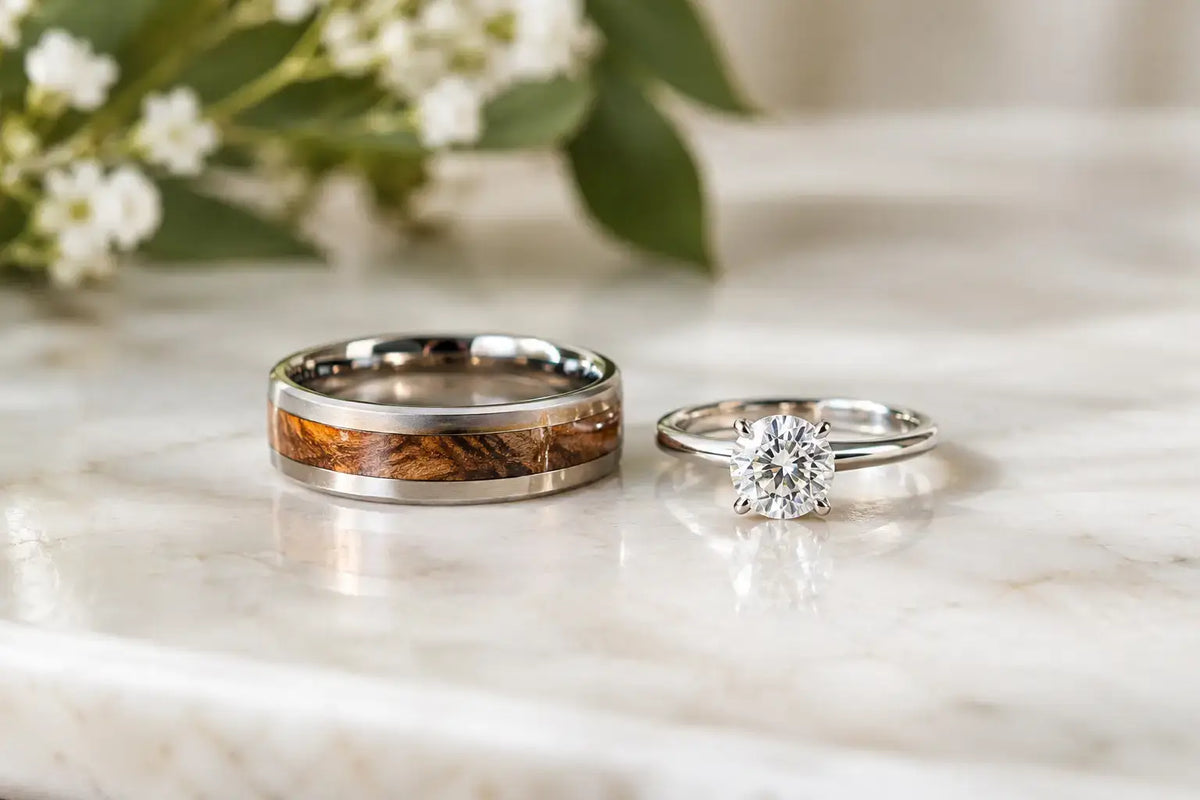
Absolutely. The choice does not have to be either-or. A solitaire engagement ring can be paired with an inlay wedding band for a set that balances classic sparkle with a personal material. The contrast can be striking: a bright center stone beside a dark meteorite band, or a simple solitaire alongside a slim opal inlay.
You can also choose an inlay ring for a wedding band or anniversary gift while keeping a solitaire as the engagement ring. Matching is optional. What matters is that the proportions sit comfortably together and that both rings suit the wearer’s lifestyle.
Choosing the Ring You Will Reach for Every Day
Choose a solitaire if you love a center gemstone, traditional elegance, and a ring that feels instantly recognizable as an engagement classic. Choose an inlay ring if you want texture, color, rare material, and a design that carries its meaning in every detail.
The strongest choice is usually the one that still feels exciting after the first unboxing moment. Look closely at the materials, ask how the ring is made, confirm your size, and picture it in the ordinary moments as much as the celebratory ones. At Decazi, handcrafted rings are designed for that kind of daily significance: a piece with a story worth wearing, not just a style worth choosing.