
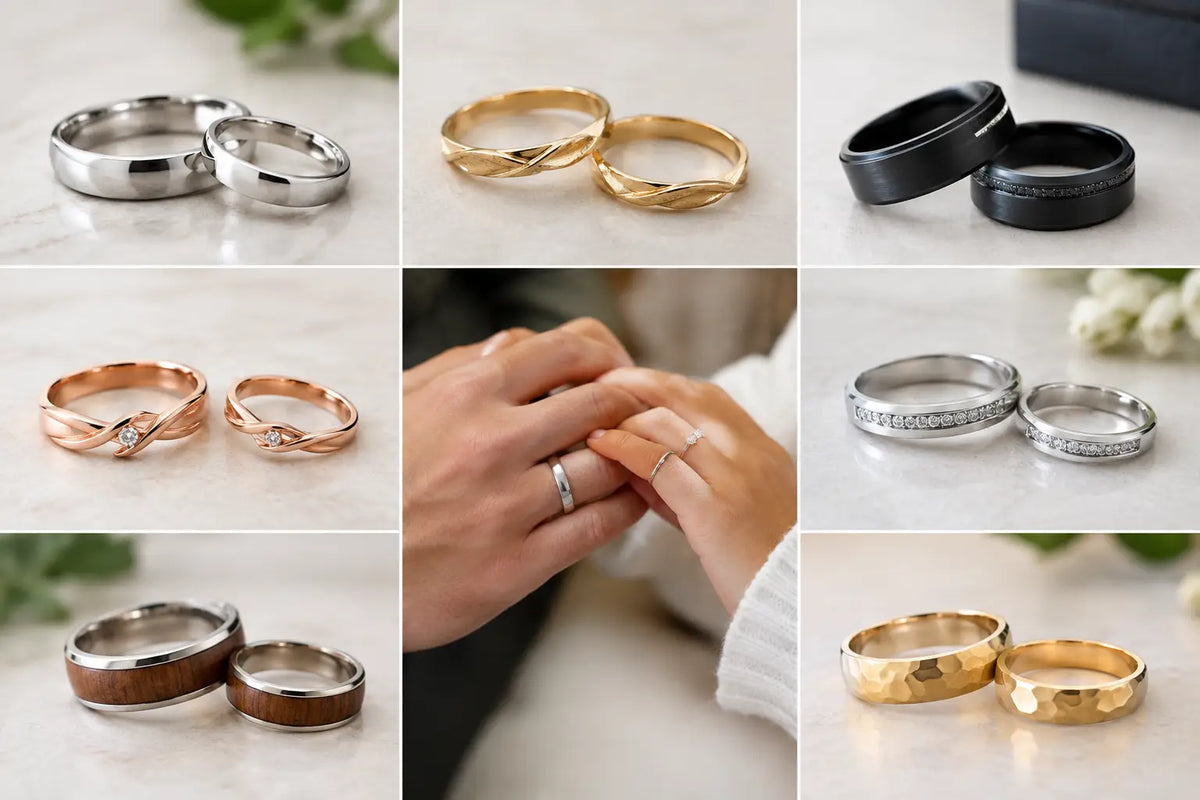
7 Matching Couple Ring Examples to Make Your Own
A matching ring set does not have to mean two carbon-copy bands. The best matching couple ring examples feel connected at a glance while still making room for each person’s style, daily routine, and comfort. One partner may want a wide, dark tungsten band; the other may prefer a slimmer profile with a bright opal inlay. When the materials, colors, or story tie them together, the result still feels unmistakably shared.
For couples who would rather wear a piece of their story than a standard gold band, unconventional materials create plenty of possibilities. Meteorite can mark a love that feels bigger than Earth. Dinosaur bone speaks to endurance. Opal brings changing color and a little unexpected light. The question is not whether your rings match perfectly. It is which detail should belong to both of you.
What Makes Couple Rings Feel Like a Set?
A coordinated pair usually shares one or two clear design cues. That might be the same inlay material, the same metal color, a matching stripe of crushed opal, or an identical engraving placed inside two very different bands. Too many shared elements can make the rings feel less personal, especially when one partner’s taste leans minimal and the other’s is more expressive.
Start with the story you want the rings to carry. A couple who bonded over stargazing may choose meteorite in both rings. Partners who love hiking and the outdoors may be drawn to petrified wood or a forest-toned opal. If you want a subtle connection, use the same base material and vary the inlay. If you want a bolder set, reverse the materials so each band contains a piece of the other’s design.
Comfort matters just as much as appearance. Wider bands make a strong visual statement, but they can feel different from a narrow band on the same finger size. A comfort-fit interior and a width that suits each wearer are often more meaningful in the long run than making every measurement identical.
7 Matching Couple Ring Examples
1. Meteorite bands in two widths
A pair of meteorite rings is a classic choice for couples who want a shared material with a dramatic origin story. Choose a wider tungsten band with a meteorite inlay for one partner and a slimmer tungsten or ceramic band with the same inlay for the other. The pattern in natural meteorite will vary from ring to ring, which is part of the appeal: the rings belong together without ever being duplicates.
This pairing suits wedding bands, anniversaries, and promise rings. Tungsten offers substantial weight and strong scratch resistance for everyday wear, while a narrower profile can give the second ring a lighter, more delicate feel. The trade-off is that tungsten rings cannot be resized, so getting an accurate ring size before ordering is especially worthwhile.
2. Black ceramic and opal with reversed colors
For a modern pair with contrast, try a black ceramic ring with a vivid opal inlay alongside a bright opal-focused band detailed with a slim black stripe. The rings share the same palette, but neither person has to compromise on the amount of color they want to wear.
Blue and green opal creates an ocean-inspired look, while fire opal tones bring more warmth. Black ceramic has a sleek, lightweight feel and makes the color in an inlay stand out sharply. It is a great fit for couples who want their wedding bands to look intentional with casual clothes, formal wear, and everything in between.
3. Dinosaur bone rings with complementary inlays
Dinosaur bone rings are made for couples who want something no ordinary jewelry counter can offer. One ring might feature fossilized dinosaur bone and meteorite, while the matching band uses dinosaur bone and crushed opal. The shared fossil material connects the set, and the secondary inlay lets each ring take on its own character.
Because fossil patterns and colors vary naturally, no two dinosaur bone inlays will look exactly alike. That variation gives the rings a one-of-a-kind quality, but it also means buyers should embrace natural differences rather than expect a perfectly uniform surface. For many couples, that is the point: a lasting partnership made from materials shaped over an unimaginable amount of time.
4. Moon dust rings with a hidden shared detail
Not every matching set needs to announce itself from across the room. Moon dust rings can offer a quieter kind of connection, especially when paired with a simple exterior profile. Select matching silver-toned tungsten bands with moon dust inlays, then personalize the inside with a date, initials, or a short phrase meaningful only to the two of you.
This option works beautifully for couples with different workplace dress codes or style preferences. The visible design stays refined, while the material and engraving keep the emotional connection close. Just keep interior engraving brief enough to remain readable on the ring width you choose.
5. Damascus steel and wood for an outdoorsy pair
Damascus steel has flowing, layered patterns that bring movement to a band, while petrified wood adds warmth and an organic texture. A strong matching combination might include Damascus steel as the foundation of both rings, with one featuring a wider wood inlay and the other a narrow wood accent.
This design feels rugged without being overly heavy-handed. It is particularly fitting for couples who spend weekends on trails, in workshops, or around a campfire, but it is still polished enough for a wedding ceremony. Keep in mind that rings with organic inlays deserve mindful care. Remove them for harsh chemicals, heavy impact tasks, or situations where the band could be repeatedly knocked against hard surfaces.
6. Coordinated glow rings for couples who love color
A glow-in-the-dark inlay is not only for novelty. In the right design, it adds a subtle flash of personality that appears after a day outdoors or an evening under bright light. Choose the same glow color in two different band styles, such as a black tungsten ring with a bright green channel and a silver-toned band with a thinner green inlay.
For a more understated set, pair a glow line with opal in similar tones. Blue glow and blue-green opal create a cohesive look in daylight, then reveal a different character after dark. This is a playful choice for couples who want rings that start conversations, but it may not be ideal for someone who prefers an entirely traditional wedding band.
7. Same metal, different statements
Sometimes the simplest matching approach is the strongest. Choose the same base material, such as polished tungsten, matte tungsten, or black ceramic, then let each person select their preferred inlay. One partner can wear a clean, matte black band; the other can choose the same band shape with meteorite, opal, or crystal detail.
The matching element is the silhouette, finish, or metal tone rather than the decorative material. This approach is especially helpful when one person wants a low-profile everyday ring and the other wants a design with more visual storytelling. It also makes a thoughtful choice for promise rings, where the connection matters more than following any wedding-band convention.
How to Choose a Pair You Will Actually Wear
Before falling for a material, think about how each ring will live day to day. People who work with their hands may prefer a smooth, low-profile design without raised edges. Someone who rarely wears jewelry may appreciate a lighter, narrower band. If a ring will be worn beside an engagement ring, consider whether its profile and width will sit comfortably alongside it.
Material choice should balance symbolism with practical expectations. Tungsten is known for its weight, durability, and crisp finish, while ceramic offers a lighter feel and bold color. Natural materials such as meteorite, opal, wood, and dinosaur bone provide the rare detail that makes a ring feel personal, but every handcrafted inlay has its own pattern and color variation. That is not a flaw. It is evidence that the ring was made from real, distinctive material rather than stamped out to look like every other band.
Ordering online also calls for a little preparation. Confirm ring sizes carefully, especially for comfort-fit bands and wider styles. Read the material and care details, look at customer reviews, and choose a maker that is clear about handmade production and buyer support. Decazi creates handcrafted rings to order, which allows couples to choose uncommon material pairings without treating their rings like an afterthought.
Let the Connection Be Yours
The most memorable matching rings do not follow a formula. They can be nearly identical, color-reversed, quietly coordinated, or completely different on the surface with one shared material hidden within. Choose the pairing that feels natural when you picture it on your hands years from now - not just in a product photo, but in the ordinary moments you want to remember together.


