Opal Versus Moon Dust Rings for Your Story
A ring can say “us” without looking like anyone else’s. When choosing opal versus moon dust rings, the real question is not which material is better. It is whether you want your band to lead with living color or a quieter piece of cosmic texture. Both can make an unforgettable wedding band, promise ring, anniversary gift, or everyday statement piece, but they tell very different stories on the hand.
Opal Versus Moon Dust Rings: The Visual Difference
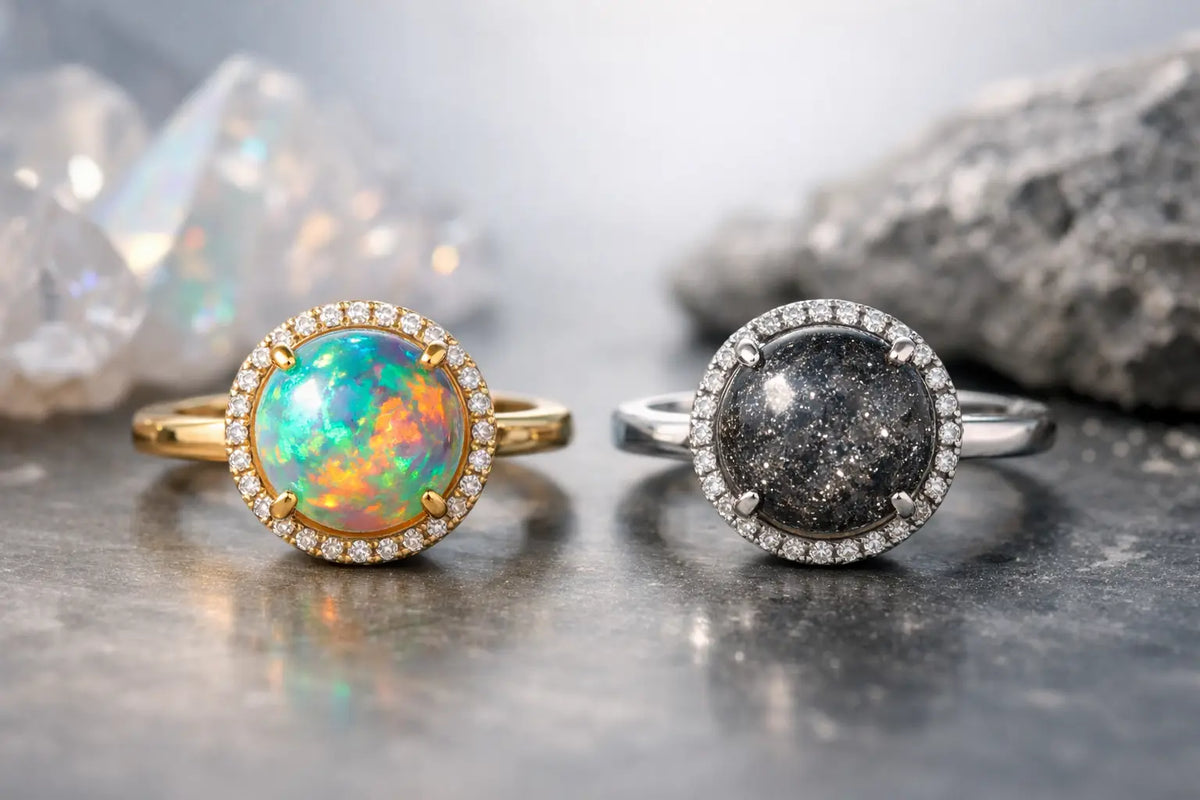
Opal is made for people who want color that refuses to sit still. Depending on the cut, lighting, and angle, an opal inlay can flash blue, green, violet, pink, orange, or red. Some opals feel cool and oceanic; others look like tiny galaxies or fire held beneath glass. No two pieces display color in exactly the same way, which is a large part of the appeal.
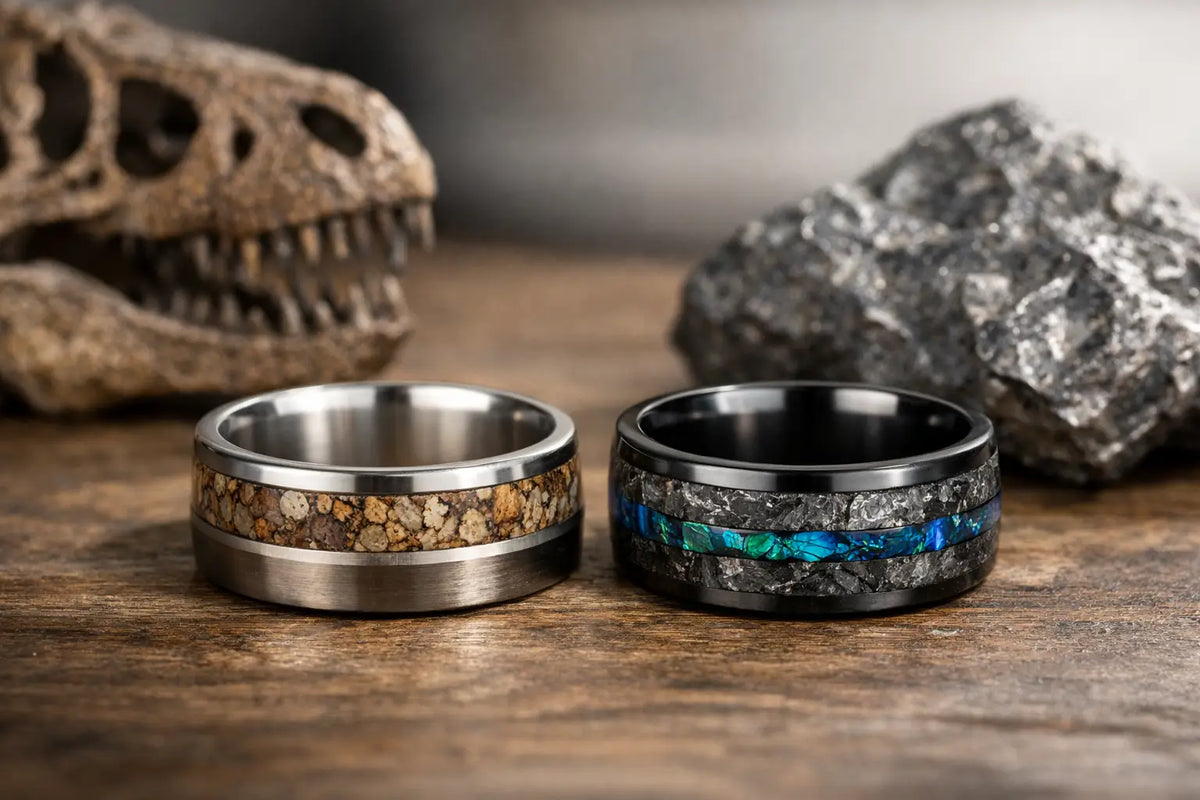
A moon dust ring takes a more understated route. Its beauty is usually found in fine, mineral-like texture: silvery gray, charcoal, soft white, or dark speckling that catches the light in a subtle way. It may look like a slice of a night sky, lunar terrain, or stardust suspended within the band. Moon dust can also be paired with meteorite, crushed crystal, glow material, or a darker metal for added contrast.
The difference is easy to picture. Opal tends to be the conversation-starting color moment. Moon dust tends to reward a closer look. If your personal style includes bold sneakers, colorful art, or jewelry that gets noticed across the table, opal may feel natural. If you lean toward black, silver, earth tones, clean design, or space-inspired details, moon dust can feel especially right.
Choose the Story You Want to Wear
Materials carry meaning, especially when a ring marks a relationship or milestone. Opal is often chosen for its sense of individuality. Its shifting colors can represent change, creativity, joy, and the fact that a relationship looks different in every season while remaining deeply recognizable. For couples who do not want a traditional diamond-first look, opal offers romance with personality.
Moon dust has a different emotional pull. It speaks to distance, wonder, and the unlikely things that find their way together. A moon dust wedding band can be a fitting choice for a couple bonded by astronomy, travel, science fiction, late-night conversations, or simply the feeling that their connection is one in a million. It has a rare, grounded quality: ancient-looking material in a ring designed for daily life.
Neither symbolism has to be literal. You may choose opal because the colors match your partner’s eyes, a favorite trip, or the birthstones in your family. You may choose moon dust because it feels modern, mysterious, and unlike anything in a standard jewelry case. The strongest choice is the one that still feels personal after the occasion has passed.
Color, Metal, and Everyday Style
The ring’s base material changes the personality of both inlays. A black tungsten band can make bright opal colors look even more vivid, while silver-tone tungsten gives opal a brighter, cleaner frame. Rose gold-tone finishes can bring out warmer flashes in some opals. Because color play varies, it is smart to look at several product photos and expect natural variation rather than one identical pattern.
Moon dust is especially flexible with metal color. Black tungsten gives it a dramatic, space-forward appearance. Silver-tone or polished steel-colored bands create a cooler, more minimalist look. Damascus steel can add patterned movement around the inlay, while ceramic provides a sleek, contemporary setting. A narrow moon dust line can be subtle enough for daily wear; a wider inlay makes the lunar effect more graphic.
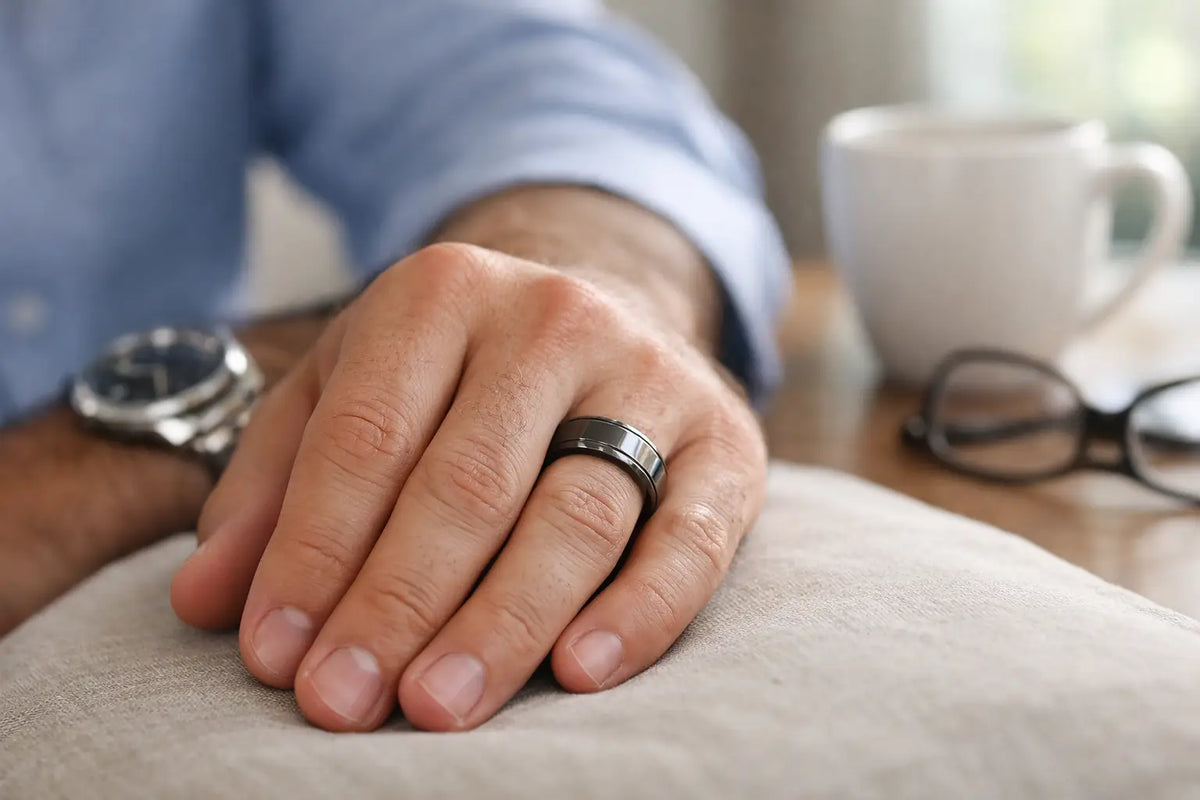
Think about the rest of your wardrobe, too. Opal can coordinate beautifully with colorful tattoos, gemstones, or mixed-metal accessories. Moon dust often works effortlessly with watches, dark bands, and understated jewelry. If you want a matching set without matching exactly, one partner might choose moon dust while the other chooses an opal inlay in a shared metal or band profile.
Durability Depends on Construction, Not Just the Inlay
When shoppers compare opal versus moon dust rings, durability deserves a clear-eyed answer. Traditional solid opal can be more delicate than many metals and may be sensitive to hard knocks. In a handcrafted inlay ring, opal is commonly set into a protective channel and sealed beneath a clear finish. That construction helps create a smooth surface and supports everyday wear, but it does not make a ring indestructible.
Moon dust inlay is also typically secured within the band and protected by a clear resin or similar finish. The inlay itself may be fine and textural, but the ring’s day-to-day resilience depends heavily on the core material, inlay setting, finish, and how it is worn. Tungsten is a popular choice because it is highly scratch-resistant in normal use, while ceramic offers a lightweight, modern alternative. Both require sensible care and can be damaged by a strong enough impact.
For either style, remove your ring before weightlifting, construction work, rock climbing, harsh chemical cleaning, or tasks where your hands could be struck or compressed. Avoid prolonged exposure to strong chemicals, and store the ring separately from harder jewelry when possible. These small habits protect the polished finish and keep the inlay looking its best.
If you work with your hands every day, a lower-profile design with a narrower inlay may be more practical than a wide, domed statement band. If your ring is primarily for dates, events, or lighter daily wear, you may have more freedom to choose the bolder look you love. A meaningful ring should fit your actual life, not ask you to change it.
Ask What “Opal” and “Moon Dust” Mean in the Specific Ring
Material names can describe different things from one maker to another. Opal may be natural, lab-created, or crushed opal used in an inlay. Moon dust may refer to lunar-inspired material, a specialty dust blend, or a space-themed composite. That does not make one option less special, but it does mean transparency matters.
Before ordering, look for a clear description of the inlay, the ring core, the protective finish, and any care guidance. Handmade rings also have expected variation in color, pattern, and placement. That variation is part of what makes a collectible-material band feel like yours rather than mass-produced.
Comfort, Sizing, and Long-Term Confidence
A ring can be visually perfect and still miss the mark if it does not fit well. Wider bands often feel snugger than narrow bands, so confirm the seller’s sizing guidance before placing a made-to-order order. Consider the band width, interior comfort fit, and whether your fingers tend to swell with heat, travel, or activity.
Tungsten and ceramic rings generally cannot be resized in the same way as precious-metal bands. That makes getting the size right especially valuable. Measure at a time when your hands are at a normal temperature, and do not guess based only on an old ring that fits a different finger. For a wedding band or surprise gift, a professional sizing check can offer welcome confidence.
Buying online should still feel considered. Product photography, detailed material information, customer reviews, and responsive answers to practical questions all help turn a beautiful idea into a confident purchase. Decazi creates handcrafted rings for customers who want that rare-material story without the formality or sameness of conventional jewelry.
Which Ring Feels More Like You?
Choose opal if you want visible color, expressive energy, and a band that changes with the light. It is a strong fit for someone who sees jewelry as art and wants every glance at their hand to reveal a new detail.
Choose moon dust if you prefer subtle texture, celestial symbolism, and a design that feels unusual without being loud. It is ideal for someone drawn to the night sky, minimal palettes, and materials with a quiet sense of mystery.
There is also no rule against combining the two. An opal-and-moon-dust ring can bring together bright color and cosmic depth, creating a design with both sparkle and shadow. For couples who want a band that cannot be mistaken for anyone else’s, that contrast can be exactly the point.
Let the ring be a small daily reminder of what you value: color that changes, a sky that stretches farther than you can see, or a story that only the two of you fully understand.