Tungsten Versus Gold Wedding Bands
One ring gets babied in a jewelry box. The other gets worn through workouts, yard work, travel, and Tuesday dishes without much thought. That contrast is often what couples are really weighing when they compare tungsten versus gold wedding bands. Both can be beautiful, meaningful, and wedding-worthy, but they behave very differently once real life starts.
For some people, gold is the obvious classic. It has history, prestige, and that familiar warm glow many of us grew up associating with wedding jewelry. For others, tungsten feels more aligned with modern wear - stronger, lower maintenance, and often more distinctive in finish and design. The right choice is less about which metal is better in the abstract and more about how you want your ring to look, feel, and hold up over time.
Tungsten versus gold wedding bands: the real difference
The biggest difference is simple. Gold is a precious metal valued for tradition, softness, and long-term repairability. Tungsten is chosen for hardness, scratch resistance, and a more contemporary, substantial feel.
That means gold tends to develop wear more easily, but it can usually be polished, resized, and restored by a jeweler. Tungsten resists daily scratching far better, but it cannot be resized in the same way and is more likely to be replaced than repaired if damaged. Those trade-offs matter more than marketing language.
If you want a ring that ages with character and carries the legacy of classic fine jewelry, gold has a strong case. If you want a ring that stays sharp-looking with less upkeep and feels built for constant wear, tungsten often stands out.
How durability changes the day-to-day experience
This is where many shoppers make their decision.
Gold, especially in higher purities, is relatively soft. A 24K gold ring is too soft for most wedding band lifestyles, which is why wedding bands are usually made in 10K, 14K, or 18K gold mixed with other metals for strength. Even then, gold can scratch, bend, and show wear over time. Some people love that because the ring picks up a lived-in patina that reflects years of wear. Others find it frustrating.
Tungsten carbide is at the other end of the spectrum. It is extremely hard and highly scratch resistant, which is why it appeals to people who use their hands a lot or simply do not want to fuss over their ring. A tungsten band can keep its polish or brushed finish looking crisp long after a gold band would start showing everyday marks.
There is one catch. Hardness is not the same thing as invincibility. Tungsten is very resistant to scratching, but under enough force it can crack or shatter rather than bend. Gold is softer, so it is more likely to dent or deform instead of breaking. Neither material is perfect. They just fail in different ways.
Which one is better for active lifestyles?
If your concern is surface wear, tungsten usually wins. If your concern is having a ring that can be repaired after years of knocks and reshaped as needed, gold has the advantage.
That is why occupation and habits matter. Someone working around heavy tools may remove any ring for safety anyway. Someone who wants a wedding band for office wear, travel, workouts, and daily errands may appreciate how little maintenance tungsten asks for.
Look, color, and design possibilities
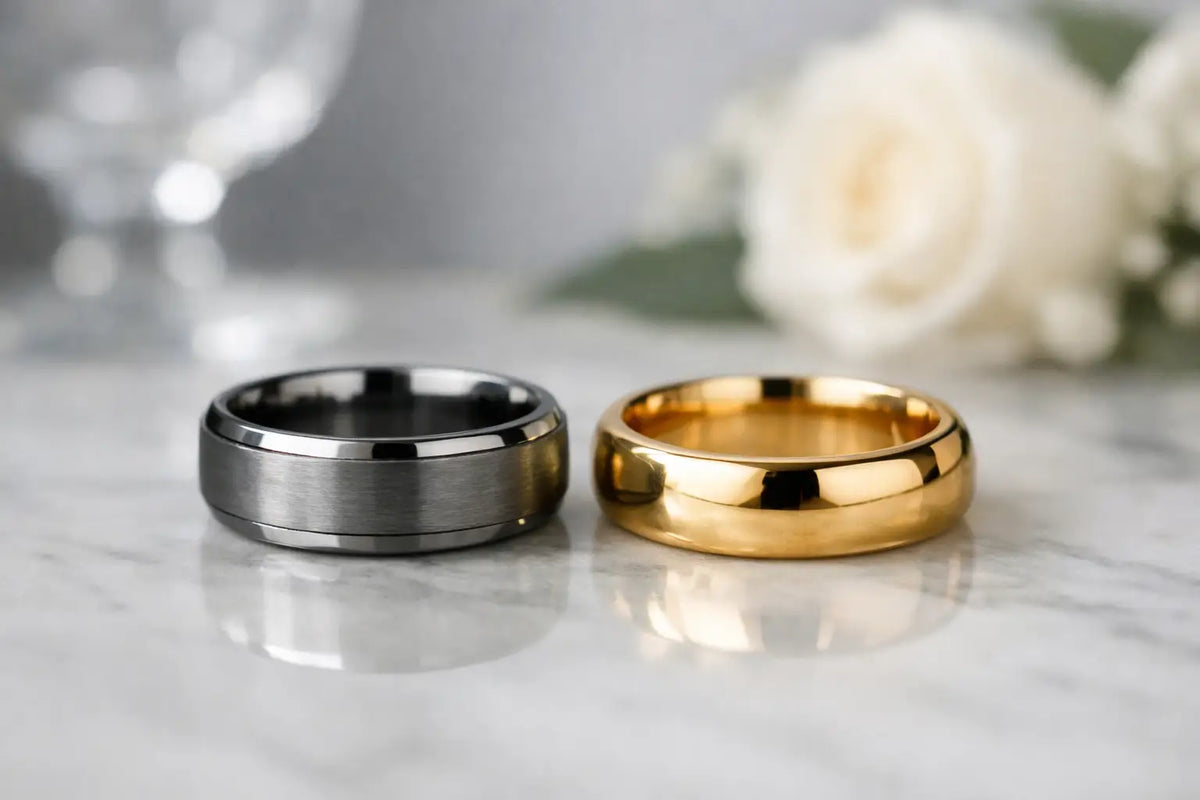
Gold is timeless, but it is not one look. Yellow gold feels classic and warm. White gold leans sleek and contemporary. Rose gold brings a softer, romantic tone. Gold also tends to read as more traditional and more closely tied to legacy bridal jewelry.
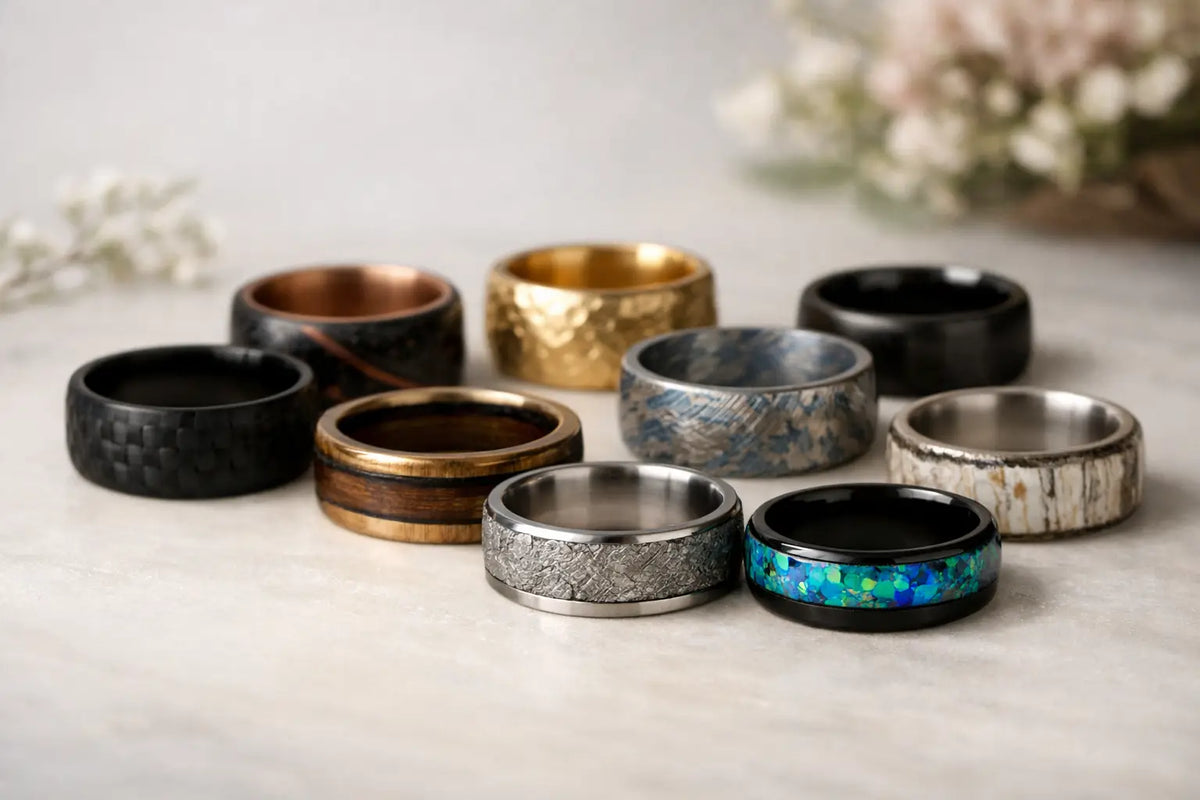
Tungsten has a different visual personality. It often comes in gunmetal gray, silver tone, black, or gold tone finishes, and it pairs especially well with modern textures such as brushed surfaces, beveled edges, hammered details, and inlays. If you are drawn to rings that feel less expected, tungsten opens more room for bold material combinations.
This is part of why unconventional bands have become such a strong category. Tungsten works beautifully with inlays like opal, meteorite, wood, shell, and other tactile materials that turn a ring into more of a personal artifact than a standard metal band. For couples who want symbolism and visual story, that matters.
Gold can absolutely be customized too, but the final result usually stays within a more traditional jewelry language. Tungsten tends to feel sharper, more graphic, and more design-forward.
Comfort and weight on the hand
A ring can look perfect online and still feel wrong once it is on your finger.
Gold is typically lighter than tungsten, especially when comparing similar widths. Some people prefer that lighter feel because it disappears on the hand. Others like the reassuring weight of tungsten, which often feels more substantial and grounded.
Comfort also depends on the interior shape. A comfort-fit band with a slightly rounded inside can make a major difference regardless of metal. But in general, tungsten is known for that solid, weighty presence. If you enjoy jewelry that feels noticeable and secure, that can be a plus. If you barely wear jewelry and want the lightest possible experience, gold may feel more natural.
Cost and value are not the same thing
Gold usually costs more, sometimes much more, depending on karat, market price, and craftsmanship. Part of that is intrinsic material value. Gold has long-standing resale and trade value that tungsten does not share in the same way.
Tungsten is typically more affordable, which changes the buying experience. A couple might be able to choose a wider band, a more detailed finish, or a ring with a rare-looking inlay while still staying in budget. That makes tungsten especially appealing for buyers who want a ring with strong visual impact without entering traditional fine-jewelry pricing.
Value depends on what you care about. If you want precious-metal prestige and long-term heirloom associations, gold makes sense. If you care more about durability, style, and getting something distinctive at a more approachable price, tungsten can feel like the smarter buy.
Neither choice is shallow. They simply reflect different priorities.
Sizing, resizing, and long-term flexibility
This is one of the most practical differences between tungsten versus gold wedding bands, and it deserves real attention before you buy.
Gold can usually be resized by a skilled jeweler, depending on the design. That is a major advantage if your finger size changes over the years or if you are buying a surprise ring and need a little flexibility afterward.
Tungsten usually cannot be resized. Because of its hardness, the typical solution is replacement rather than adjustment. That means getting your size right from the start matters more. It also helps to buy from a seller that is transparent about sizing support and what happens if the fit is off.
For many shoppers, this is not a deal-breaker. It is just something to plan for. Accurate sizing and clear policies go a long way.
Skin sensitivity and maintenance
Gold alloys vary. Depending on the mix of metals used, some people react to certain gold compositions, especially if nickel is present in white gold alloys. Higher-karat gold contains more pure gold, but it is also softer.
Tungsten rings are often made with a binder metal, and quality matters here too. Well-made tungsten carbide bands are commonly considered a good option for many wearers, but anyone with known metal sensitivities should still check the exact composition before buying.
Maintenance is usually easier with tungsten. It does not need the same level of polishing or routine attention to keep its finish looking clean. Gold asks for a bit more care, especially if you want to preserve a high polish or avoid accumulating scratches.
Who should choose tungsten and who should choose gold?
Choose gold if tradition is part of the emotional appeal for you. It is ideal if you want a classic wedding metal, the option to resize later, and a ring that can be repaired and refinished over decades.
Choose tungsten if you want durability, a more modern look, and lower-maintenance wear. It is especially compelling if you like bolder finishes or want a band that feels more unusual and tactile than a standard precious-metal ring.
For some couples, the answer is not either-or. One partner may want gold for its heritage, while the other wants tungsten for its practicality and style. Matching does not always mean identical. Shared meaning can matter more than matching metals.
That is also why handcrafted rings in unconventional materials continue to resonate. A wedding band does not have to follow a script to feel serious or lasting. At Decazi, that idea sits at the heart of why so many couples choose rings with character, texture, and story instead of defaulting to tradition.
If you are stuck between the two, picture your ring five years from now, not just on the wedding day. Think about how often you will wear it, how hard you are on jewelry, how much maintenance you are comfortable with, and whether you want timeless familiarity or something that feels more personal right away. The best wedding band is the one that still feels right when the honeymoon is long over and real life is in full swing.