Wedding Band Materials That Fit Real Life
A wedding band gets handled more than almost any other piece of jewelry. It goes through hand washing, workouts, cold weather, road trips, desk work, and all the little routines that make up a life together. That is why wedding band materials matter so much. The right one should look like you, feel good every day, and hold up to the way you actually live.
For some couples, that means classic precious metals. For others, it means something with more personality - a ring with meteorite, dinosaur bone, opal, wood, or another inlay that tells a story at a glance. There is no single best choice. There is only the material that fits your style, your comfort preferences, and your expectations for wear.
How to think about wedding band materials
Most people start with appearance, which makes sense. If you are going to wear a ring daily, you should love looking at it. But appearance is only one part of the decision. Durability, weight, maintenance, scratch resistance, and even how the ring feels between your fingers can make a huge difference over time.
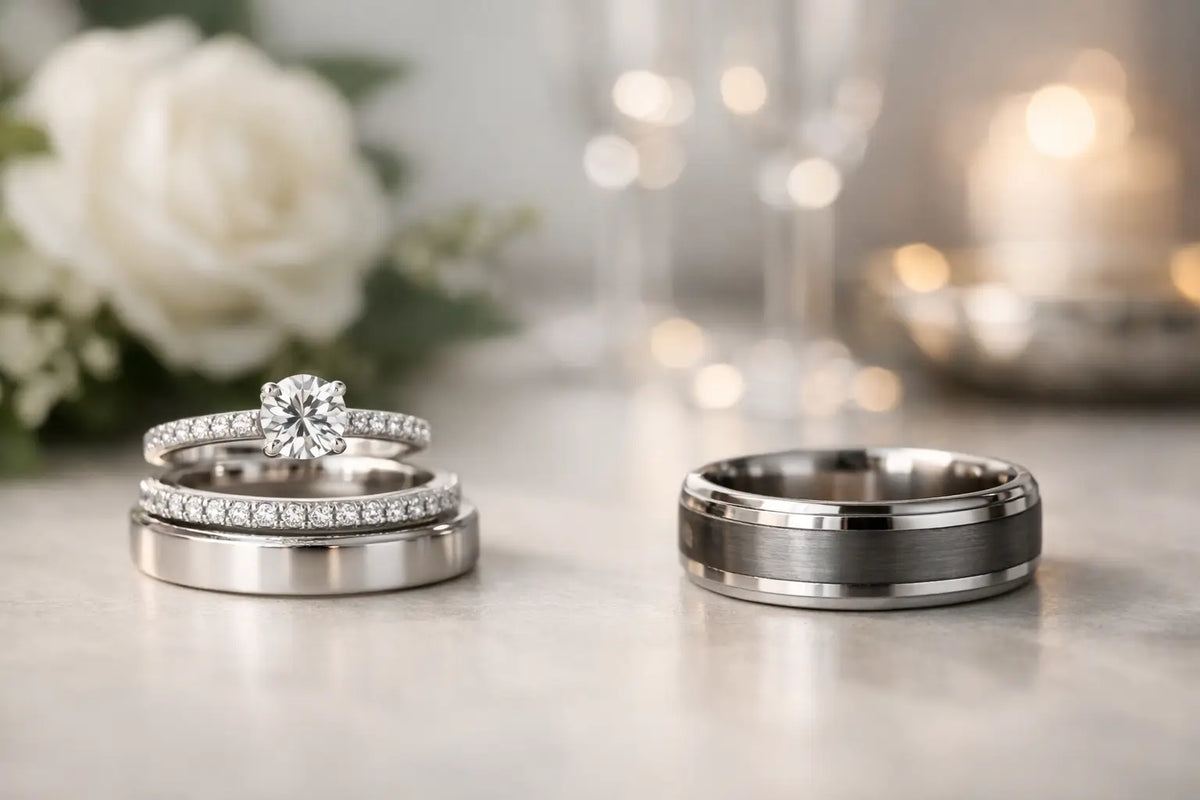
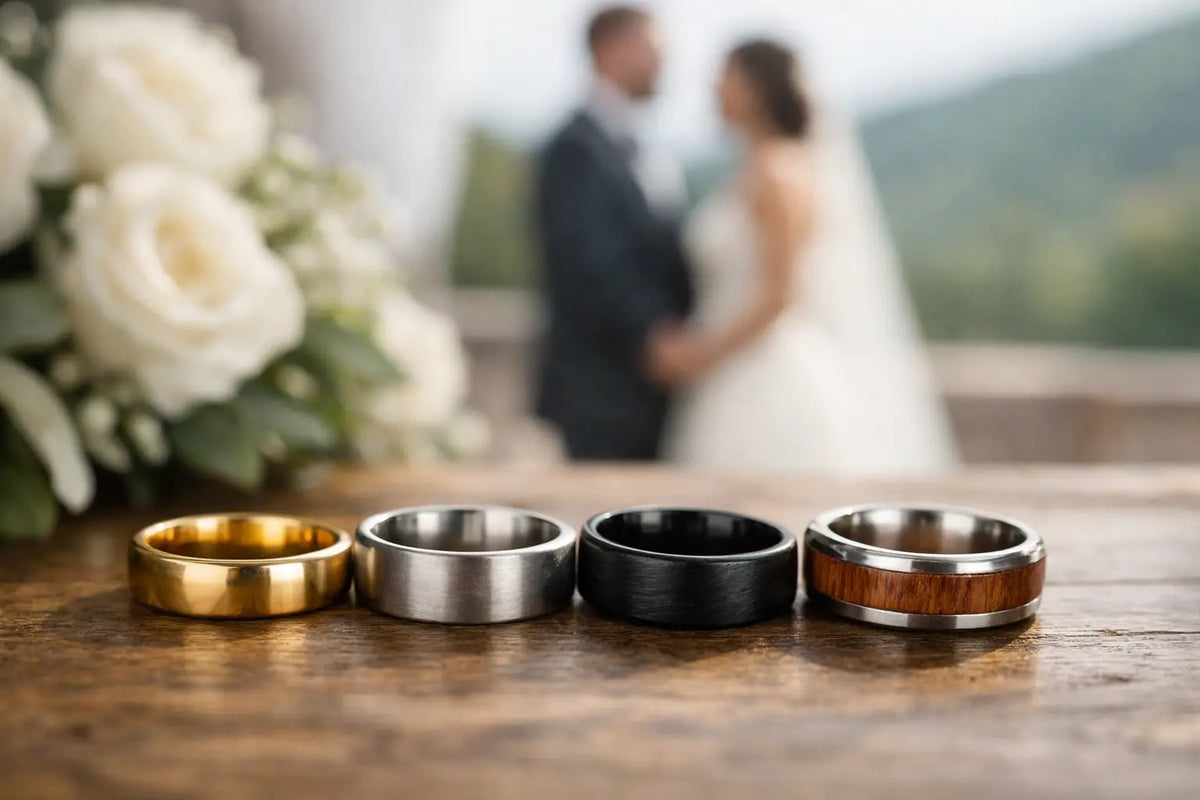
A polished metal band can feel sleek and familiar. A brushed finish feels a little more understated. A ring with an inlay often adds texture, contrast, and symbolism, which is why so many modern couples gravitate toward unconventional designs. Some want a clean black ceramic ring. Others want a tungsten band with a strip of galaxy opal or a piece of meteorite that makes the ring feel one of a kind.
It also helps to separate two ideas people often blend together: structural material and design material. The structural material is the body of the ring, such as tungsten, ceramic, titanium, or gold. The design material is what gives the ring its visual identity, like opal, crystal, moon dust, petrified wood, or dinosaur bone. A ring can be built for strength while still carrying a rare, expressive inlay.
The most popular wedding band materials for daily wear
Tungsten has become a favorite for a reason. It is dense, substantial, and highly scratch resistant compared with many traditional metals. If you like a ring with a confident feel and a clean, modern look, tungsten checks a lot of boxes. It also works especially well as a base for inlays because the strong body of the ring gives bolder materials a grounded, wearable structure.
That said, tungsten is not the same as indestructible. It resists scratching better than gold, but under enough force it can crack rather than bend. For many people, that trade-off is completely worth it because daily cosmetic wear matters more than the rare extreme impact.
Ceramic is another standout for modern bands. It is lightweight compared with tungsten, comfortable to wear, and loved for its smooth finish and bold color, especially black. Ceramic bands often appeal to shoppers who want something sleek and contemporary without a heavy feel. Like tungsten, ceramic can be very scratch resistant in normal wear, but it can also be more prone to breaking under hard impact than metals that bend.
Precious metals still have their place, especially if tradition matters to you or you want a ring that can be resized more easily in the future. Gold offers warmth and familiarity, while platinum is known for heft and prestige. The trade-off is that softer metals show wear more quickly. Some people love that lived-in patina. Others would rather choose a material that keeps its original finish longer.
Titanium sits in an interesting middle ground. It is lightweight, durable, and practical for people who do not enjoy heavy jewelry. It does not have the same density as tungsten, so if you want a ring that feels almost weightless, titanium can be appealing. If you prefer a more solid, substantial feel, it may seem too light.
Unconventional materials and why people love them
This is where shopping gets fun. Unconventional wedding band materials turn a ring from a simple accessory into a personal statement. They often carry a story before anyone even asks.
Meteorite is one of the most distinctive options because it is literally extraterrestrial. The natural Widmanstatten pattern gives it a texture that does not look manufactured, and that alone is part of the appeal. It feels ancient, rare, and meaningful without being flashy. A meteorite inlay can make a band feel grounded and cosmic at the same time.
Moon dust has a similar emotional pull, but with a softer, more symbolic energy. For couples drawn to space, wonder, and a sense of possibility, it adds romance in a way that feels modern rather than overly traditional.
Dinosaur bone is different in the best way. It has fossil history, natural pattern variation, and a visual depth that feels collectible. People choose it because it is unusual, yes, but also because it gives the ring a sense of age, endurance, and individuality that polished metal alone cannot match.
Opal remains one of the most loved inlay materials because it changes with the light. It can flash green, blue, red, or violet depending on the cut and angle. If you want a ring with movement and color, opal is hard to beat. The practical side is worth mentioning, though. Opal is more delicate than structural materials like tungsten or ceramic, which means it benefits from thoughtful wear and care.
Petrified wood, crystals, and other natural inlays speak to a different kind of personality. They feel earthy, tactile, and deeply personal. No two pieces look exactly alike, which is often the point. A ring becomes less about matching a standard and more about wearing something that feels truly yours.
Damascus steel deserves its own mention because of its layered patterning. It has a forged, almost topographical look that feels both rugged and refined. For people who want visual movement without gemstones or bright color, Damascus steel offers strong character in a more understated lane.
Choosing the right material for your lifestyle
The best wedding band materials are the ones that still make sense after the honeymoon. If you work with your hands, go to the gym often, travel a lot, or simply do not want to think too hard about maintenance, durability should carry real weight in your decision.
If low upkeep matters most, tungsten and ceramic are strong contenders. They tend to preserve their appearance well with everyday use, which makes them appealing for people who want a ring that keeps looking sharp with minimal fuss.
If symbolism and visual rarity matter more, inlay-based designs can be a better fit. A meteorite or dinosaur bone ring may say more about who you are as a couple than a plain band ever could. The trade-off is that certain inlays need a little more mindfulness. That does not make them impractical. It just means you should choose with clear expectations.
Comfort is also more personal than people expect. Some love the weight of tungsten because it feels secure and substantial. Others prefer the ease of ceramic or titanium. Width, profile, and interior fit all affect comfort too, so the material is only one part of the wearing experience.
Wedding band materials and personal style
A ring should make sense with the way you dress, but also with the way you see yourself. Some people want a wedding band that blends into everything. Others want it to start conversations.
If your style leans minimal, black ceramic, brushed tungsten, or a clean titanium band may feel right. If you want more contrast and story, look at combinations that pair a strong base with a vivid or historic inlay. Meteorite with tungsten feels sleek but dramatic. Opal with black ceramic can feel bold and luminous. Wood or fossil inlays often land in a warmer, more organic place.
This is also why handcrafted rings stand out. They feel less generic. Small shifts in pattern, color play, and texture can make the piece feel personal before it is even engraved. At Decazi, that balance between wearable durability and uncommon materials is what makes a band feel expressive instead of costume-like.
What matters most before you buy
A good ring should be beautiful, but beauty alone is not enough for a daily piece. Ask whether the material fits your routine, whether the look still feels like you five years from now, and whether you want tradition, rarity, or a bit of both.
The smartest purchase is usually not the safest-looking ring. It is the one that matches your actual life and carries meaning you will still care about later. Wedding bands do not have to be plain to be practical, and they do not have to be traditional to feel lasting.
If a material catches your attention and keeps pulling you back, that usually means something. The right ring often starts there - not with a rule, but with a feeling that this piece already belongs in your story.