Artikel: Can Opal Rings Get Wet? Care Tips That Protect Color
Can Opal Rings Get Wet? Care Tips That Protect Color
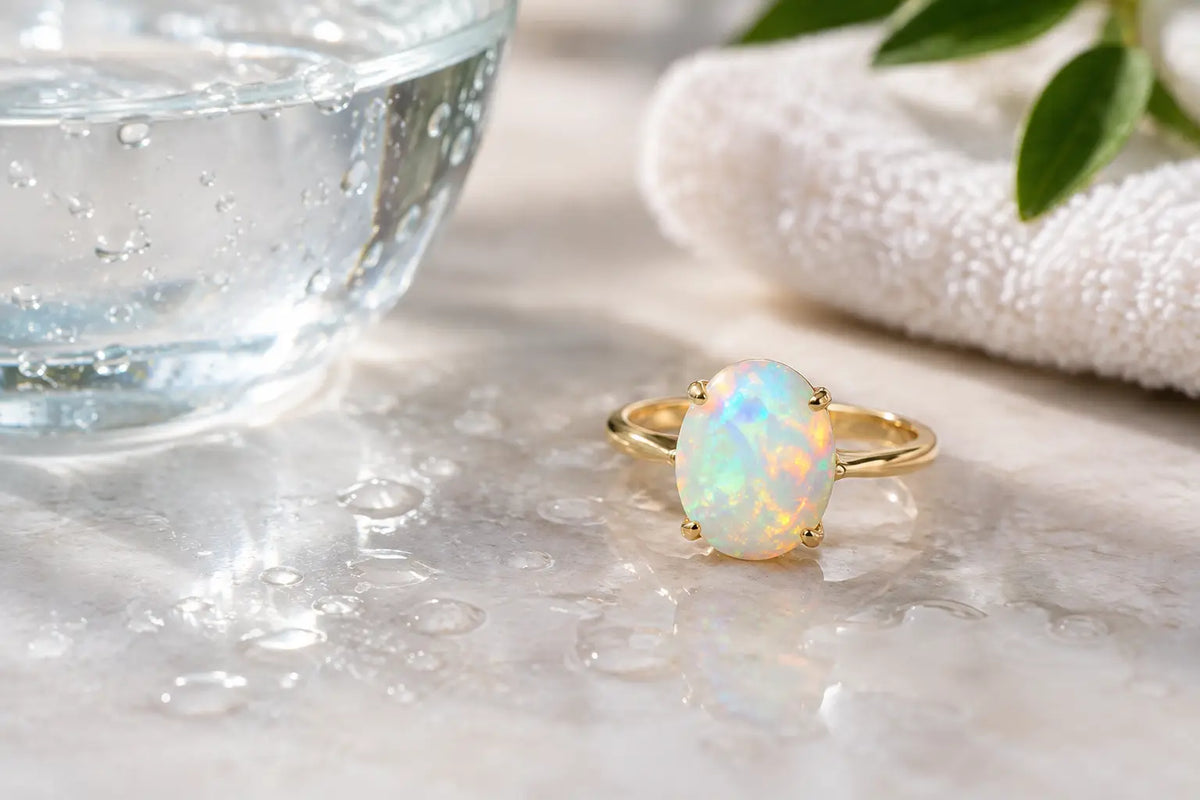
An opal ring catches attention because it never looks flat. Its shifting flashes of blue, green, pink, and fire make every glance feel a little different. That natural magic also prompts a practical question before everyday wear: can opal rings get wet?
Yes, an opal ring can handle the occasional splash, hand wash, or light rain. But it should not be treated like a waterproof accessory. Long soaking, harsh cleaners, hot water, and swimming pools can put the opal itself - or the layers and adhesives used in an inlay design - at risk.
The good news is that caring for an opal ring is simple. A few thoughtful habits will help preserve the color and craftsmanship that made you choose it in the first place.
Can Opal Rings Get Wet? The Short Answer
Brief contact with clean, room-temperature water is usually fine. If you forget to remove your ring before washing your hands, there is no need to panic. Dry it gently afterward with a soft, lint-free cloth.
The concern is repeated or prolonged exposure. Do not wear an opal ring in the shower, bath, hot tub, pool, ocean, or while washing dishes. These environments combine water with heat, chemicals, soap residue, pressure, or sudden temperature changes. Over time, that is far more demanding than a quick rinse at the sink.
Not every opal ring is built the same way, either. A solid opal, a doublet or triplet, and a handcrafted opal inlay ring can respond differently to moisture. The safest approach is to care for the whole ring, not just the stone.
Why Water Can Be Hard on Opal
Natural opal contains a small amount of water within its structure. That is part of what makes it unique, but it also means opal is more sensitive than many traditional ring stones. Rapid changes in temperature or moisture can place stress on the material. In some cases, an opal may develop tiny surface cracks called crazing.
Crazing is not guaranteed just because an opal gets wet once. It is more often linked to ongoing exposure, dehydration, heat, or abrupt environmental changes. Still, avoiding unnecessary soaking gives your ring the best chance to stay beautiful for years.
Water is especially worth avoiding when it can reach construction layers. Some opals are assembled as doublets or triplets, with a thin slice of opal bonded to a backing or covered by a clear cap. Prolonged moisture may weaken those bonds or create a cloudy appearance beneath the surface.
For opal inlay rings, the opal is often set into a durable base such as tungsten or ceramic and protected with a clear finish. That construction is made for wear, but it is not a reason to soak the ring. The inlay edges, protective layer, and setting all deserve care.
The Metal May Be Tougher Than the Inlay
Tungsten is known for its strength and scratch resistance. Ceramic is lightweight and highly scratch resistant. Those qualities make them excellent foundations for statement wedding bands and everyday rings. Yet an opal inlay changes the care equation.
Think of it this way: the ring may have a very durable frame, while the opal remains the material that sets the limits. Protecting the inlay protects the story, color, and handmade detail that make the ring distinctive.
When to Take Your Opal Ring Off
A good rule is to remove your opal ring before any activity where you would not want a favorite photograph, leather jacket, or electronic device exposed to water and chemicals. This is less about being overly cautious and more about making a meaningful piece easy to enjoy for the long term.
Take it off before showering, bathing, swimming, using a hot tub, doing dishes, cleaning, gardening with wet soil, or applying lotion and sunscreen. Chlorine can be particularly tough on jewelry finishes and settings. Saltwater can leave residue behind, while soaps and skincare products can build up in small seams and dull the ring's shine.
If you wear your ring while washing your hands, keep the water lukewarm rather than very hot or very cold. Avoid directing a strong stream at the inlay. Once your hands are dry, blot the ring dry too.
There is also a practical reason to remove a ring around water: wet skin can make fingers slippery, and rings are easy to lose near sinks, pools, beaches, and drains.
How to Clean an Opal Ring Safely
Opal jewelry does not need aggressive cleaning to look great. In fact, simpler is better. Start by wiping the ring with a clean, soft microfiber or jewelry cloth after normal wear. This removes fingerprints, skin oils, and everyday dust without exposing the piece to unnecessary moisture.
If it needs a deeper clean, dampen a soft cloth with a small amount of clean, lukewarm water. Wipe the surface gently, then immediately dry the ring thoroughly with another soft cloth. Never leave it sitting in water, even if the water is plain.
Avoid ultrasonic cleaners, steam cleaners, abrasive polishing cloths, jewelry dips, bleach, ammonia, alcohol-based solutions, and harsh household cleaners. These methods can be too intense for opal and may affect resin, protective coatings, or adhesives in an inlay ring.
Do not use a toothbrush on the opal section. Even a soft brush can catch an edge or repeatedly scrub the surface. If debris has collected around a metal setting, use a barely damp cotton swab with a light touch, then dry the area right away.
What If Your Opal Ring Gets Soaked?
Accidents happen. A ring may slip into the sink, stay on during a shower, or get caught in a sudden downpour. One incident does not automatically mean damage.
First, remove the ring from the water and pat it dry with a soft cloth. Let it air-dry at room temperature on a clean, dry surface. Do not use a hair dryer, place it on a radiator, or leave it in direct sun. Fast heat can create the kind of temperature shock you want to avoid.
Watch for changes over the next day or two. A cloudy area, loose inlay, lifting edge, new crack, or sudden loss of brightness can indicate that moisture has affected the construction. If you notice any of these signs, stop wearing the ring until a qualified jeweler can assess it. Continuing to wear a damaged ring can allow moisture and debris to travel farther into the setting.
Storage Matters as Much as Cleaning
The way you store an opal ring between wears has a real effect on its condition. Keep it in a ring box, soft pouch, or lined compartment where it will not rub against harder jewelry. Diamonds, metal edges, and other rings can scratch an opal or its protective surface.
Avoid leaving it on a sunny windowsill, in a hot car, or beside a heater. A bathroom is not ideal for long-term storage because regular steam and humidity swings are hard on many jewelry materials. A stable, room-temperature drawer or jewelry box is a better home.
For an engagement ring or wedding band worn daily, build ring care into your routine. Put it on after you finish showering, styling your hair, applying fragrance, and moisturizing. Take it off before bedtime if you tend to sleep with your hands tucked under pillows or do physical work early in the morning.
A Meaningful Ring Is Worth a Small Ritual
Opal rings are wearable art, but they are not meant to be worry-free pool jewelry. Their care needs are part of the trade-off for wearing a material with such unmistakable color and personality.
A quick dry after handwashing, a safe place during chores, and a gentle clean when needed are usually all it takes. Treat your opal ring as the handcrafted, story-rich piece it is, and it can stay ready for the moments you want it to mark.