
How to Choose an Australian Opal Wedding Band
An australian opal wedding band is not the quiet, traditional choice - and that is exactly the point. Opal carries flashes of green, blue, violet, red, and gold that shift with the light, so no two rings tell the same visual story. For couples who want their wedding jewelry to feel personal rather than predictable, it is a material with real presence.
That beauty also deserves an honest conversation about daily wear. Opal is a gemstone to choose with intention, not a material to treat like an indestructible metal. The right band design, a secure setting, and a few thoughtful care habits can make it a meaningful ring you will be excited to wear for years.
Why Australian Opal Feels Made for Meaningful Rings
Australian opal is prized for its natural play-of-color: the moving flashes that appear when the stone catches light from different angles. One piece may look deep ocean blue indoors and spark with electric green in the sun. Another may show warm fire tones, soft pink, or a full spectrum of color. That unpredictability is part of the appeal.
A wedding band is already a symbol of a relationship that cannot be copied. Opal gives that symbol a physical expression. Its color pattern is naturally one of a kind, which means your ring will not look exactly like anyone else’s, even when it is made in the same style.
For many couples, the material also carries a sense of place. Australian opal brings to mind vast landscapes, ancient geology, and a gemstone formed over an extraordinary span of time. It has the visual drama of a statement piece while still feeling intimate enough for everyday jewelry.
Choosing an Australian Opal Wedding Band Style
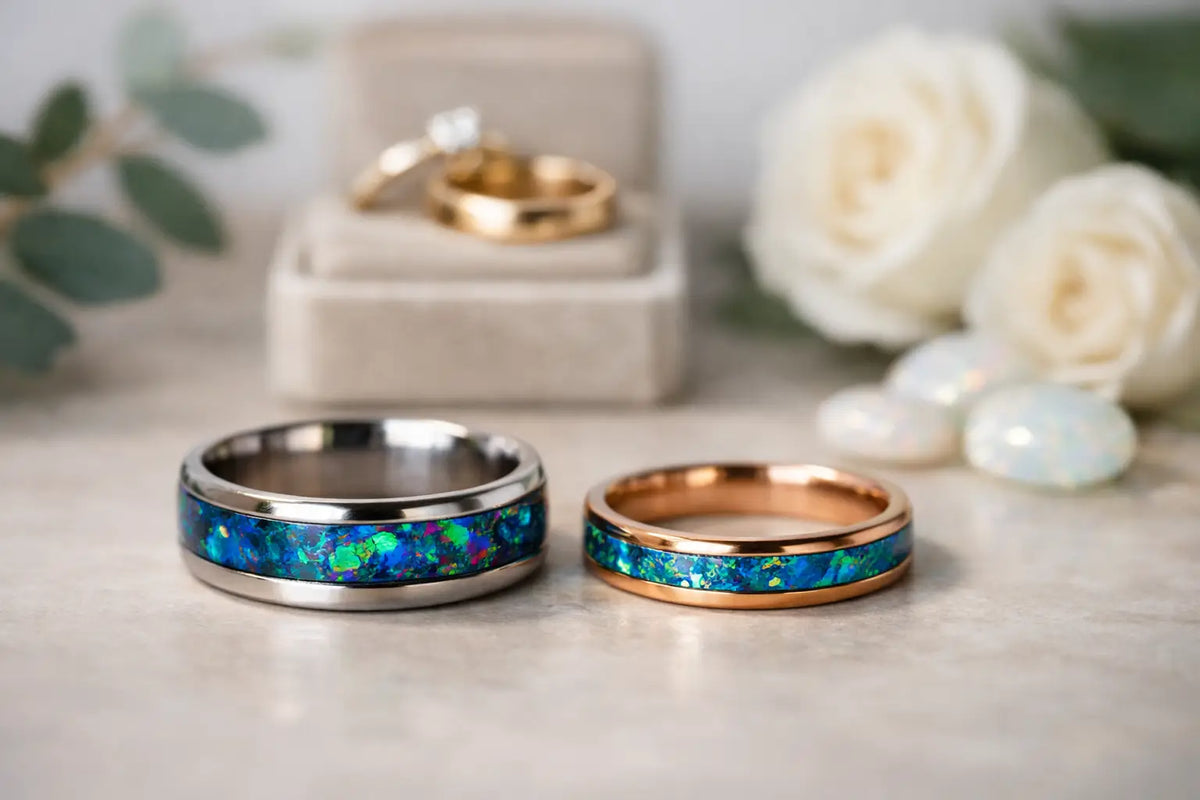
The most wearable opal wedding bands usually treat the gemstone as a protected design feature rather than leaving a large stone exposed. An opal inlay set into a durable band can offer plenty of color while reducing the edges and raised surfaces that are most likely to get knocked during daily life.
Inlay Bands for Everyday Balance
An inlay band places a narrow channel of opal within the ring, often bordered by metal or another durable material. This style feels sleek, modern, and easy to pair with an engagement ring. Because the opal sits lower in the profile than a tall center stone, it is often a smart option for people who work with their hands or simply prefer a smoother ring.
The surrounding material matters. Tungsten bands are a popular choice for their substantial feel and resistance to everyday scratching. Ceramic can create a clean, contemporary contrast. Dark materials such as black tungsten or Damascus steel can make bright blue and green opal appear even more vivid, while warmer metals can bring out fire-toned flashes.
No ring material makes opal invincible, but a well-designed inlay helps balance striking color with practical protection.
Wide Bands That Let the Color Lead
A wider wedding band creates more room for an opal inlay, mixed-material design, or multiple rows of texture. This is ideal if the ring itself is meant to be the centerpiece rather than an understated complement to other jewelry.
Wide styles suit shoppers who love a bolder look, but comfort still matters. A comfort-fit interior, with gently rounded edges inside the band, can make a wider ring feel much easier to wear. If you are between sizes, band width can affect how a ring feels on the finger, so it is worth choosing your size carefully before a made-to-order piece is created.
Pairing Opal With Personal Materials
Opal is especially compelling when it is paired with a material that adds another layer of story. Meteorite and opal can feel cosmic and colorful at once. Dinosaur bone and opal bring together fossil texture and luminous gemstone color. Crushed crystal, wood, or glow accents can also create a band that feels tailored to a shared interest, a favorite color, or a memorable place.
The key is contrast with purpose. A design with too many competing colors may feel busy, while a restrained combination lets each material stay recognizable. If the opal has a lot of fire, a dark or neutral base can keep the design grounded.
Know What You Are Buying
“Opal” can describe several types of material and construction. A transparent, solid natural opal is different from a doublet or triplet, which uses layers to create a durable and visually striking opal surface. There is no single best choice for every buyer, but there should be clarity about what is in the ring.
When shopping for an australian opal wedding band, ask how the opal is prepared, where it is placed in the design, and what protects it from direct impact. A trustworthy maker should be direct about the materials used and show the kind of color variation you can expect.
Natural opal varies significantly. Product photos are helpful for understanding the overall look, but your finished ring may show a different pattern, color distribution, or brightness. That is not a flaw. It is the character of a natural material. Still, if you are hoping for a particular dominant color, such as blue-green rather than red fire, communicate that preference before ordering when customization is available.
Durability: The Trade-Off Worth Understanding
Opal is softer and more sensitive than diamonds, sapphires, tungsten, or steel. It can be scratched, chipped, or damaged by a hard impact. Rapid temperature changes and harsh chemicals are also not friends to opal. That does not mean it cannot be worn as a wedding band. It means the ring should fit your actual lifestyle.
If your work involves tools, heavy lifting, frequent contact with hard surfaces, or chemicals, consider reserving your opal band for evenings, events, and lower-impact parts of the day. Some couples choose an opal wedding band as their primary ring and keep a simpler silicone or metal band for the gym, worksite, travel, or hands-on projects. That is not treating the ring as too precious. It is giving a meaningful piece the care it deserves.
A low-profile inlay design is generally more practical than an exposed opal centerpiece. A secure channel, a smooth finish, and protective bordering materials all help. Handmade craftsmanship matters here because the transitions between materials should feel intentional, smooth, and firmly finished.
Getting the Fit Right Before You Order
A ring can be beautifully made and still disappoint if it is uncomfortable or difficult to wear. Measure your finger when your hands are at a normal temperature, ideally later in the day when fingers are not at their smallest. Avoid sizing immediately after exercise, a hot shower, or a very salty meal, when swelling can temporarily affect the result.
Band width influences fit. A wider band covers more of the finger and can feel tighter than a narrow band in the same size. Comfort-fit bands can make a substantial ring easier to slide over the knuckle, but they do not replace accurate sizing.
This is particularly important with materials like tungsten and ceramic. These materials are valued for strength and finish, but they are not resized in the same way as traditional gold bands. Confirm the seller’s sizing guidance and exchange policy before ordering. Decazi’s handcrafted approach is designed around distinctive materials, so taking a moment to get the size right helps ensure the finished ring feels as good as it looks.
Simple Care for an Opal Band
Keep care uncomplicated. Remove your ring before lifting weights, doing home repairs, gardening, swimming in chlorinated pools, or using strong cleaning products. Store it separately from harder jewelry so it is not rubbed against diamonds or metal edges in a jewelry box.
For routine cleaning, use a soft, dry cloth or a lightly damp cloth, then dry the ring immediately. Avoid ultrasonic cleaners, steam cleaning, abrasive polishing cloths, and chemical dips unless the maker specifically confirms they are safe for that exact construction. If the ring ever catches on fabric, develops a rough edge, or suffers a hard hit, stop wearing it until it can be inspected.
An opal wedding band should feel like a piece of your life, not a piece you are afraid to enjoy. Choose a design that suits how you live, respect the material’s nature, and let its changing color be a small reminder that the best stories never look exactly the same in every light.


