
How to Clean Opal Rings Without Dulling Their Fire
An opal ring earns attention for its shifting flashes of color, not because it looks freshly polished every second of the day. Still, knowing how to clean opal rings properly helps protect the vivid fire that made you choose one in the first place. The safest method is wonderfully simple: a soft cloth, lukewarm water, gentle handling, and a little patience.
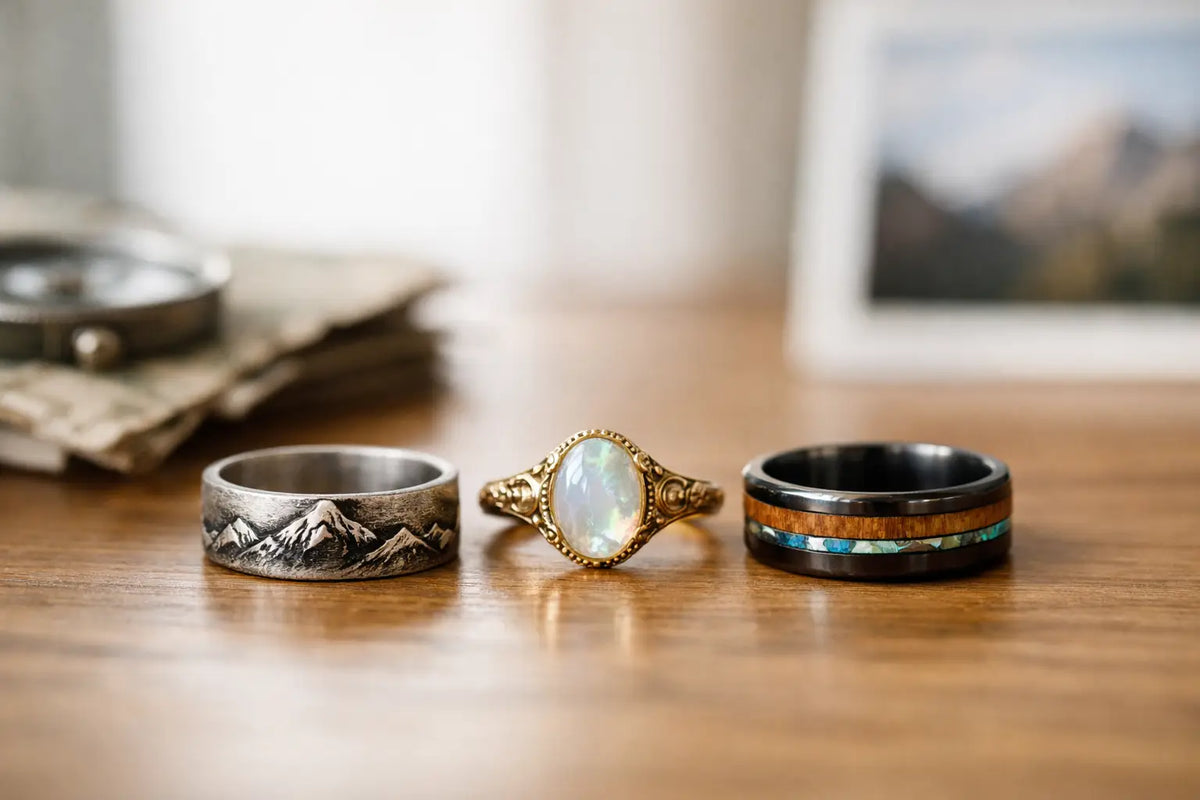
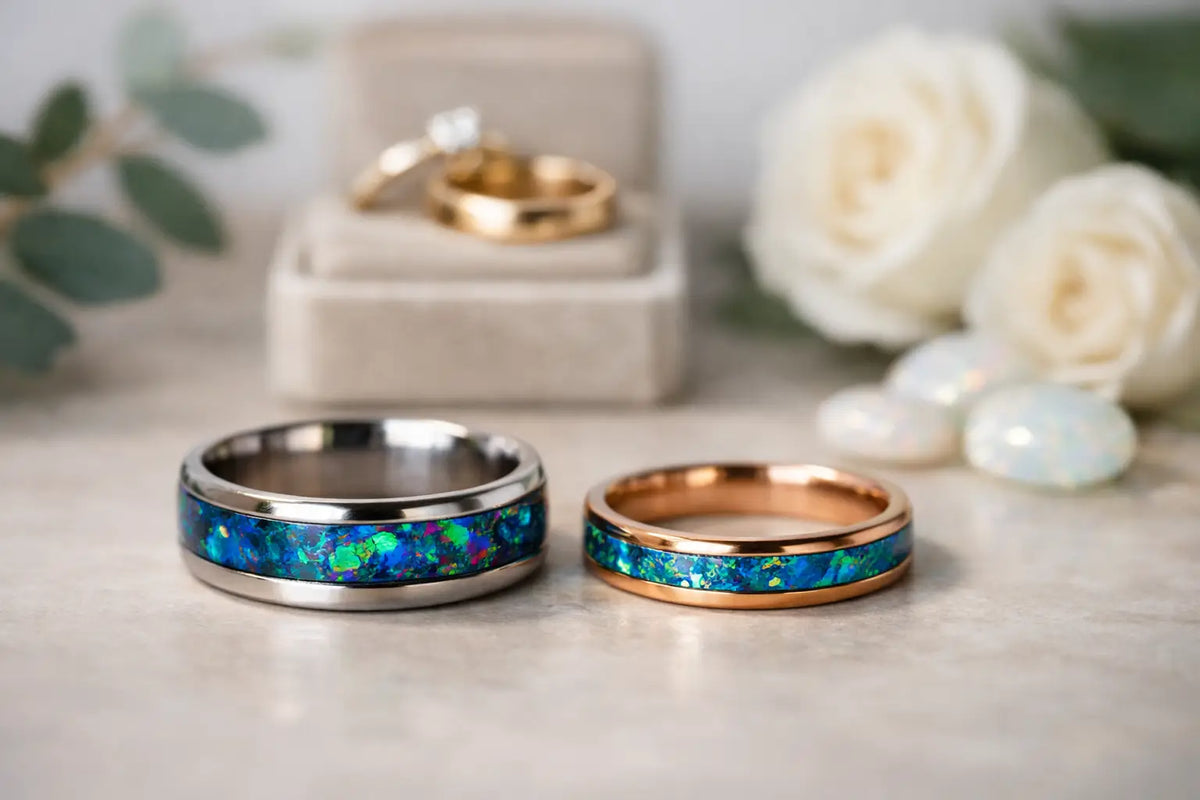
Opal is not a material to treat like a plain metal band. Whether your ring has a solid opal centerpiece or a colorful opal inlay set into tungsten, ceramic, or another durable base, the stone and its setting deserve care that matches their one-of-a-kind character.
Why Opal Rings Need Gentler Cleaning
Opal is loved for its play-of-color - those brilliant flashes of blue, green, pink, and gold that seem to move as the ring catches the light. But unlike diamond, opal is comparatively soft. Its surface can scratch, and certain types of opal jewelry can be affected by prolonged moisture, heat, or harsh cleaning products.
The exact care routine depends on how the opal is used in your ring. A solid opal is cut from a single piece of natural material. A doublet or triplet combines a thin opal layer with a backing, and sometimes a clear protective cap. Many contemporary statement rings and wedding bands use crushed opal or opal inlay, often sealed beneath a protective resin layer.
That construction matters. A quick, careful wipe is safe for nearly every opal ring. Soaking, steaming, or using powerful cleaners is where avoidable damage can happen.
How to Clean Opal Rings at Home
For routine cleaning, start by removing your ring before washing dishes, showering, swimming, or applying lotion. If it already has residue on it, place a soft microfiber cloth on a clean, flat surface so the ring cannot roll or scratch against a counter.
Dampen a second soft cloth with lukewarm water. It should be damp, not dripping. Gently wipe the opal and the surrounding band, using light pressure to lift away skin oils, dust, and everyday buildup. Pay attention to the edges of an inlay or the area around a raised stone, where residue can collect.
If water alone is not enough, add the smallest drop of mild, fragrance-free dish soap to a cup of lukewarm water. Dampen the cloth in the mixture, wring it out thoroughly, and wipe the ring. Follow with a separate water-dampened cloth to remove any soap film. Then dry the piece right away with a clean, lint-free cloth.
For most opal rings, this is all the cleaning they need. The goal is not to scrub the ring until it shines like a mirror. It is to gently remove what does not belong there without disturbing what makes the material special.
Cleaning Around an Opal Inlay
Opal inlay rings often pair luminous color with materials chosen for everyday durability, such as tungsten or ceramic. The band may be highly scratch-resistant, but that does not mean the opal inlay should be cleaned aggressively.
Use the same soft-cloth method across the entire ring. Do not use a stiff toothbrush, toothpick, scouring pad, or abrasive polishing cloth along the inlay. These tools can catch at the border between materials or gradually dull the protective surface over the opal.
If buildup has settled into a narrow groove, use a clean, soft makeup brush with very fine bristles while the ring is dry. Brush lightly, then wipe with a barely damp cloth. Do not force bristles into the inlay or try to pry debris out with a sharp object.
What Not to Use on an Opal Ring
The products that make quick work of tarnished silver or cloudy glass can be far too harsh for opal. Keep your ring away from ultrasonic cleaners and steam cleaners. The vibration, pressure, and heat can create problems for delicate stones, layered opals, adhesives, and resin-backed inlays.
Avoid jewelry dips, bleach, ammonia, acetone, alcohol-heavy cleaners, and strong chemical solutions. Household cleaners are not ring cleaners, even when the band itself is made from a tough material. Chlorine is especially worth avoiding, so take your ring off before getting into a pool or hot tub.
It is also best to skip toothpaste, baking soda, powdered cleaners, and polishing compounds. These can leave fine scratches or haze a glossy finish. A ring does not need a harsh cleaner to look cared for.
Should You Soak an Opal Ring?
In most cases, no. A brief accidental splash is usually not a reason to panic, but soaking an opal ring is unnecessary and can be risky. Doublets, triplets, and some inlay designs may use layers or sealed components that should not be exposed to prolonged water.
Solid opals are often more moisture-tolerant than layered opals, but they still do not benefit from being left in a cup of water. The safest standard is simple: clean with a damp cloth, then dry promptly.
This is one of those situations where a little restraint protects a meaningful piece for the long run. If you are unsure whether your ring contains solid opal, a doublet, a triplet, or an inlay, follow the gentlest method until you can confirm its construction.
Everyday Habits That Keep Opal Bright
Cleaning is only part of opal care. The way you wear and store the ring has just as much influence on how it looks over time. Put your ring on after lotion, sunscreen, fragrance, hair products, and makeup have had a chance to settle. Product residue can create a dull film over any stone, especially one with a lot of visual depth.
Remove it for gardening, weightlifting, home repairs, beach days, and hands-on work. Even a durable wedding band can take a hard hit, and opal is better protected from sharp impacts and gritty surfaces. Rings with raised opals are particularly vulnerable to knocks on countertops, door frames, and exercise equipment.
When you are not wearing it, store the ring in a soft pouch or a lined jewelry box compartment. Keeping it separate from harder jewelry helps prevent scratches. Do not leave it on a sunny windowsill, in a hot car, or near a heating vent. Sudden and extreme temperature changes are not ideal for opal or for the materials used to secure it.
When a Professional Cleaning Makes Sense
At-home care handles normal fingerprints and daily residue. Professional help is a better choice if you notice a loose stone, a lifted edge around an inlay, cracking, cloudiness beneath a layered opal, or a change that does not wipe away with a damp cloth.
Choose a jeweler who understands opals and ask them to avoid ultrasonic and steam cleaning. This is especially relevant for handcrafted rings with mixed materials. A ring made with tungsten, meteorite, wood, crystal, or opal may need a different approach from a standard gold-and-diamond setting.
If your ring is an everyday wedding band, inspect it occasionally in good light. Catching a loose setting or damaged protective surface early is much easier than waiting until a small issue becomes a repair.
A Gentle Routine for a Ring With a Big Story
Your opal ring might mark a wedding, anniversary, promise, milestone, or simply a love for jewelry that refuses to look ordinary. It does not need complicated maintenance to keep telling that story. Wipe it gently after wear, keep it away from chemicals and long soaks, and let its color do the talking whenever the light finds it.