Do Opal Rings Scratch Easily?
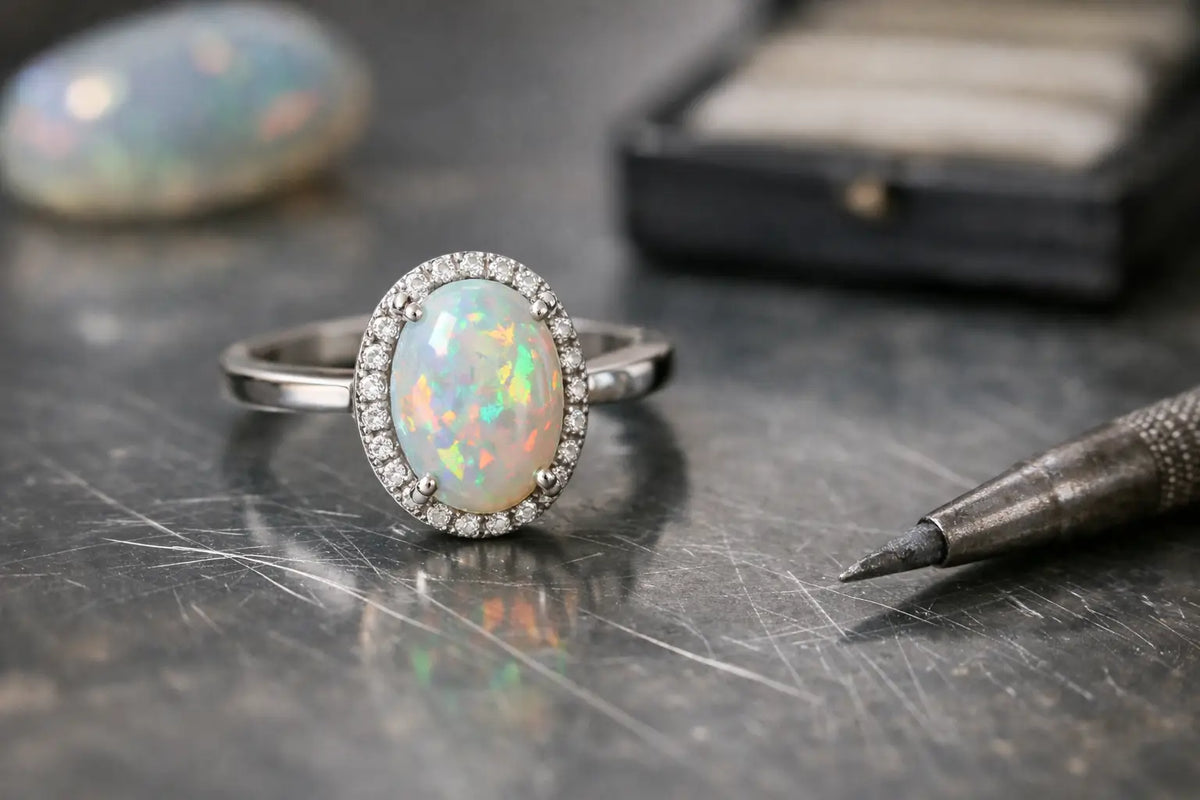
You notice it the first time light hits an opal - flashes of green, blue, orange, sometimes all at once. It does not look like any other ring stone, which is exactly why so many people ask, do opal rings scratch easily? The honest answer is yes, they can. But that does not automatically make them a bad choice. It just means opal is a ring material with more personality, more care needs, and a different kind of wear profile than harder stones.
Do opal rings scratch easily compared to other stones?
Opal is softer than many popular ring stones. On the Mohs hardness scale, most opals sit around 5.5 to 6.5. That puts them well below sapphires and diamonds, and below many materials people assume are delicate but actually hold up better to abrasion.
In practical terms, this means everyday contact can mark the surface over time. A countertop edge, keys in a pocket, rough stacking against another ring, or even tiny particles of grit can leave fine scratches. If you are used to hearing about ultra-hard stones that shrug off daily wear, opal lives in a different category.
That softer nature is part of the trade-off. You choose opal for its fire, depth, and color play, not because it behaves like an industrial material. For many buyers, that is worth it. Especially if the ring is meant to feel artistic, symbolic, or one-of-a-kind rather than purely low-maintenance.
Why opal scratches more easily than people expect
A lot of shoppers look at opal and assume the glossy finish means toughness. The shine can be misleading. Opal may look sleek and polished, but its internal structure and relative softness make it more vulnerable to surface wear.
There is also a difference between scratching, chipping, and cracking. Scratches are usually light marks on the surface caused by friction or contact with something harder. Chipping happens when an edge gets hit. Cracking can result from a stronger impact or sudden pressure. When people ask whether opal rings scratch easily, they are often really asking whether opal is fragile overall. The answer is that opal deserves care on all three fronts.
That said, not every opal ring wears the same way. The design matters. A protected inlay style or a setting where the opal sits lower in the ring can reduce exposure. A raised stone with unshielded edges will generally face more risk during daily wear.
Solid opal vs opal inlay
This is where ring construction matters a lot. A solid opal center stone tends to be more exposed, especially in traditional engagement-style settings. It shows off the stone beautifully, but it also gives daily knocks more chances to reach the surface or edges.
An opal inlay ring is often better protected because the material is set into the band itself. When paired with a strong base like tungsten or ceramic, the overall ring can feel much more wearable for everyday life. The opal still needs respect, but the design helps shield it from the kind of direct contact that causes damage faster.
For shoppers who love opal but want a practical wedding band or statement ring, this is often the sweet spot - you keep the vivid color and rarity, but gain a more secure structure around it.
Can you wear an opal ring every day?
You can, but it depends on your routine and your expectations. If your day involves typing, commuting, light errands, and generally careful wear, an opal ring may do just fine with thoughtful handling. If you work with tools, lift weights, garden, clean with chemicals, or use your hands heavily, daily wear becomes much riskier.
This is the part many jewelry articles skip. Durability is not just about the stone. It is about the life around the stone. A person with a desk job and a habit of removing jewelry before chores may wear opal comfortably for years. Someone who wants to keep the ring on through workouts, yard work, showers, cooking, and moving boxes is much more likely to see scratches and other damage sooner.
That does not mean opal is too delicate for meaningful jewelry. It means opal is best for people who appreciate beauty enough to make small adjustments. Plenty of customers are happy to do that, especially when the ring has emotional significance and a look that harder stones simply cannot copy.
How to keep an opal ring from scratching
If you love the look, a few habits make a real difference. The biggest one is taking the ring off before hands-on tasks. House cleaning, weight training, swimming, gardening, woodworking, and even moving furniture are all easy ways to scuff or knock an opal.
Storage matters too. If an opal ring is tossed into a tray with other jewelry, harder stones and metals can scratch it. A soft pouch or separate ring box is a much better choice. This sounds simple, but it prevents a lot of avoidable wear.
Cleaning should stay gentle. Use mild soap, lukewarm water, and a soft cloth. Avoid ultrasonic cleaners, harsh chemicals, and abrasive brushes. Opal is not the stone to attack with aggressive cleaning methods.
It also helps to think about how the ring is worn alongside other bands. Stacked rings can rub against each other constantly, especially if one has sharper edges or a harder surface. If your opal ring is part of a stack, make sure the combination is actually compatible.
Best habits for long-term wear
The people who keep opal rings looking beautiful usually treat them as fine jewelry, not indestructible gear. They put them on after lotions and products have absorbed. They remove them before messy or high-impact tasks. They give them a dedicated place to rest at night.
That level of care is not excessive. It is simply matching the material to the right habits.
Is opal a bad choice for a wedding ring?
Not necessarily. It is just a more intentional choice.
If you want a wedding ring that can handle years of rough daily wear with very little thought, opal may not be your best match. There are tougher materials better suited to that goal. But if your priority is symbolism, originality, and a ring that feels deeply personal, opal can be a beautiful option.
This is especially true when the ring is designed for better protection. Handmade bands that pair opal with durable materials can offer a balance between visual impact and practical wearability. For couples who want something rare and story-rich rather than standard, opal has a kind of emotional pull that is hard to fake.
At Decazi, that balance is part of the appeal - unusual materials are chosen not just because they look striking, but because they help turn a ring into something memorable and personal.
Who should choose opal and who should skip it?
Opal is a great fit for someone who loves expressive color, wants a ring that feels uncommon, and is comfortable being careful with it. It also makes sense for occasional wear, special event jewelry, promise rings, anniversary gifts, and wedding bands worn by people with lighter daily hand use.
It may be the wrong fit if you know you are rough on jewelry, never take rings off, or want a stone that stays looking pristine with minimal maintenance. There is no shame in that. Different materials serve different lifestyles.
The good news is that choosing opal does not have to be all or nothing. Some buyers reserve an opal ring for certain days and wear a tougher band for travel, work, or active weekends. That kind of rotation can dramatically extend the life of the piece while still letting you enjoy everything that makes opal special.
So, do opal rings scratch easily?
Yes - more easily than harder ring stones and many alternative materials. But that answer only tells half the story. Opal is not popular because it is the toughest option. It is popular because it has color, movement, and individuality that feels almost impossible to replace.
If you go in expecting armor, you will probably be disappointed. If you go in wanting a handcrafted ring with rare visual character and you are willing to care for it properly, opal can be a very satisfying choice. The best ring is not always the one you never have to think about. Sometimes it is the one that feels so special, you are happy to treat it that way.