A Guide to Matching Ring Sets
Matching rings do not have to look identical to feel deeply connected. That is the heart of any good guide to matching ring sets - finding the visual and emotional thread that makes two rings belong together, even if each person’s style is different.
For some couples, that thread is subtle, like a shared metal tone or a repeating edge detail. For others, it is the story behind the material itself: meteorite for something cosmic, opal for color and movement, dinosaur bone for a piece that feels rare and unforgettable. The best matching set is not the one that follows old rules. It is the one that feels right every time you look down at your hand.
What matching ring sets really mean
A lot of people start shopping with one picture in mind: two rings that are exactly the same. Sometimes that works beautifully. If you both love the same width, same finish, and same material, a mirrored pair can look bold and intentional.
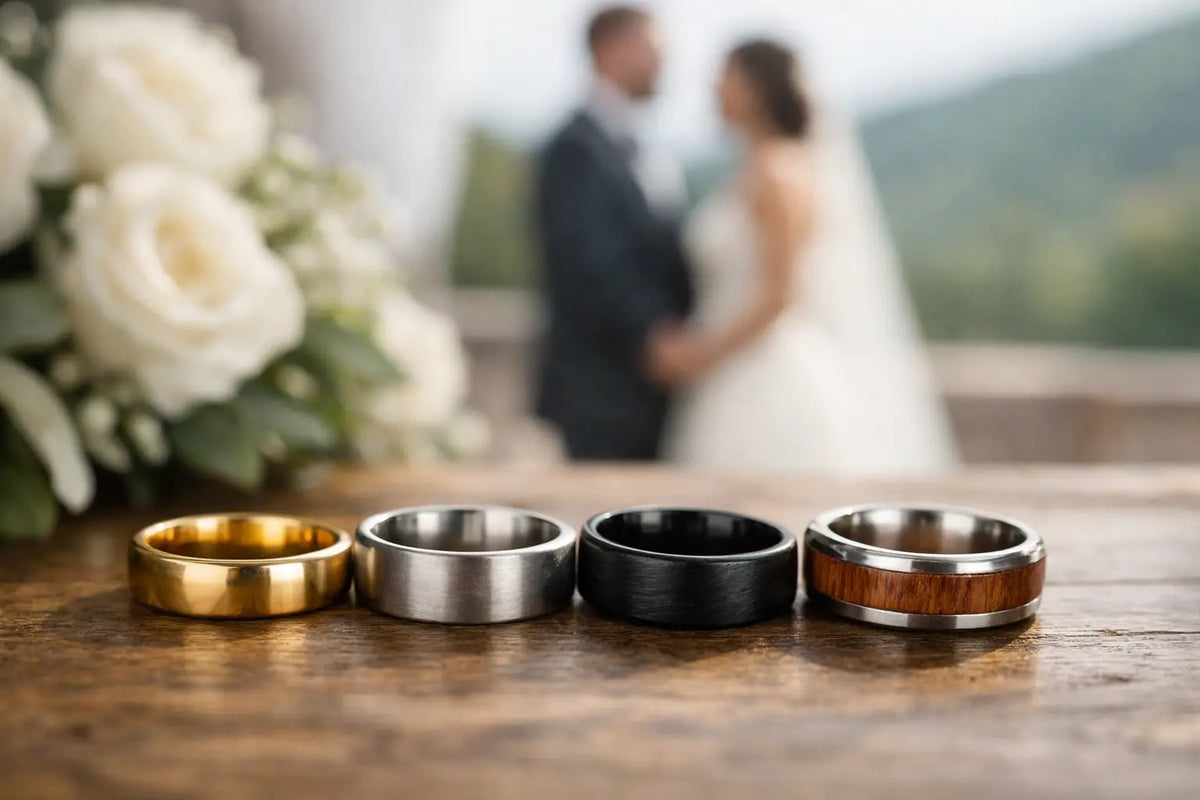
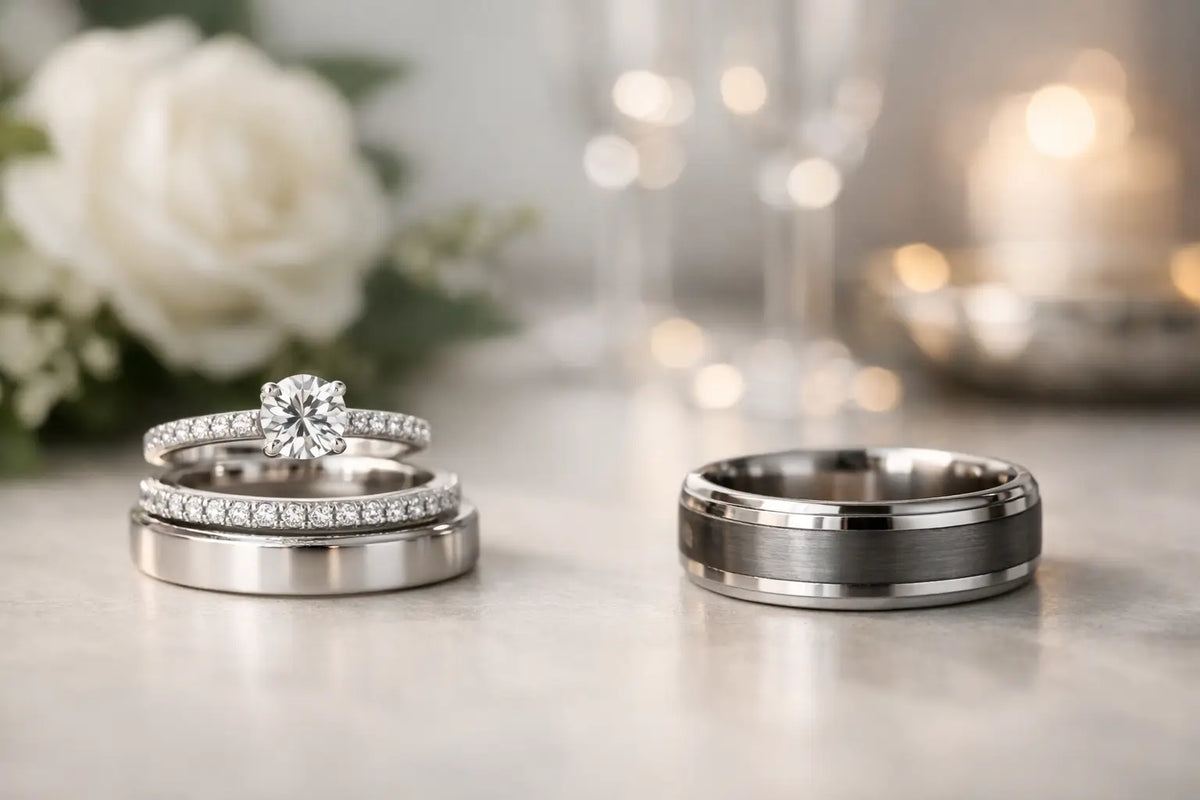
But matching can also mean coordinated rather than identical. One ring might be a slimmer band with opal and moon dust, while the other uses the same inlay in a wider tungsten profile. One person may want a smooth polished edge, while the other prefers a matte finish or beveled shape. The set still reads as a pair because the design language is shared.
That flexibility matters, especially for couples with different tastes, hand sizes, or day-to-day needs. A matching set should feel like a connection, not a compromise.
A practical guide to matching ring sets that feel personal
The easiest place to start is not with color or price. Start with lifestyle. Rings are worn every day, so the design has to make sense for real life before it can feel meaningful.
If one or both of you work with your hands, durability usually moves to the top of the list. Tungsten, ceramic, and Damascus steel often appeal to couples who want a strong, low-maintenance ring with real presence. If visual texture matters more than high shine, materials like meteorite, petrified wood, or fossil inlays can add character without looking overly formal.
Then think about comfort. A dramatic ring can look incredible in photos and still feel wrong by week two if the width is too heavy or the profile is too sharp. Matching sets work best when each person gets a ring they will actually enjoy wearing. That may mean choosing the same material combination in different widths, or using one core design with slightly different shapes.
This is where handcrafted rings shine. You are not boxed into one standard version of a “set.” You can keep the bond between the two rings while tailoring the details to each wearer.
Start with one shared design anchor
When couples feel overwhelmed, one shared anchor usually brings everything into focus. That anchor could be the main material, an inlay, a finish, or even a symbolic theme.
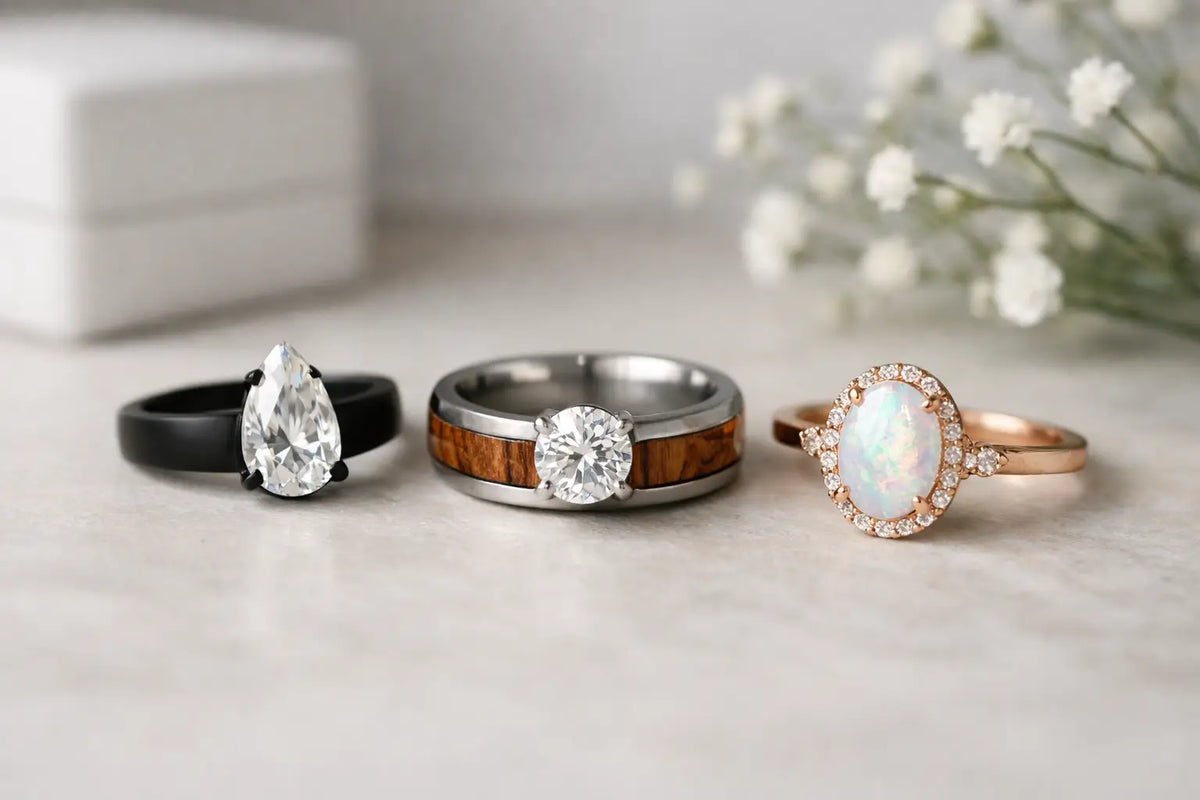
If you both love the idea of something celestial, meteorite or moon dust can carry that theme across both rings. If you want a richer, earthier look, petrified wood, antler-inspired textures, or dinosaur bone can create a pair that feels organic and rare. If your taste leans vibrant, opal or crushed crystal inlays can tie the set together with color.
The key is picking one dominant feature that appears in both rings. Once that is established, the rest can flex. Width, band shape, and accent materials can vary without making the rings look unrelated.
Decide where you want similarity and where you want contrast
Some couples want a perfect visual match. Others want rings that clearly belong together but still reflect individual personality. Neither approach is better. It depends on what feels authentic to you.
If you want a stronger matching effect, keep the material combination and finish the same, and vary only the width. This is a clean, dependable option because the rings will read as a set instantly.
If you want more individuality, keep one or two shared elements and change the rest. For example, both rings might feature black tungsten and opal, but one includes a polished surface while the other has a matte brushed finish. Or both use meteorite, but one is paired with blue glow inlay while the other stays dark and understated.
That kind of contrast often creates a more personal result. It also helps when one partner prefers statement jewelry and the other wants something quieter.
Choosing materials for a matching ring set
Material choice shapes the whole personality of a set. It affects not only the look, but how the rings feel on the hand, how much care they need, and how distinctive they appear in person.
Tungsten is a favorite for matching sets because it feels substantial, resists scratching well, and has a modern edge. It works especially well with bold inlays like opal, meteorite, or glow materials. Ceramic has a cleaner, lighter feel and suits couples who want a sleek black or white band with strong contrast. Damascus steel brings layered texture and an artisan look that feels traditional and unconventional at the same time.
Then there are the storytelling materials. Meteorite gives a ring a naturally patterned surface that no plain metal can imitate. Moon dust adds symbolic romance without feeling overly delicate. Dinosaur bone, petrified wood, and crystal inlays turn a ring into something people ask about, which is part of the fun for couples who never wanted ordinary bands in the first place.
There is a trade-off here. The more visually complex the material, the more important it becomes to balance the overall design. If both rings use vivid inlays, unusual textures, and multiple contrasting colors, the set can tip from distinctive into busy. Usually, one standout element paired with a strong base material creates the best result.
How to match rings when your styles are different
This is one of the most common shopping situations, and honestly, it is where the most interesting sets come from.
Maybe one of you likes black rings, angular edges, and darker finishes. The other wants color, shimmer, or a slimmer silhouette. Instead of trying to average those preferences into something neither person loves, look for crossover points.
You might share an inlay but choose different band bodies. You might use the same tungsten base while changing the finish and width. You might match through symbolism rather than appearance, using two different materials that connect to a shared story, trip, memory, or milestone.
A guide to matching ring sets should leave room for personality. Rings are intimate objects. If they feel generic just to satisfy the idea of “matching,” the set loses some of its meaning.
Think in pairs, not copies
The strongest matching sets often behave like a good couple themselves. They are clearly connected, but not interchangeable.
That may mean one ring is more dramatic and one is more refined. One may use a wider profile to showcase material patterning, while the other keeps the same material in a narrower, softer shape. They still belong together because the relationship between them is deliberate.
This approach is especially useful for wedding bands and promise rings, where both people want something symbolic but wearable for years.
Details that make a set feel intentional
Small details are what separate a ring pair from two rings that just happen to be purchased together. Edge styles, finishes, inlay placement, and interior comfort fit all matter more than most shoppers expect.
A beveled edge can make a ring feel sharper and more architectural. Rounded edges tend to feel softer and more classic. Matte finishes downplay fingerprints and give the ring a modern, understated look. Polished finishes pull more light and make opal, crystal, or meteorite details pop.
Engravings can also strengthen the connection between two rings, especially if the outside designs are not identical. A shared date, phrase, coordinates, or private message adds meaning without changing the visual balance. It is a quiet detail, but often one of the most personal.
Sizing deserves just as much attention. Even the most beautiful set will disappoint if the fit is off. Wider bands usually feel snugger than slim ones, and different materials can wear differently depending on weight and profile. If you are building a matching set with distinct widths or shapes, it is smart to think about each ring as its own fit decision rather than assuming both should follow the same logic.
When to choose a ready-made set and when to customize
A ready-made matching set is ideal when you already know what you like and want a straightforward choice. It removes some decision fatigue and gives you confidence that the rings were designed to coordinate from the beginning.
Customization makes more sense when your preferences are close, but not identical, or when the material itself is a big part of the meaning. For couples drawn to uncommon inlays and handcrafted detail, customizing can be the difference between “good enough” and “exactly us.” That is one reason brands like Decazi resonate with couples who want rings to feel memorable, not mass-produced.
If you do customize, try not to change everything at once. Keep one clear shared theme, then adjust width, profile, or finish from there. Too many changes can make the pair lose its visual connection.
The right matching ring set should feel easy once it is on your hand. Not forced, not overly coordinated, and not disconnected either. If the two rings tell the same story in different voices, you are probably very close. Pick the set that still feels personal after the excitement of shopping fades, because that is the one you will keep loving in ordinary, everyday moments.