
What Material Is Best for Wedding Rings?
Some couples know the exact look they want the second they start shopping. Others get stuck on the first big question: what material is best for wedding rings? The honest answer is that there is no single best material for every hand, lifestyle, and budget. The right choice depends on how you live, what kind of story you want your ring to tell, and how much maintenance you are willing to take on over time.
A wedding ring is one of the few things you wear almost every day. That makes material more than a style decision. It affects comfort, scratch resistance, weight, price, color, symbolism, and how the ring holds up through years of work, travel, workouts, hobbies, and daily routines.
What material is best for wedding rings if you want durability?
If durability is your top priority, tungsten usually leads the conversation. It is one of the most scratch-resistant materials used in wedding bands, which makes it a favorite for people who work with their hands, prefer a low-maintenance ring, or simply want that polished look to last. Tungsten also has a satisfying weight, so it feels substantial on the hand.
That said, durability is not one simple category. Tungsten resists scratching extremely well, but it can crack or shatter under a hard enough impact instead of bending. Gold and platinum are softer, so they scratch more easily, but they are also easier to resize and repair. Titanium is lightweight and strong, while ceramic offers great scratch resistance with a clean modern finish, though it can also chip if struck hard.
So if by durable you mean resistant to surface wear, tungsten and ceramic are excellent choices. If you mean a material that can be repaired, reshaped, and maintained over decades, gold and platinum still deserve serious consideration.
Comparing the most popular wedding ring materials
Tungsten
Tungsten has become a standout choice for modern wedding bands because it combines toughness, affordability, and bold appearance. It resists scratches better than most traditional metals, and it works especially well in matte, brushed, beveled, and inlay-heavy designs. It is a strong option for anyone who wants a ring that looks crisp with very little upkeep.
It is not ideal for resizing, though, and it is heavier than titanium. For many people, that weight feels premium. For others, it takes some getting used to.
Gold
Gold is classic for a reason. Yellow gold, white gold, and rose gold each bring a different personality, and gold has a long history in wedding jewelry that many couples still love. It is easier to resize than harder alternative materials, which can matter if your finger size changes in the future.
The trade-off is wear. Gold scratches more easily than tungsten, titanium, or ceramic, especially in higher karats. Some people love that softer, lived-in character. Others want a ring that keeps a sharper finish.
Platinum
Platinum sits in a similar traditional category, but with a different feel. It is denser and heavier than gold, naturally white in tone, and highly valued for its purity and prestige. It is durable in the sense that the metal does not wear away quickly, but it does develop surface marks over time.
For buyers who want a precious metal with heirloom appeal, platinum makes sense. For buyers focused on price and scratch resistance, it may not be the most practical fit.
Titanium
Titanium is strong, lightweight, and comfortable for everyday wear. If you dislike the feel of a heavy ring, titanium often feels immediately better than tungsten or platinum. It also has a sleek, understated modern look.
Its limitations are similar to other alternative metals. Resizing can be difficult, and design options may be more limited compared with handcrafted rings that use richer inlays and more tactile materials.
Ceramic
Ceramic wedding bands are popular for their clean finish and impressive scratch resistance. Black ceramic, in particular, has a crisp, contemporary edge that appeals to buyers who want something different from standard metal bands.
Like tungsten, ceramic is a practical material for low-maintenance wear, but it is less forgiving under impact. It is best for someone who values style and surface durability and is comfortable with the trade-offs.
What material is best for wedding rings if style matters most?
If style and individuality are driving your search, the answer opens up fast. Traditional metals are only part of the picture now. Many couples want a ring that feels personal, expressive, and memorable rather than standard. That is where unconventional materials really shine.
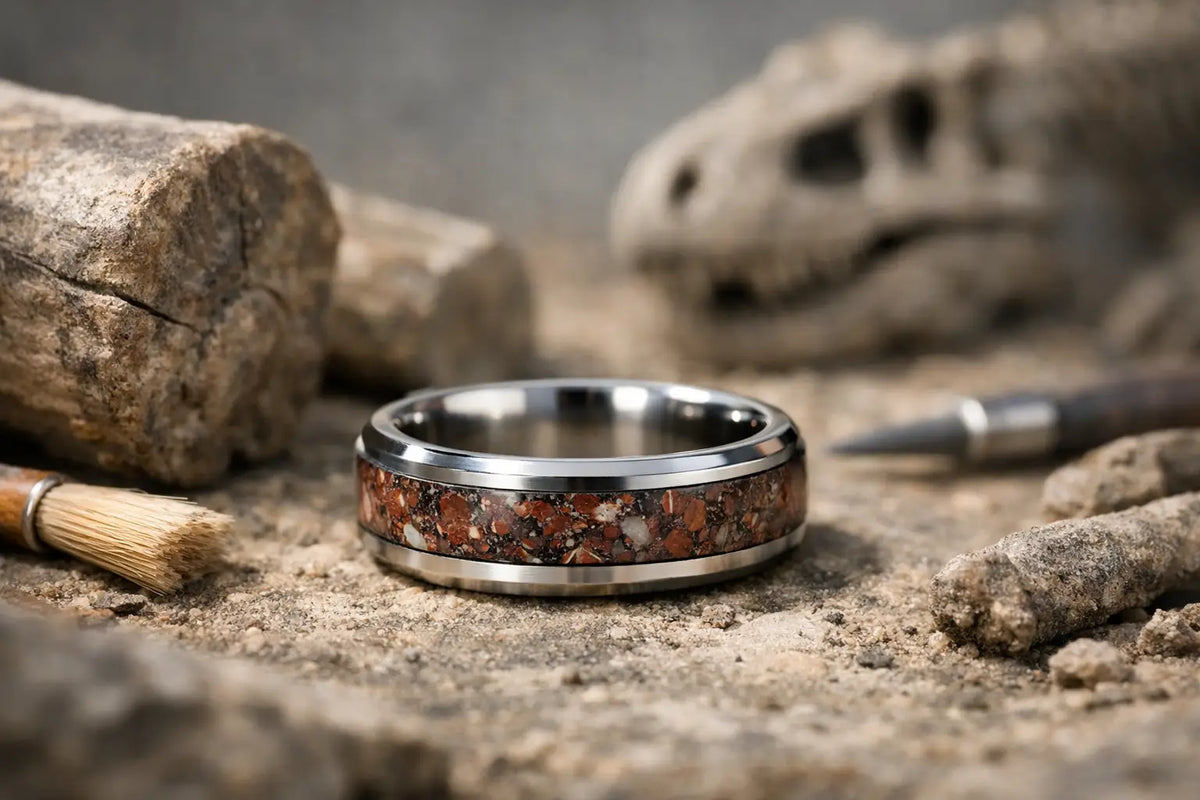
Meteorite brings a pattern that literally cannot be replicated by ordinary metal alone. Dinosaur bone carries an ancient, fossil-based texture that feels rare and deeply symbolic. Opal adds color play and movement. Crushed moon dust, crystals, glow materials, and petrified wood create rings that feel less like generic jewelry and more like wearable stories.
This is also where craftsmanship matters. A simple metal band can be beautiful, but a handcrafted ring with carefully set inlays and a tactile finish offers a very different kind of experience. It feels chosen, not defaulted to.
For a lot of modern couples, especially those who want their wedding bands to reflect personality, the best material is not just the hardest or most expensive one. It is the one that captures something true about the relationship.
The real question: how will you wear it?
A ring can look amazing in photos and still be wrong for your day-to-day life. That is why the best way to choose a wedding ring material is to think about wear habits first.
If you work with tools, lift weights, or spend a lot of time outdoors, you may want a material that resists visible scratching, like tungsten or ceramic. If you want a ring that can be resized later, gold or platinum may make more sense. If you hate heavy accessories, titanium might feel best. If you want a piece that stands out every time you glance at your hand, an inlay design with meteorite, opal, dinosaur bone, or other collectible materials may be exactly what you are looking for.
There is also the question of maintenance. Some buyers are happy to polish, clean, and baby a ring a little. Others want something they can put on and forget. Neither approach is wrong, but it should shape your choice.
What material is best for wedding rings on a budget?
Budget does not have to mean basic. In fact, some of the most interesting wedding ring options today sit outside the traditional precious-metal pricing structure.
Tungsten is one of the strongest values in wedding jewelry because it offers durability, visual presence, and design flexibility at a more accessible price point than platinum or high-karat gold. Ceramic and titanium can also be budget-friendly while still looking polished and intentional.
What matters here is value, not just price. A ring that feels personal, wears well, and matches your lifestyle will usually feel like a better purchase than a more expensive ring that does not suit you. This is one reason so many shoppers are drawn to handcrafted alternative bands. They can get a rare look and meaningful material story without stepping into traditional luxury pricing.
Choosing between traditional and unconventional materials
This is often the point where couples realize they do not actually want the same thing. One person may want timeless gold. The other may want black tungsten with meteorite or an opal inlay. That is completely fine.
Wedding rings do not need to match perfectly to feel connected. Shared details like shape, finish, engraving, or color palette can create a sense of unity even when the materials differ. And for couples who do want matching bands, alternative materials offer a lot of room to create a coordinated set that still feels distinctive.
Brands like Decazi have helped make this category more approachable by treating rare materials as wearable everyday jewelry rather than museum pieces. That shift matters because it gives couples permission to choose a ring based on meaning and style, not just tradition.
So, what material is best for wedding rings?
If you want the shortest possible answer, tungsten is one of the best all-around choices for many modern buyers because it is durable, visually versatile, and easy on the budget. But that does not make it universally best.
Gold is best for those who want tradition and future resizing. Platinum is best for buyers who want a premium precious metal with weight and heritage. Titanium is best for those who want strength without heaviness. Ceramic is best for a sleek, low-maintenance modern look. And unconventional materials like meteorite, opal, dinosaur bone, moon dust, and petrified wood are best for couples who want their ring to feel one-of-a-kind.
The best wedding ring material is the one you will still love after the excitement of shopping is over - when you are wearing it on ordinary Tuesdays, on road trips, at dinner, at work, and years into married life. Choose the material that fits that version of your life, and the ring will keep meaning more as time goes on.