Ceramic vs Tungsten Ring Durability Compared
A ring can carry a lot more than style. It may mark a wedding day, a promise, an anniversary, or simply the moment you chose something that feels unmistakably yours. That is why ceramic vs tungsten ring durability is more than a technical comparison. Both materials create bold, modern bands that resist the everyday scuffs gold can pick up, but they behave very differently when life gets rough.
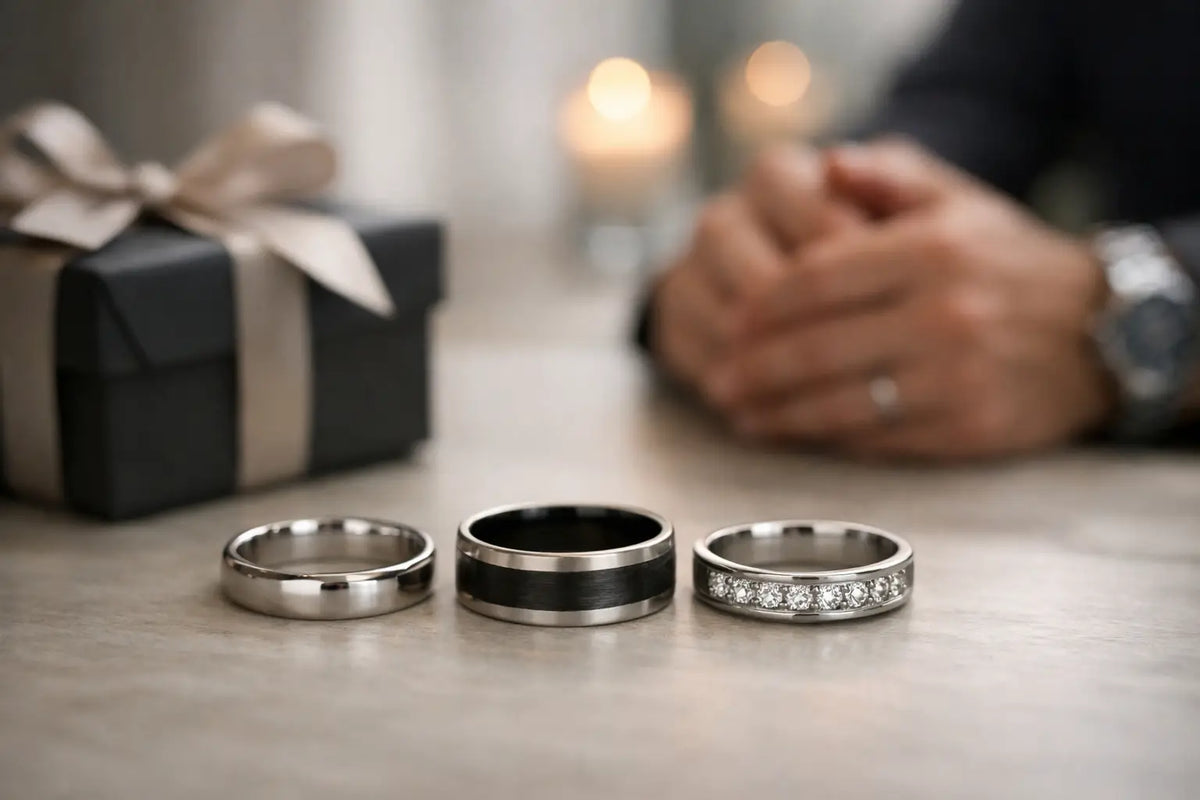
If you are choosing between a sleek black ceramic band and a weighty tungsten ring, the best choice comes down to how you wear it, what feel you love, and which kind of damage worries you most.
Ceramic vs Tungsten Ring Durability at a Glance
Ceramic and tungsten are both exceptionally hard materials, especially compared with traditional precious metals. They are popular with couples who want a ring that keeps a clean, polished appearance through daily wear. Neither material is likely to bend out of shape like gold or silver.
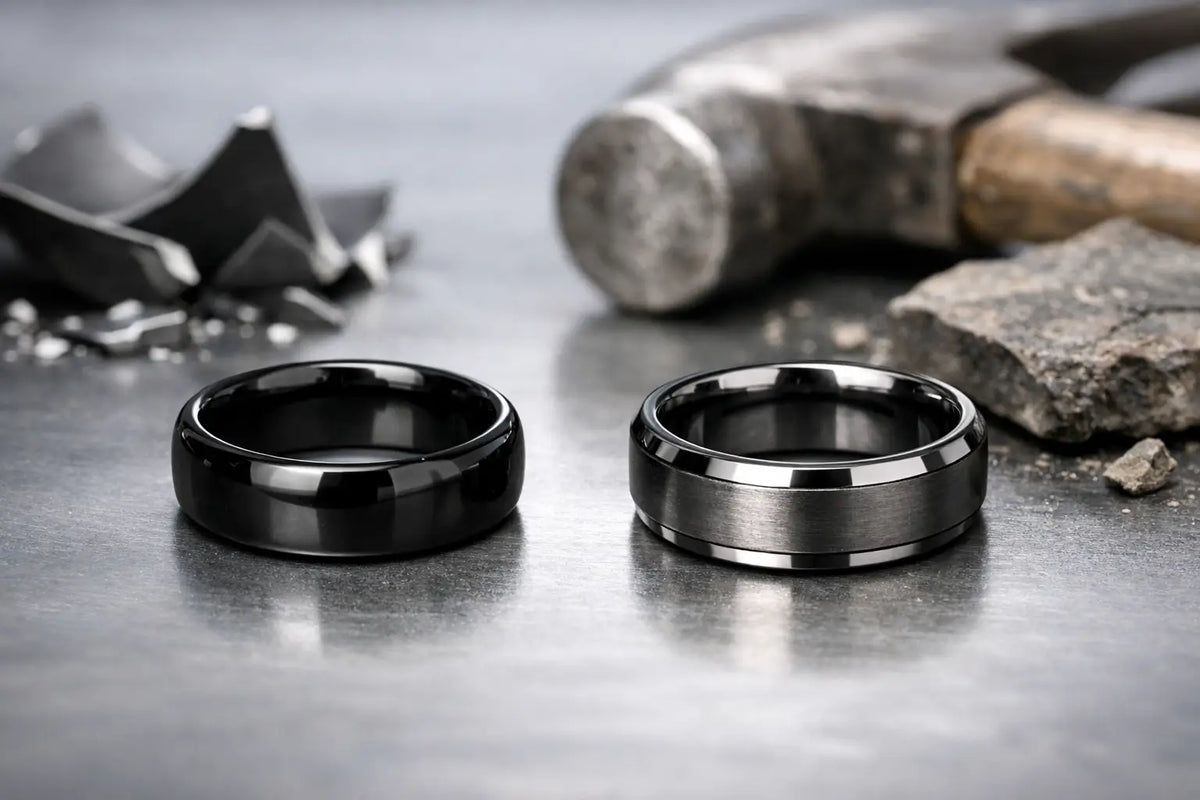
The key difference is this: tungsten generally offers greater resistance to scratching, while ceramic is lighter and can be more resistant to surface wear in its own right. Both can crack or chip under a sharp, heavy impact because hardness is not the same as flexibility. A material can resist scratches beautifully yet still be brittle when dropped onto tile or struck against a hard edge.
For most people, tungsten is the stronger all-around option for demanding daily use. Ceramic is an excellent choice for someone who values its light feel, rich color, and smooth finish, and who does not routinely put their hands through high-impact work.
How Tungsten Holds Up to Everyday Wear
Tungsten carbide is known for its substantial weight and remarkable scratch resistance. It feels solid on the hand, which many people enjoy in a wedding band. A well-made tungsten ring is far harder than gold, sterling silver, platinum, and many other common jewelry metals, so it is a smart match for people who want a band that keeps looking crisp over time.
Keys, countertops, gym equipment, and the normal friction of daily life are unlikely to leave the fine scratches that can quickly soften the shine of a gold ring. Polished tungsten stays mirror-like for longer, while brushed finishes tend to maintain their purposeful texture without looking worn out.
That said, tungsten is not indestructible. It cannot bend, so a force that might dent a softer metal can cause tungsten to fracture instead. Dropping it on concrete, hitting it hard against a stone surface, or catching it under significant pressure can create a crack or break. This is uncommon in ordinary wear, but it is the trade-off behind tungsten's impressive hardness.
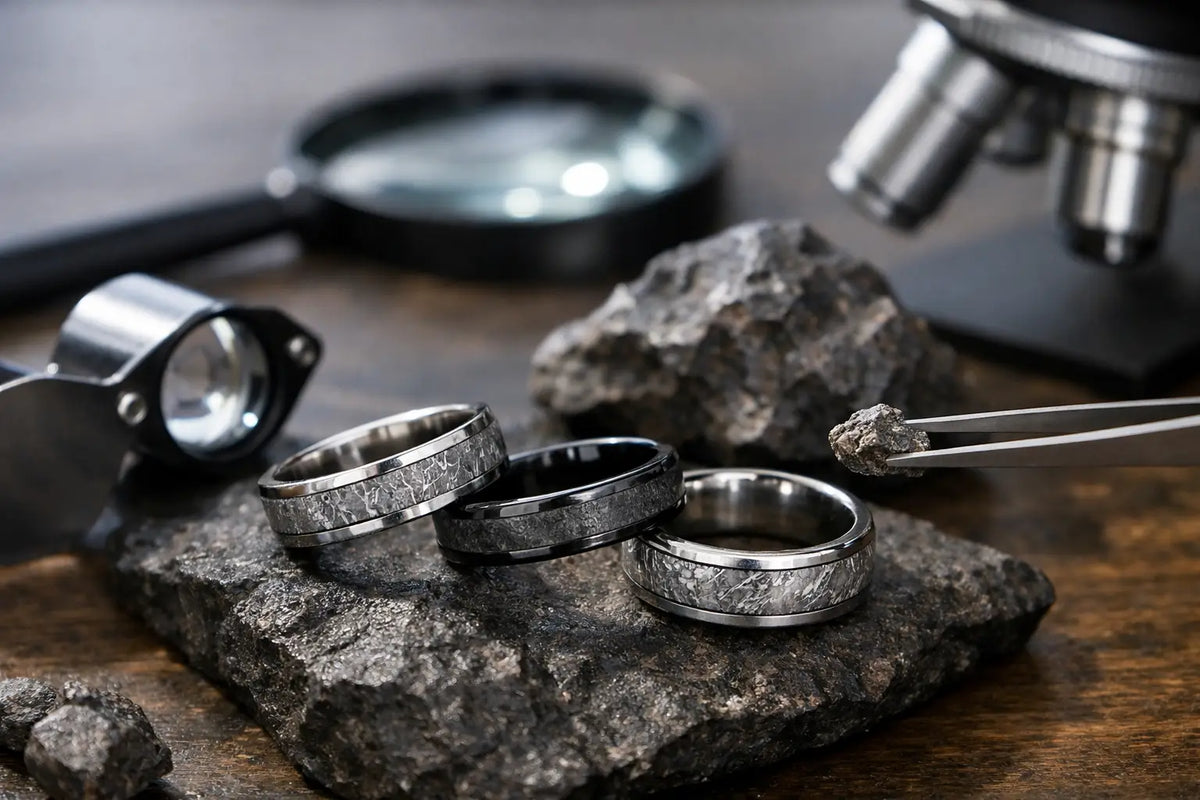
Tungsten also cannot be resized. Choosing the correct size before ordering matters, particularly for a wider band that may feel snugger than a narrow ring. For a handcrafted wedding band with an inlay of meteorite, opal, dinosaur bone, or another distinctive material, accurate sizing helps protect both comfort and the ring's detailed design.
Tungsten is a strong choice for active routines
For office work, errands, travel, social events, and most hands-on hobbies, tungsten performs extremely well. It is also a favorite for people who tend to be hard on jewelry or who simply do not want to think about polishing a ring every few months.
If your work involves heavy machinery, electrical equipment, climbing, or frequent impact risks, taking any ring off is the safer practice. Durability should never be confused with safety. No band material is a substitute for proper protection in high-risk situations.
How Ceramic Rings Handle Wear and Impact
Jewelry-grade ceramic is typically a high-tech material, not the porous household ceramic people picture when they hear the word. It has a sleek, dense finish and is especially loved for saturated black, white, or colored bands that do not rely on plating for their appearance. That makes ceramic a striking choice when you want a clean, contemporary look that feels different from metal.
Ceramic rings are highly scratch resistant. Their color will not simply rub away, and their finish can remain smooth and glossy through normal use. They are also much lighter than tungsten, making them appealing if you dislike the noticeable heft of a heavier ring or have never worn jewelry regularly.
The limitation is impact. Like tungsten, ceramic is hard but not flexible. A hard fall onto stone flooring or a direct blow against a metal edge can chip or crack it. Ceramic may be more likely to shatter than tungsten under a severe impact, although the outcome depends on the ring's construction, thickness, and exactly how it is hit.
Ceramic offers a lighter, color-forward experience
A ceramic band makes sense when weight and color are part of the decision. Its lightness can be particularly comfortable for someone with an active lifestyle who prefers not to feel a ring throughout the day. Black ceramic also creates a dramatic backdrop for colorful inlays, such as opal, crushed crystal, or glow material.
Just treat it with the care you would give any meaningful piece of jewelry. Remove it before moving heavy objects, working with tools, or doing activities where a hard collision is likely. That small habit can make a major difference over years of wear.
Scratch Resistance Is Not the Whole Story
When comparing ceramic and tungsten, it is easy to focus only on hardness ratings. Scratch resistance matters, but a ring's long-term appearance also depends on its finish and its design details.
A plain polished tungsten ring may hide daily wear better than a band with a highly reflective, intricate surface. A ceramic ring with a smooth black finish may look nearly new for a long time, but a substantial chip will be more noticeable than the fine marks that develop on a softer metal. Inlay rings introduce another consideration: the primary band material may be exceptionally hard, while organic or gemstone elements need their own thoughtful care.
Meteorite, opal, wood, dinosaur bone, and crushed stone give a ring its one-of-a-kind story. They are carefully set and protected in a quality handmade design, yet they should still be kept away from harsh chemicals, heavy impact, and unnecessary abrasion. The right ring is not just about choosing the toughest base material. It is about choosing a design that suits the way you actually live.
Which Ring Material Is Better for You?
Choose tungsten if you want a substantial ring with standout scratch resistance, a classic metal-like presence, and a durable foundation for a distinctive inlay. It is especially well suited to people who want a band that feels solid, bold, and built for ordinary daily wear.
Choose ceramic if you want a lightweight band with a smooth, modern look and lasting color. It is a compelling option for anyone drawn to black or white rings, minimal silhouettes, or a less noticeable feel on the hand.
Neither choice is automatically better. A person who works at a desk, exercises regularly, and wants a featherlight black band may be happiest with ceramic. Someone who uses their hands often, prefers a heavier ring, and wants maximum resistance to surface scratches may find tungsten more reassuring.
Caring for Ceramic and Tungsten Rings
Both materials are easy to maintain. Clean your ring with mild soap, warm water, and a soft cloth, then dry it thoroughly. Avoid abrasive cleaners, harsh chemicals, and tossing it loose into a drawer with other jewelry that could affect inlays or decorative details.
Store the ring separately when you are not wearing it. If it is a sentimental band with meteorite, opal, or other natural materials, take it off before swimming, showering, lifting weights, gardening, or using cleaning products. These habits are simple, but they honor the craftsmanship and story built into the piece.
A ring does not have to be delicate to deserve care. Whether you choose the satisfying weight of tungsten or the smooth lightness of ceramic, select the material that feels right for your relationship and your real routine. The most lasting band is the one you will be proud to wear, day after day, year after year.