How to Verify Meteorite Rings Before You Buy
A meteorite ring should feel like more than a space-themed accessory. It should carry a real material story you can see, ask about, and feel confident wearing for years. Learning how to verify meteorite rings helps you separate genuine extraterrestrial material from a printed pattern, a vague product claim, or a ring whose construction does not match its price.
A practical note before you start: a real meteorite ring does not always mean the entire band is meteorite. Many well-made designs use meteorite as an inlay or a protective outer layer paired with tungsten, titanium, ceramic, or another durable core. That can be a smart choice for comfort and everyday wear, provided the seller explains it clearly.
How to Verify Meteorite Rings From Photos and Details
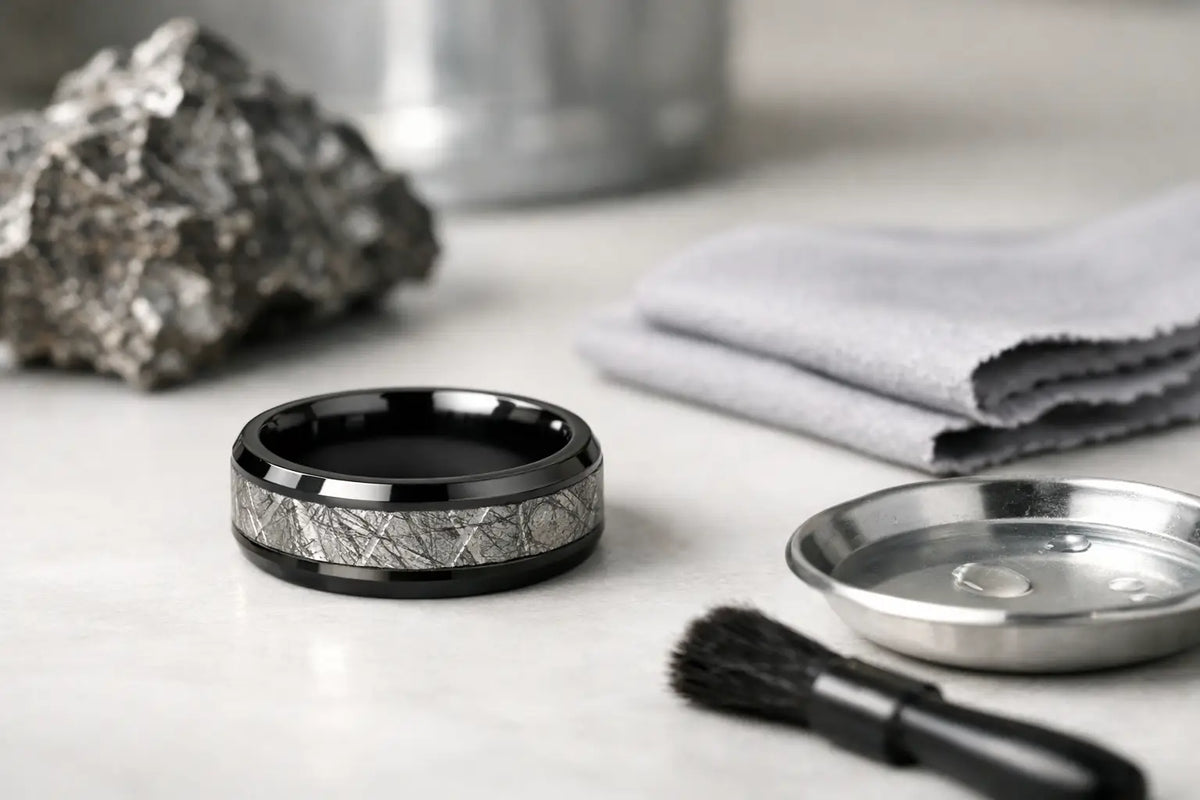
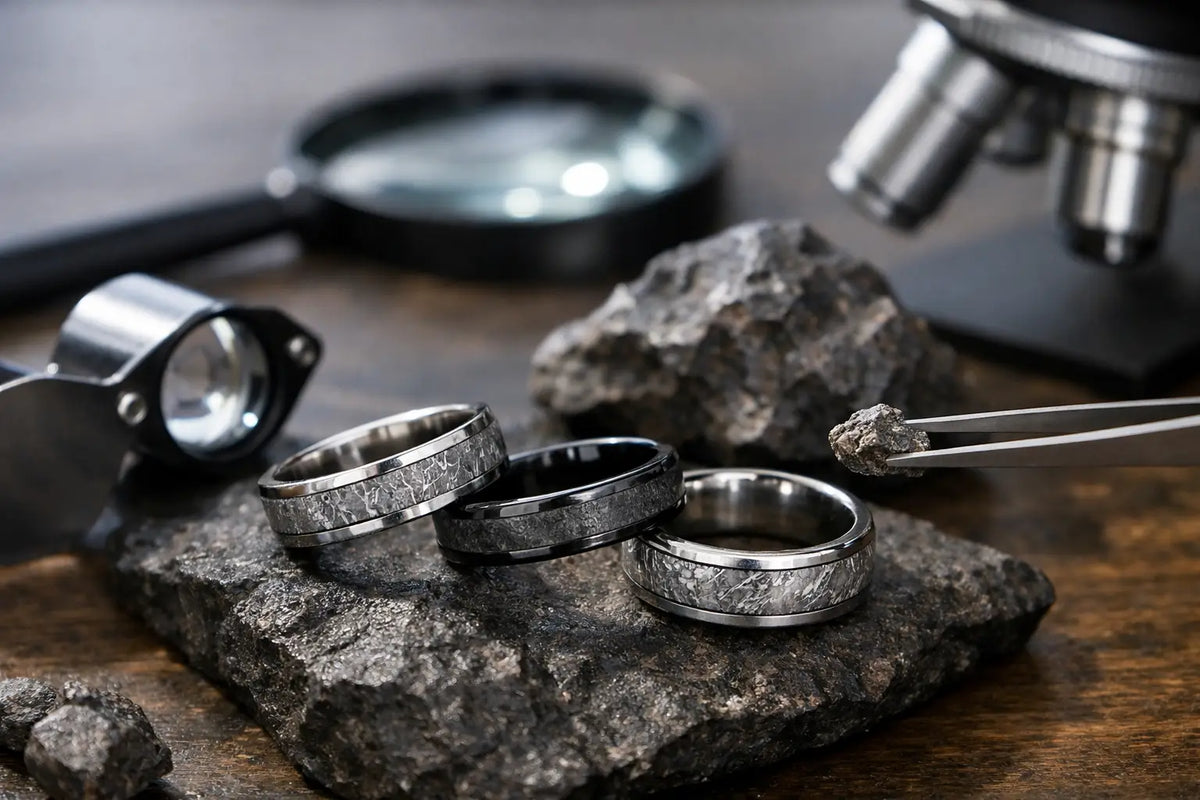
The first clue is the pattern. Many meteorite rings feature a Widmanstätten pattern - the angular, intersecting crystal structure found in certain iron meteorites after the surface is cut, polished, and carefully etched. It often looks like fine metallic lines or geometric ribbons crossing at different angles. No two authentic sections will look exactly alike.
That said, a dramatic crosshatch alone is not proof. Patterned steel, laser engraving, and printed finishes can imitate the look surprisingly well in product photos. Look for high-resolution images from more than one angle. On genuine meteorite, the pattern should follow the surface naturally rather than appearing as a flat, repeated graphic. The lines may shift in width and direction around the ring, especially where the material has been shaped.
Read the product description as closely as you study the photos. A transparent listing should identify the material as meteorite, ideally naming the type or source when that information is available. Gibeon meteorite is a commonly used material in jewelry because its iron-nickel composition can reveal a striking etched pattern. A listing that only says "meteorite style," "space pattern," or "meteorite-inspired" is not necessarily misleading, but it is not a claim of genuine meteorite.
Construction language matters, too. Terms such as meteorite inlay, meteorite sleeve, meteorite overlay, and solid meteorite band describe different builds. An inlay places meteorite into a channel in the band, often protected by a clear finish. A sleeve or overlay uses a visible layer of meteorite over a structural core. Neither is lesser by default. The better choice depends on the design, your lifestyle, and how much exposed meteorite you want to wear.
Ask for Provenance, Not Just a Promise
Authenticity begins with traceability. A reputable maker should be willing to explain where its meteorite material comes from and how it is incorporated into the ring. You do not need a museum-level scientific report for every purchase, but you should receive a clear, direct answer rather than a vague assurance that the material is "real."
Useful questions include whether the meteorite source is known, whether the piece includes a certificate or authenticity statement, and whether the photos show the actual ring or a representative sample. Because each cut of meteorite is different, handmade-to-order rings can vary slightly from listing images. That variation is normal and can be part of the appeal. The seller should set that expectation upfront.
Provenance is especially valuable when a ring is marketed as a meaningful wedding band, anniversary gift, or heirloom piece. Save the listing details, receipt, material description, and any certificate you receive. These records will not turn an imitation into a meteorite, but they do preserve the story of a genuine piece and make future care or insurance conversations easier.
Be cautious with sellers who make enormous claims but offer no specifics. Statements like "billions of years old" may be technically true of meteorites, yet they tell you nothing about whether the ring contains one. Trust is built through material details, consistent descriptions, customer reviews with real photos, and a seller who can answer questions before the sale.
Why a magnet test is not enough
Iron meteorites often contain nickel and may respond to a magnet, but a magnet test is not a reliable way to verify a finished ring. The ring may have a tungsten or steel core, both of which can affect the result. Some designs seal the meteorite beneath resin or another protective layer, and a small inlay may not behave like a loose meteorite specimen.
The reverse is also true: a magnetic ring is not automatically meteorite. Plenty of ordinary metals are magnetic. Treat this as a curiosity check, not evidence. A seller's material disclosure and provenance are far more useful than an at-home test that can easily create false confidence.
Examine Craftsmanship Around the Meteorite
A real material deserves careful finishing. Inspect the border where the meteorite meets the rest of the ring. It should look clean, even, and intentional, without visible gaps, rough edges, cloudy patches, or loose-looking sections. If the meteorite is set under a protective clear layer, that layer should be smooth and level rather than thick, uneven, or full of bubbles.
For rings with a meteorite inlay, ask what protects the material from moisture. Iron-bearing meteorites can oxidize when repeatedly exposed to water, sweat, chemicals, or damp storage. Quality jewelry makers plan for this with thoughtful construction and finishing, but no finish makes a meteorite ring completely maintenance-free.
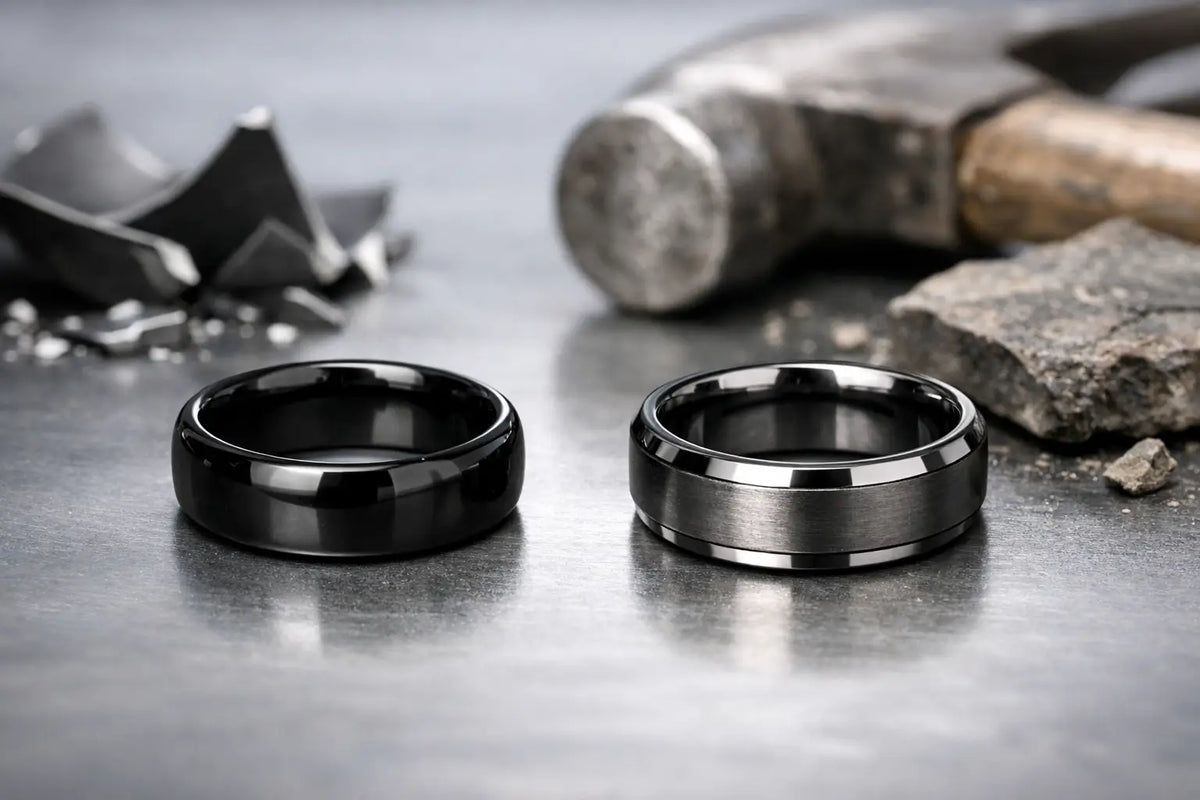
This is where material combinations have a real advantage. A tungsten, ceramic, or titanium foundation can provide structure and durability, while the meteorite carries the visual story. The trade-off is that the meteorite may be a portion of the design rather than the whole band. For most everyday wearers, that balance is often more practical than a fully exposed meteorite ring.
Also consider fit and profile. A wide meteorite inlay creates an unmistakable look, but a slimmer inlay may be better for someone who works with their hands, prefers a lighter visual effect, or wants a more understated wedding band. Authenticity is not only about the source material. It is also about whether the ring has been made to wear well in real life.
Compare the Price With the Claim
Price can be a useful signal, but it is never a final verdict. Genuine meteorite is limited, difficult to cut, and requires careful finishing, so a ring advertised as solid meteorite at an unusually low price deserves extra questions. On the other hand, a fair price does not have to be out of reach when meteorite is used as an inlay in a durable modern band.
Look at the whole offer: the stated materials, ring width, construction, customization, production method, return terms, care guidance, customer images, and seller responsiveness. Handmade pieces often cost more than mass-produced fashion rings because the material must be selected, fitted, and finished individually. That difference should show up in the details, not just in marketing language.
If you are deciding between two rings, do not assume the more expensive option is automatically more authentic. Choose the seller who is clearest about what you are receiving. A transparent description of a meteorite inlay with a tungsten band is more trustworthy than a grand claim with no construction details.
Care Is Part of Authenticity
A seller who genuinely understands meteorite jewelry should also explain how to care for it. Remove the ring before swimming, showering, using cleaning chemicals, or doing messy hands-on work. Dry it promptly if it gets wet, and store it in a dry place rather than a humid bathroom.
Avoid abrasive cleaners, ultrasonic machines, and harsh polishing compounds unless the maker specifically approves them. These can damage protective finishes, scratch adjacent materials, or change the appearance of the etched meteorite pattern. If you notice discoloration or a spot that concerns you, contact the maker before trying a home remedy.
Care requirements are not a weakness. They are an honest reflection of wearing a material that formed beyond Earth and still contains iron. A knowledgeable seller will present that truth clearly while building the ring to make routine wear realistic.
Buy the Story You Can Verify
The best meteorite ring is not the one with the most dramatic claim. It is the one whose pattern, material description, construction, provenance, and care guidance all tell the same story. Look for clear answers, detailed images, and workmanship that respects both the meteorite and the person wearing it.
A ring made with genuine meteorite can mark a wedding, promise, anniversary, or personal milestone with a piece of material that has traveled farther than almost anything else you can wear. Give yourself permission to ask thoughtful questions before you choose it. The right maker will be glad you did.