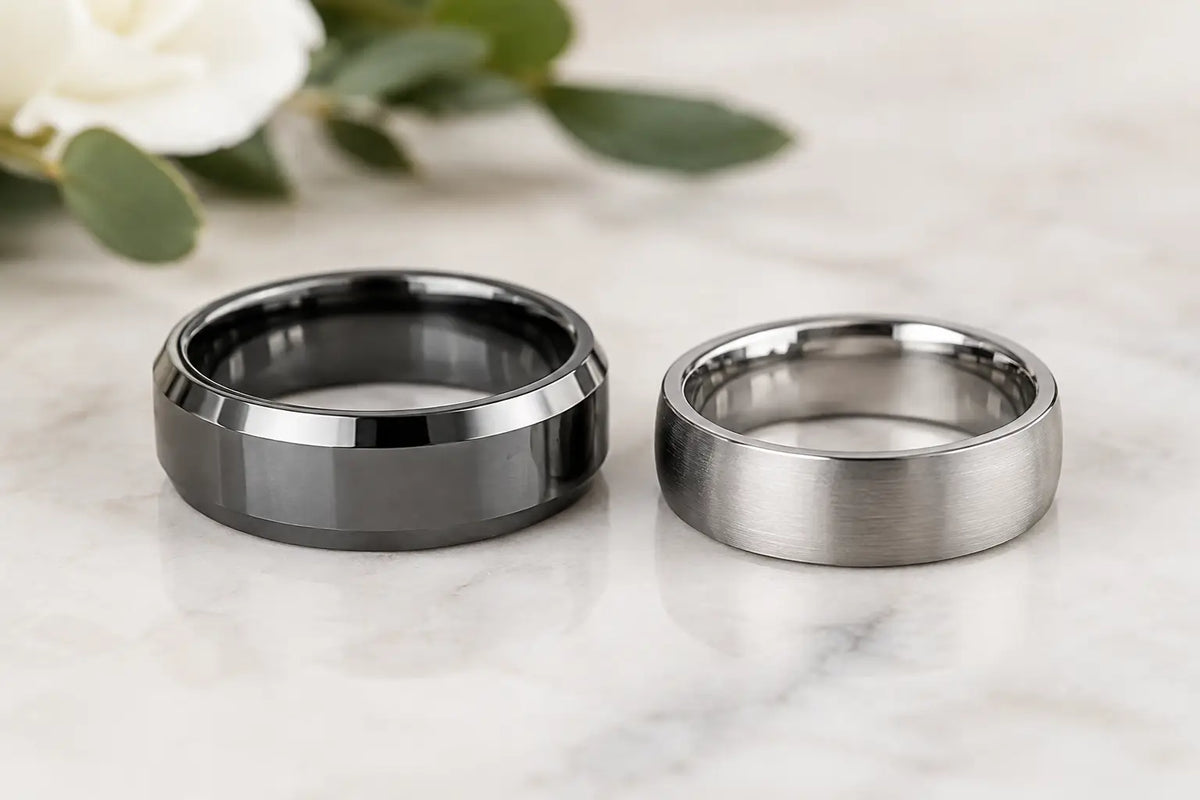

Guide to Ring Width Styles: Find Your Fit
A ring can carry a piece of the night sky, a fossil from deep time, or a flash of opal color - but its width is what decides how that story sits on your hand. This guide to ring width styles will help you compare the look, comfort, and everyday feel of narrow, standard, and wide bands before choosing a ring that feels unmistakably yours.
Width is measured across the face of the band in millimeters, not from the inside of the ring to its outer edge. A 4 mm band covers less of the finger than an 8 mm band, even if both rings are the same size. That small measurement changes the entire character of a ring: delicate or bold, understated or impossible to miss.
Why Ring Width Changes Everything
Many people begin by choosing a material or inlay. That makes sense when you are drawn to meteorite, dinosaur bone, moon dust, glow material, or richly colored crushed opal. Still, the width determines how much room the design has to breathe. A narrow band may show a fine, concentrated line of color, while a wider ring can turn the same material into a dramatic landscape.
Width also affects balance. On a larger hand or longer fingers, a very slim band can look intentionally minimal, but it can also disappear beside a broad watch or layered jewelry. On shorter or narrower fingers, a wide band can make a strong statement, though some people prefer a slightly slimmer profile for visual length and easier movement.
There is no correct width for a gender, hand size, or relationship milestone. Traditional shopping rules often put men in wider bands and women in narrower ones, but personal style matters more. The best choice is the one you will want to wear on an ordinary Tuesday as much as on the day you first put it on.
Guide to Ring Width Styles by Millimeter
Slim bands: 2 mm to 4 mm
Slim rings feel refined, light, and quietly personal. A 2 mm or 3 mm band is often chosen for a stacking ring, promise ring, engagement band, or a wedding band intended to sit alongside another ring. At 4 mm, the band still feels sleek but has enough surface area for a defined inlay or a subtle textured material.
This range is a natural fit if you prefer jewelry that does not dominate your hand. It can also suit people who are new to wearing rings and want the least noticeable feel. A slim profile may be especially appealing for a ring with an intricate material story, such as a narrow meteorite stripe or a delicate opal inlay.
The trade-off is visual impact. A narrow ring offers less space for wide patterns, larger fragments, or multiple inlay materials. If your favorite part of a design is its vivid color variation, consider whether 4 mm gives that material enough room to show its character.
Classic bands: 5 mm to 6 mm
For many couples, 5 mm and 6 mm are the comfortable middle ground. They have enough presence to look substantial on their own without covering a large portion of the finger. These widths work well for wedding bands, anniversary rings, and everyday statement pieces that need to move easily from work to weekends.
A 5 mm band often reads clean and versatile. It can carry a single inlay beautifully, especially a bright opal, a line of crushed crystal, or a slim channel of glow material. At 6 mm, a ring gains a little more visual weight and gives materials with natural variation, such as wood, meteorite, or dinosaur bone, more room to reveal their pattern.
If you are buying a matching set, the widths do not have to match exactly. A 4 mm and 6 mm pair can look connected through the same material combination while still fitting each wearer’s hand and style. Matching the story can be more meaningful than matching the measurement.
Wide bands: 7 mm to 8 mm
A 7 mm or 8 mm ring is a confident choice. It offers a broad canvas for tactile materials, bold contrast, and detailed craftsmanship. Damascus steel patterns, wider meteorite sections, layered wood-and-opal designs, and bright galaxy-inspired inlays can look especially striking in this range.
Wide bands are popular for people who want their wedding ring to double as their signature piece of jewelry. They feel substantial, look intentional from a distance, and can make an unconventional material the center of attention. If you love the idea of wearing a piece of space, ancient earth, or a custom color story, a wider band gives that idea real presence.
Comfort is the consideration here. Because a wide ring touches more skin, it can feel tighter than a narrow ring in the same size, particularly if your fingers swell in warm weather or during active days. A comfort-fit interior, with gently rounded inside edges, can make a major difference. It is worth taking time with sizing rather than assuming a width you have never worn will feel exactly like your current ring.
Extra-wide bands: 9 mm to 12 mm and beyond
Extra-wide rings are for a look that is deliberately bold. They can feel architectural, rugged, artistic, or ceremonial, depending on the material and finish. A 10 mm tungsten or ceramic band with a dramatic inlay has a presence that a narrow ring simply cannot replicate.
These widths can be excellent for someone who prefers one standout ring instead of several accessories. They also provide room for designs that combine materials, such as meteorite with opal or petrified wood with luminous accents. However, extra-wide bands are not the most invisible option. They may feel more noticeable when gripping tools, exercising, or typing, and they reward careful attention to fit.
Match the Width to Your Hand and Daily Life
Your hand shape can guide the decision, but it should never limit it. Longer fingers often carry medium and wide rings with ease, while slim bands can create a graceful, minimalist effect on any hand. Shorter fingers may prefer a 4 mm to 6 mm band for a balanced look, yet an 8 mm ring can be exactly right when you want a stronger, more graphic style.
Consider what you do with your hands, too. If you work at a keyboard, lift weights, make art, or wear gloves often, a lower-profile 4 mm to 6 mm ring may be more convenient. If your ring is primarily a meaningful daily symbol and you love a substantial feel, 7 mm or 8 mm may be worth the extra presence.
Material affects the experience as well. Tungsten has a solid, weighty feel that can make a wide band feel especially substantial. Ceramic is often lighter in sensation, even at a broader width. Organic inlays such as wood, dinosaur bone, and opal bring visual texture, while a polished metal or ceramic edge can keep the overall design clean and wearable.
Width, Profile, and Thickness Are Different Choices
Ring width is only one part of fit. Profile describes the outside shape of the band. A flat profile looks crisp and modern, while a dome profile is softly rounded and often feels more traditional. A beveled edge adds angled sides that catch the light and can make a wider ring appear more streamlined.
Thickness refers to how far the ring rises off the finger. Two 8 mm bands can have the same width but feel very different if one is thin and flat while the other is thick with a rounded interior. When shopping online, look at all three details together: width, profile, and thickness. Product photos show personality, but measurements explain how that personality will wear.
For a ring meant to be worn every day, comfort fit is often as valuable as a favorite material. The slightly rounded inner surface helps the band glide over the knuckle and reduces the sharp-edged feeling some people notice in wider styles.
How to Choose With Confidence Online
Start with a ring you already wear comfortably, if you have one. Measure its width with a millimeter ruler or compare it against a printed size guide at true scale. Even a quick comparison can reveal whether you are naturally drawn to a slim 4 mm band or something more substantial.
Then picture the new ring in context. Will it sit next to an engagement ring? Be paired with a watch? Worn alone as your everyday signature? These details matter more than a generic rule about what a wedding band should look like.
For a first ring, 5 mm or 6 mm is a reassuring starting point. For a bolder material-driven design, 7 mm or 8 mm often gives the craftsmanship more room to shine. Decazi creates handmade rings with distinctive inlays and wearable proportions, so the width can support the material story rather than compete with it.
Finally, do not rush sizing for a wide band. Measure when your hands are at a normal temperature, avoid checking immediately after exercise, and use an accurate ring sizer whenever possible. If you are between sizes or choosing a notably wider design, ask for sizing guidance based on that specific band.
A ring’s width is not a minor specification hidden beneath a beautiful material. It is the detail that decides whether your ring feels like an accent, a daily companion, or a statement you never want to take off.