Are Ceramic Rings Hypoallergenic for Sensitive Skin?
A ring can be meaningful enough to wear every day, but it should never leave your finger itchy, red, or uncomfortable. The question behind the search for "ceramic rings hypoallergenic" is usually simple: can this striking, modern material work for sensitive skin? In many cases, yes. But the most accurate answer depends on what the ring is actually made from, how it is constructed, and which materials touch your skin.
Ceramic rings are a favorite for people who want a sleek alternative to traditional metal bands. Their smooth finish, bold black or white color, lightweight feel, and scratch-resistant surface make them especially appealing for wedding bands, promise rings, and everyday statement pieces. For someone who has reacted to nickel or certain metal alloys before, ceramic can be a promising option - provided you know what to look for.
Are ceramic rings hypoallergenic?
High-quality ceramic jewelry is generally considered hypoallergenic because ceramic itself is nonmetallic and typically does not contain common metal allergens such as nickel. Many jewelry rings marketed as ceramic are made from advanced zirconia ceramic, a dense material valued for its smooth polish, durability, and comfortable feel against the skin.
That said, hypoallergenic does not mean that every ceramic ring will suit every person in every design. Sensitivities are personal, and “ceramic” describes the primary material, not always every component in the finished ring. A band may include metal cores, plated accents, inlays, settings, or interior sleeves. If a ring combines ceramic with another material, the materials on the inside of the band matter most because they have direct contact with your finger.
For shoppers with a known nickel allergy, the safest approach is to ask for the full material details rather than relying only on a product title. A solid ceramic band with a ceramic interior is very different from a ring that uses ceramic only as an outer layer over metal.
Why ceramic can be a comfortable choice
Ceramic has a naturally smooth, nonporous surface that feels clean and polished on the hand. Unlike some metals, it does not tarnish from ordinary wear or develop the same kind of surface oxidation that can occasionally irritate sensitive skin. Its color is also part of the material rather than a finish that needs constant replating.
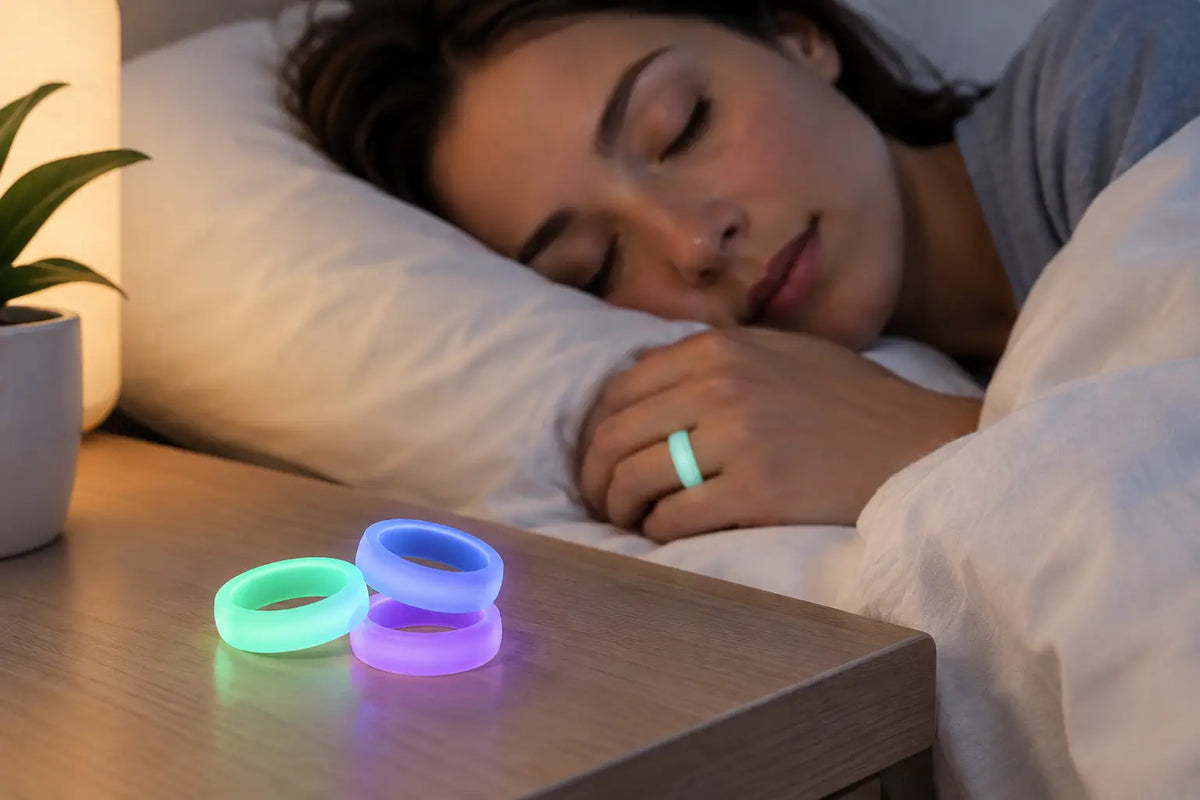
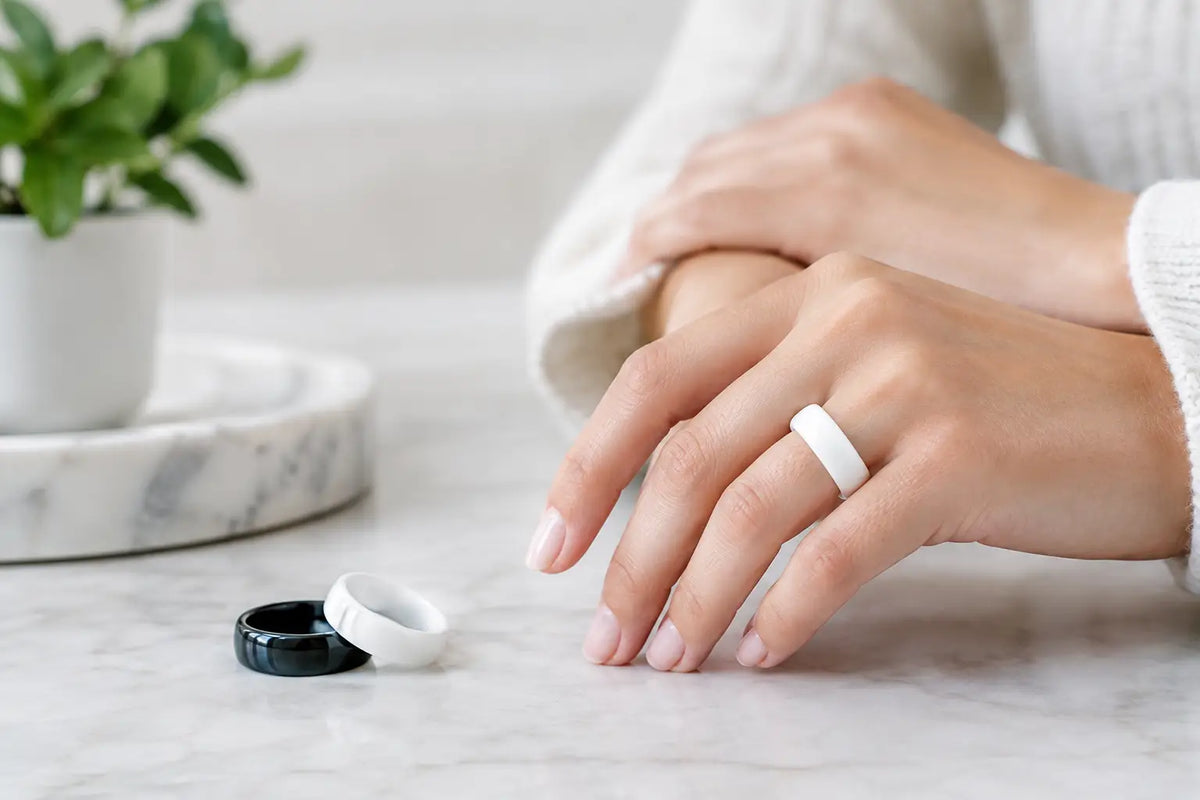
That makes ceramic especially attractive for people who want a low-maintenance ring. Black ceramic bands keep their deep, dramatic color without the darker surface rubbing away in normal use. White ceramic offers a crisp, bright look for couples who want a lighter alternative to silver-toned metals. Both can create a contemporary base for expressive materials such as opal, crushed crystal, glow pigment, meteorite, or wood inlays.
Comfort is not only about allergies, either. Ceramic rings are often lighter than tungsten, which can be a welcome difference for someone who is not used to wearing jewelry. A carefully polished interior and a comfort-fit shape can make a ring feel less intrusive throughout the day, from typing at work to holding hands on a weekend away.
What can cause a reaction in a ceramic ring?
When a wearer reacts to a ring described as ceramic, ceramic may not be the cause. The reaction may come from another material, moisture trapped beneath the band, or simple friction from a ring that is too tight.
Nickel is the most common concern in jewelry allergies. It can appear in metal alloys, clasps, settings, and hidden structural components. If you are highly sensitive, pay close attention to rings with metallic edges, metal-lined interiors, or raised metal decorative elements. Even a beautiful mixed-material ring deserves a closer look at the part that rests against your skin.
Adhesives and resins used to secure an inlay can also be relevant for a small number of people with chemical sensitivities. Well-made handcrafted rings are finished and cured before they are worn, but if you have a diagnosed sensitivity to specific resins or bonding agents, share that concern before ordering. Clear questions lead to a more confident choice.
There is also a common issue that has nothing to do with an allergy: contact irritation. Soap, lotion, sweat, sunscreen, and water can collect under any snug-fitting ring. If the skin beneath your band becomes soft, itchy, or irritated after exercise or washing your hands, remove the ring, clean and dry both your finger and the band, and give the area time to breathe. If irritation persists or is severe, a medical professional can help identify the cause.
How to choose a skin-friendly ceramic ring
Start with the band construction. If hypoallergenic wear is your priority, look for a ring described clearly as solid ceramic or zirconia ceramic, with the same skin-friendly material on the interior. Product descriptions should identify any inlays, liners, plating, or metal elements rather than leaving you to guess.
Next, consider the ring’s profile. A comfort-fit interior has gently rounded inner edges, which can reduce pressure and make daily wear feel easier. Correct sizing matters just as much. A ring that spins loosely can trap moisture as it shifts; one that feels tight can create friction and make ordinary skin sensitivity feel worse.
Finally, think about your lifestyle. Ceramic is impressively scratch resistant, but it is not indestructible. It can crack or chip when struck hard against a tile floor, concrete, or heavy equipment. Tungsten is also hard and scratch resistant, yet it has a similar brittleness under sharp impact. If your work or hobbies involve frequent impacts, gloves, or a ring-free routine during those activities may be the wiser choice regardless of material.
Ceramic versus other hypoallergenic ring materials
There is no single “best” hypoallergenic ring material for everyone. The right choice balances skin sensitivity, desired weight, visual style, and how you live in the ring.
Titanium is a popular option for sensitive skin because it is lightweight and commonly used in body-safe applications. It has a metallic look and can be more forgiving under impact than ceramic, although it can show scratches over time. Platinum is another excellent choice for many people with sensitivities, but it comes with a much higher price point and a traditional precious-metal appearance that may not match a more unconventional style.
Tungsten can be a strong option when the alloy is clearly identified and free from nickel-containing components. It delivers a substantial, weighty feel and a mirror-like finish, but shoppers with known metal allergies should never assume that all tungsten rings have the same composition.
Ceramic stands apart when you want a nonmetallic look and feel. Its crisp color, low-maintenance polish, and featherlight wear can make it an especially compelling canvas for a ring with a personal story. A black ceramic band paired with luminous opal or crushed crystal feels bold without being flashy. A white ceramic design can frame colorful inlays with a clean, modern contrast.
Caring for a ceramic ring and your skin
A clean ring is more comfortable to wear. Wash a ceramic band gently with mild soap, warm water, and a soft cloth, then dry it thoroughly before putting it back on. Avoid harsh chemicals, abrasive cleaners, and ultrasonic cleaning unless the specific design has been approved for that method, especially if the ring includes opal, wood, resin, glow materials, or other detailed inlays.
It also helps to remove your ring before swimming, showering, applying hand lotion, or handling strong cleaning products. This simple habit protects both the finish and the skin beneath the band. Store the ring separately when you are not wearing it so it is less likely to knock against harder jewelry or bathroom surfaces.
For a handcrafted ring meant to mark a wedding, anniversary, promise, or personal milestone, comfort should feel as intentional as the design. Choose a ceramic ring with transparent material details, a properly fitted comfort profile, and an interior you can feel good about wearing every day. The best band is not only the one that catches someone’s eye - it is the one you barely notice on your hand, except when its story makes you smile.