Are Glow Rings Safe for Everyday Wear and Sleep?
A glow ring should feel magical when the lights go down, not questionable. So, are glow rings safe? For most people, yes - when the ring uses modern, non-radioactive glow pigments and the inlay is properly sealed within a durable setting. The details matter, though. The glow material, the metal or ceramic band, the quality of the seal, and how you wear the ring all affect comfort and long-term confidence.
At Decazi, we believe a statement ring can be unusual without being impractical. A band that captures light during the day and gives off a subtle glow at night has real visual impact, especially when paired with materials like opal, meteorite, or wood. It should also be made to be worn with care, understood clearly, and chosen for the life you actually lead.
How glow rings create their light
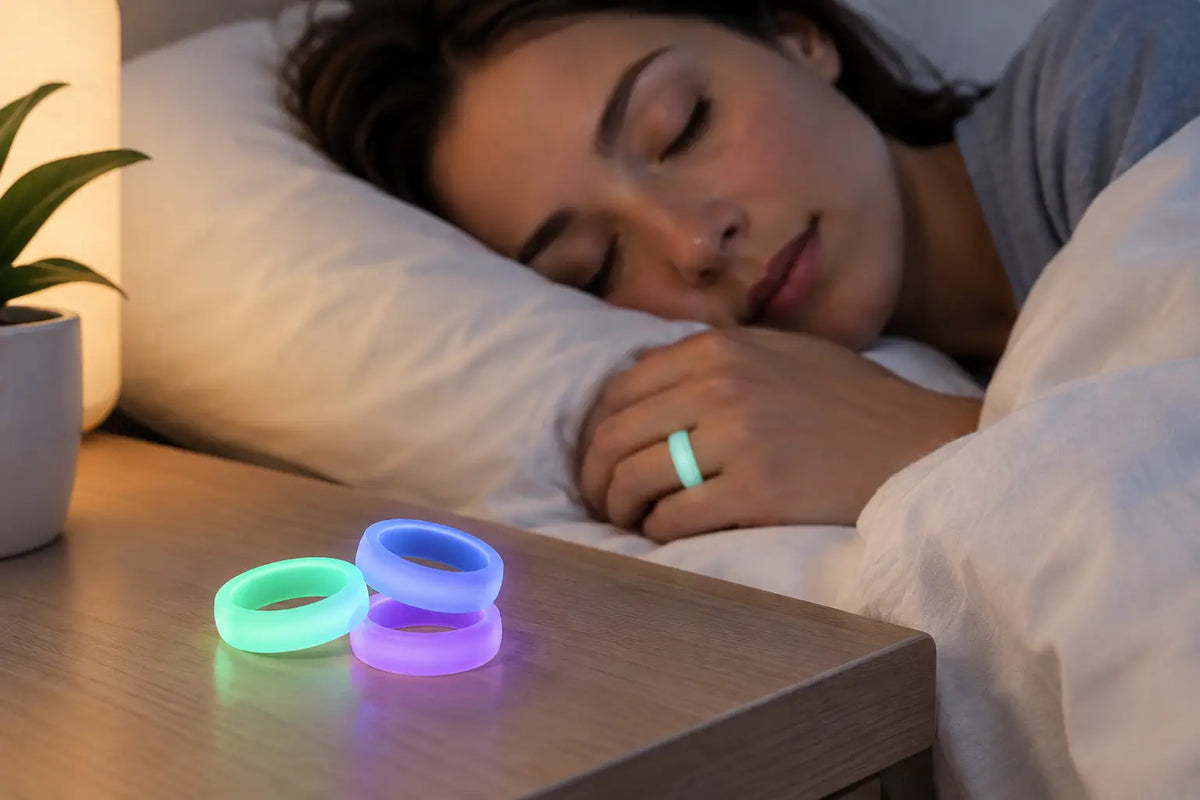
Most modern glow rings are photoluminescent. Their glow comes from pigments that absorb light energy, usually from sunlight or a bright indoor lamp, then release that energy slowly in the dark. Think of it as charging the glow rather than powering it with a battery.
High-quality glow pigments are commonly based on strontium aluminate. This material is valued because it creates a brighter, longer-lasting glow than older glow-in-the-dark compounds. It is not radioactive, and it does not need electricity, chemicals, or heat to work. A ring may glow most strongly just after charging, then fade gently over time. That is normal and does not mean the inlay is failing.
Some rings marketed as “glow” pieces are actually UV-reactive. They appear especially vivid under blacklight but may not continue glowing once the light is removed. Others use fluorescent colors that look bright in daylight without producing much light in darkness. These options can be fun, but they are different from a true photoluminescent inlay.
Are glow rings safe when worn on skin?
A well-made glow ring is generally safe for everyday skin contact because the glow material is contained inside the ring rather than sitting loose against your finger. Inlay materials are typically set into a channel and covered or bonded with a clear protective resin. The skin touches the smooth finished surface, not exposed pigment particles.
The more relevant safety question is not usually the glow itself. It is whether the overall ring is made with skin-friendly materials and finished carefully. A smooth, fully cured inlay helps prevent snagging and reduces the chance of moisture getting beneath the surface. Quality craftsmanship matters here: rough edges, gaps, cracking, or a poorly cured resin can make any inlay ring less comfortable over time.
If you have sensitive skin, pay attention to the band material. Tungsten carbide, ceramic, titanium, and certain grades of stainless steel are popular alternatives to traditional jewelry metals, but individual sensitivities vary. Nickel is a common culprit for metal allergies, so shoppers with known reactions should always review the material details before ordering. Resin sensitivity is less common, but anyone who has reacted to epoxy products or adhesives should take that history seriously.
A new ring can also feel irritating for a much simpler reason: it is too tight. Tight rings trap soap, sweat, and lotion against the skin, which can cause redness or itching even when the materials themselves are perfectly suitable. Accurate sizing is part of safe, comfortable wear.
The concern about radioactivity
This question comes up often because older glow products had a complicated history. Vintage luminous watch dials, for example, sometimes used radioactive substances such as radium. That is not the material used in standard modern photoluminescent jewelry.
Modern glow pigment rings made with strontium aluminate are not radioactive. Still, it is smart to shop with care. If a seller does not explain what creates the glow, makes vague claims about “nuclear” materials, or cannot describe the ring’s construction, choose a more transparent maker. A beautiful ring should not require guessing about what is inside it.
Tritium is another material people may encounter in specialty glow items. It is used in some sealed glass illumination tubes, not in typical resin-inlay glow rings. A tritium-vial design has different handling and safety considerations, so it should never be treated as interchangeable with a standard glow pigment band. Read the product description closely rather than assuming every glowing ring works the same way.
What makes a glow ring safer and more durable?
The best glow ring combines a stable glow material with a protective structure. A properly sealed inlay is the first thing to look for. It helps shield the design from direct exposure, body oils, hand washing, and the small bumps that happen during regular wear.
The band material matters just as much. Tungsten offers substantial weight and impressive scratch resistance, while ceramic can be lightweight, smooth, and comfortable. Each has trade-offs. Tungsten and ceramic are hard but can crack or chip under a severe impact, and neither material can be resized in the usual way. A precise ring size is especially valuable before choosing either.
Resin-based inlays also deserve sensible care. They are durable for normal wear, but repeated contact with harsh chemicals, strong solvents, chlorine, or abrasive cleaners can dull the finish over time. The same goes for many rings featuring opal, crushed stone, wood, or other natural materials. “Everyday wear” does not have to mean “every task, every time.”
Look for clear material information, close-up product photography, realistic glow images, and guidance on care. Reviews can also be helpful because they show how a ring looks and feels beyond a studio photo. Transparency is a strong sign that a handmade piece was designed for real customers, not just a dramatic product listing.
When should you take a glow ring off?
Glow rings are often comfortable enough for regular wear, including a date night, workday, weekend plans, or a special occasion. But every ring benefits from a few practical boundaries. Take it off before using harsh cleaners, swimming in a heavily chlorinated pool, applying strong chemicals, or doing work that could strike, crush, or scrape the band.
It is also wise to remove any ring before weightlifting, operating machinery, or working with tools. This is not unique to glow rings. A band can catch on equipment, and that risk is more serious than a scratched finish. If your hands swell at night, during exercise, or in hot weather, remove the ring before it becomes difficult to take off.
Sleeping in a glow ring is usually fine if it fits comfortably and has a smooth, intact finish. Many people prefer to remove jewelry overnight to reduce pressure, keep bedding from catching on details, and give their skin a break. If you wake with finger marks, itching, or swelling, treat that as useful feedback. A ring should feel like part of you, not something you are eager to peel off each morning.
Simple care keeps the glow looking its best
To refresh the glow, hold the ring under bright natural or indoor light for a short period. Avoid leaving it in extreme heat, such as on a dashboard or near a heater, since excessive heat can affect many jewelry finishes over time.
For cleaning, a soft cloth and mild soap with lukewarm water are usually enough for a sealed inlay ring. Dry it thoroughly afterward. Skip ultrasonic cleaners, steam cleaners, bleach, acetone, and strong jewelry dips unless the maker specifically confirms they are suitable for that exact material combination.
Check your ring occasionally for changes in the finish. If an inlay looks cracked, lifted, unusually cloudy, or rough to the touch, stop wearing it until you can get advice from the maker. That does not mean glow rings are inherently unsafe. It simply means a damaged protective surface deserves attention, just as it would on any handcrafted ring.
The right glow ring is one you can wear with confidence
A thoughtfully made glow ring is a safe, expressive choice for most wearers. Modern non-radioactive pigments offer the nighttime effect people love, while a sealed inlay and well-chosen band material help make the design comfortable for daily life. Choose clear craftsmanship over mystery claims, confirm the materials if you have allergies, and give the ring a break during rough work or chemical-heavy tasks.
The best part of a glow ring is that it changes with the light. In the daytime, it can be a striking piece of handcrafted jewelry. After dark, it becomes a small private signal of personality, memory, or the person who gave it to you.