10 Best Collectible Ring Materials
A ring gets more interesting the moment someone asks, “Wait - what is that made of?” That reaction is exactly why the best collectible ring materials have such staying power. They do more than look good in a product photo. They carry a story, a texture, a history, and often a level of individuality that traditional metals alone just can’t match.
For weddings, anniversaries, promise rings, memorial pieces, and everyday wear, collectible materials offer something many shoppers want but struggle to find in conventional jewelry: personality. The trick is knowing which materials are truly wearable, which ones need more care, and which ones balance rarity with long-term durability.
What makes the best collectible ring materials?
The answer is not simply “the rarest one.” A collectible ring material has to do three jobs at once. It should feel visually distinctive, hold emotional meaning, and work in real life.
That last part matters. A material can be fascinating on paper and still be a poor choice for someone who works with their hands, travels often, or wants a ring they never have to baby. On the other hand, a slightly more common material can become deeply collectible when it is paired with skilled craftsmanship, strong contrast, or a custom inlay that feels personal.
The best choices tend to sit at the intersection of rarity and wearability. They look uncommon, feel intentional, and still make sense for the person wearing them.
10 best collectible ring materials worth considering
Meteorite
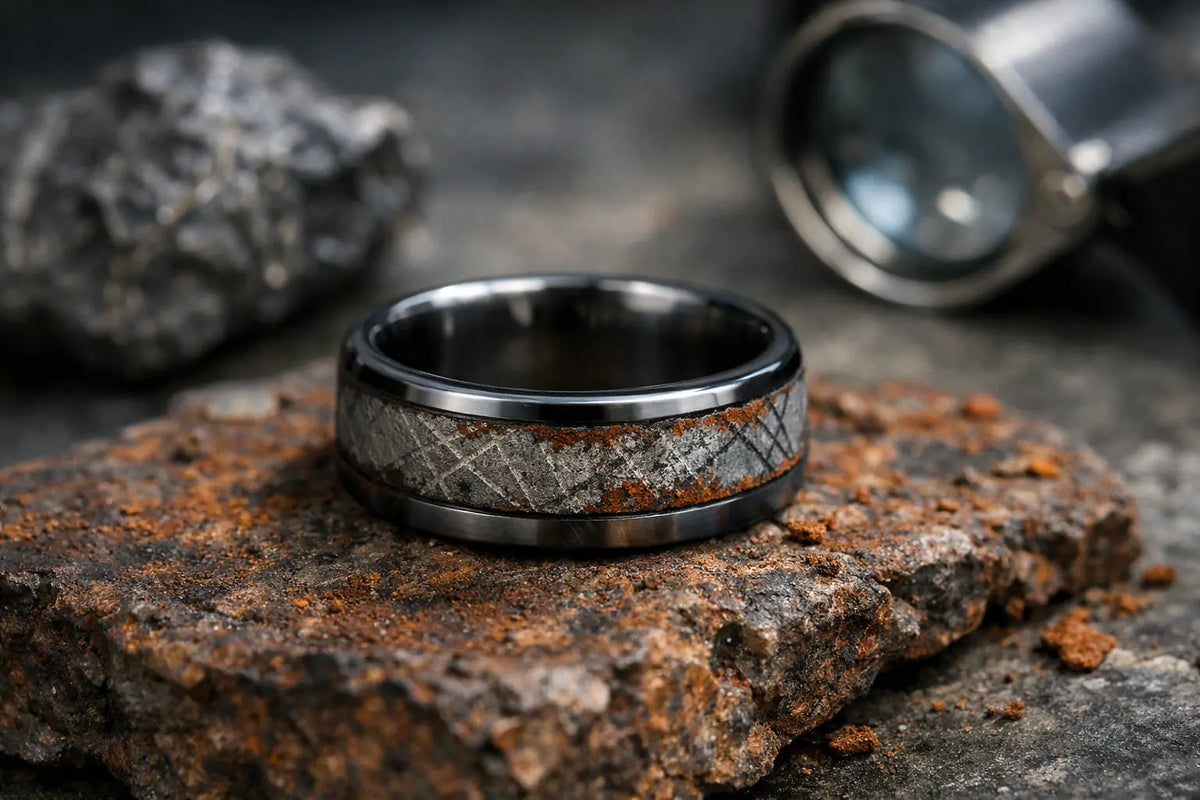
Meteorite is one of the few materials that immediately brings a sense of scale to a ring. Its natural Widmanstatten pattern gives it a texture that doesn’t look manufactured because it isn’t. No printed finish can really fake the feeling of wearing something that formed beyond Earth.
It is especially popular for wedding bands and statement rings because it feels meaningful without being overly flashy. The trade-off is care. Meteorite usually performs best as an inlay or featured design element rather than the entire structural ring, and it may need more attention than highly resistant materials like tungsten or ceramic.
Dinosaur bone
Dinosaur bone has a completely different appeal. Instead of cosmic origin, it brings fossil history and earthy, mineral-rich patterning. The color variation can be beautiful - reds, browns, blues, and neutral tones often appear in ways that make each ring feel one of a kind.
For buyers who want a ring that feels rare and conversation-worthy, dinosaur bone is hard to top. It works especially well in handcrafted bands where the inlay is protected and framed by a stronger outer material.
Moon dust
Moon dust is subtle, which is part of its charm. It usually does not scream for attention the way opal or a bright crystal inlay might. Instead, it offers a quieter kind of fascination - a material tied to space, exploration, and imagination.
That makes it a strong choice for sentimental jewelry. A moon dust ring can feel romantic, modern, and slightly mysterious all at once. It tends to appeal to couples who want symbolism over tradition and want something that feels deeply personal rather than expected.
Opal
Opal is for people who want motion and color. Few materials can shift visually the way opal does, especially when light hits it from different angles. In a ring, that gives constant variation, which helps the piece keep its novelty over time.
The main consideration with opal is lifestyle. It is stunning, but it is not the most carefree option for someone rough on jewelry. Opal often shines brightest when used thoughtfully in a protected design, paired with a harder material that adds structure and daily-wear confidence.
Tungsten
Tungsten may not sound collectible in the same way meteorite or fossil materials do, but it earns its place because it makes collectible designs practical. Its weight, scratch resistance, and bold presence make it an ideal foundation for more delicate or unusual inlays.
For many buyers, tungsten is where rarity meets reassurance. You get the visual drama of an unconventional design without giving up the durability people want in a wedding band or everyday ring. If the goal is a ring that feels special but not fragile, tungsten is one of the smartest materials in the mix.
Ceramic
Ceramic has a very different personality from tungsten. It is sleek, lightweight, and modern, with a clean finish that works well in black or other crisp tones. When paired with bright inlays, glow elements, or textured materials, it creates dramatic contrast.
It is often chosen by people who want something minimal from a distance and interesting up close. Ceramic also appeals to those who prefer a lighter feel on the hand. As always, the right choice depends on how you wear your jewelry and what kind of look feels most like you.
Damascus steel
Damascus steel brings pattern into the band itself. Its layered, flowing lines give a ring movement even before any inlay is added. That makes it a favorite for buyers who appreciate craftsmanship and want a ring that feels strong, tactile, and visibly handmade.
It sits in a sweet spot between classic and unconventional. It has the toughness and character many shoppers want in men’s bands, but it also works beautifully in unisex designs and custom combinations.
Petrified wood
Petrified wood has a grounded, organic feel that stands apart from both gemstones and metals. It carries natural grain-like patterning with the permanence of stone, which makes it especially appealing for people drawn to nature, history, and understated texture.
This material often feels more intimate than flashy. It is the kind of detail people notice when they get close, and that can make the ring feel more personal over time.
Crystals and gemstone inlays
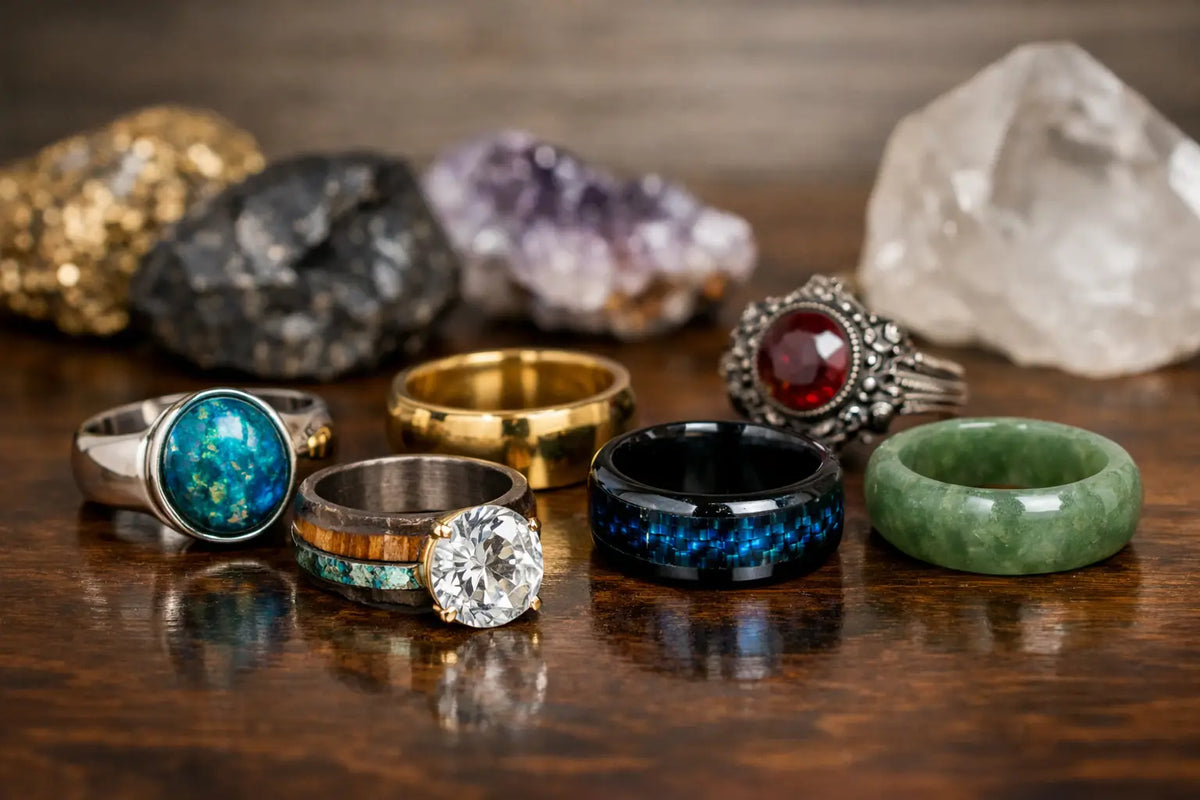
Crystals can shift the mood of a ring fast. Depending on the stone and cut, they can make a band feel mystical, romantic, bold, or refined. They are also useful for personalization, since different stones can represent birthdays, anniversaries, healing symbolism, or simply a favorite color.
The key here is balance. Some crystal-forward designs are meant to stand out loudly, while others use a narrow inlay for just a spark of contrast. The best result usually comes from matching the stone’s personality to the wearer’s style rather than chasing the brightest option available.
Glow materials
Glow materials add a playful, futuristic side to collectible rings. In daylight, they often read as a sleek design accent. In low light, they become something entirely different. That transformation is what makes them memorable.
This is a great category for shoppers who want novelty with a modern edge. Glow inlays pair especially well with dark metals, space-inspired materials, and designs meant to feel custom rather than traditional.
How to choose the best collectible ring material for you
The best collectible ring materials are not the same for everyone, and that is a good thing. A wedding band worn every day has different demands than an anniversary ring, a memorial piece, or a gift meant for occasional wear.
Start with lifestyle. If you want maximum toughness and minimal fuss, base materials like tungsten or ceramic make a lot of sense, especially when paired with collectible inlays. If you care most about visual rarity and story, meteorite, dinosaur bone, moon dust, and petrified wood bring stronger identity.
Then think about personality. Do you want people to notice the ring right away, or do you want the details to reveal themselves over time? Opal and glow materials are usually more dramatic. Petrified wood and moon dust tend to feel quieter and more intimate. Damascus steel sits somewhere in the middle, with texture that reads as refined but still distinctive.
Finally, think about meaning. The most satisfying collectible rings are usually the ones tied to a real reason. Maybe meteorite reflects a shared love of astronomy. Maybe dinosaur bone feels symbolic because it carries deep time and endurance. Maybe opal simply catches the exact color that reminds you of someone.
That emotional fit matters just as much as hardness or rarity.
Why craftsmanship matters as much as material
A rare material can fall flat if the ring is poorly made. The setting, inlay protection, finish quality, fit, and overall construction shape how the material actually performs and how it feels on your hand.
That is why handcrafted work matters so much in this category. Collectible materials are not just decorative add-ons. They need to be integrated in a way that respects both beauty and wearability. A well-made ring makes unusual materials feel dependable, not delicate.
For shoppers buying online, confidence also comes from transparency. Clear material education, honest sizing help, strong reviews, and buyer protection all make a difference when you are choosing something meaningful. That is part of why brands like Decazi resonate with customers who want a ring that feels rare without making the buying process feel risky.
A collectible ring should feel like more than a trend piece. The right material gives it a story, but the right craftsmanship is what lets that story stay with you for years.